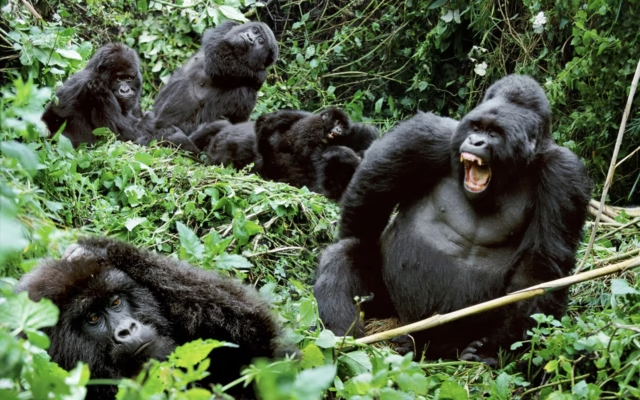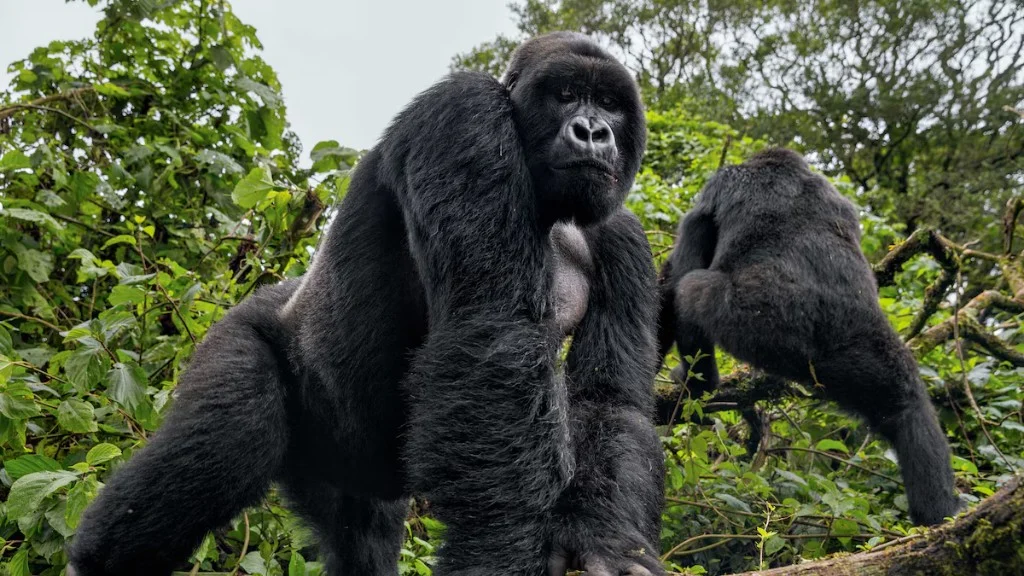
Despite this progress, mountain gorillas remain vulnerable. Their survival depends on continued protection, community cooperation, habitat security, disease prevention, and responsible tourism management.
Conservation Status
Mountain gorillas are classified as endangered and remain one of the rarest great ape populations in the world. Their restricted range and close proximity to human communities make them especially sensitive to environmental and health threats.
Population Recovery
Mountain gorilla numbers have increased significantly compared with historic lows, making them one of the few great ape populations to demonstrate meaningful recovery.
Recovery factors include:
- Protected area management
- Veterinary intervention
- Tourism revenue
- Scientific monitoring
- Anti-poaching patrols
- Community conservation partnerships
Why Mountain Gorillas Became Threatened
Several interconnected pressures historically pushed mountain gorillas toward severe decline.
Habitat Loss
Human population growth near gorilla habitats increased pressure on forests through agriculture, settlement expansion, and land-use conversion.
Poaching
Although mountain gorillas are not always direct targets, poaching infrastructure such as snares poses significant danger.
Disease Transmission
Because mountain gorillas share close genetic similarity with humans, infectious disease transmission is a major conservation concern.
Political Instability
Conflict in some range regions has complicated conservation enforcement and habitat protection.
Habitat Fragmentation
Isolated habitat patches increase ecological vulnerability and limit resilience.
Major Threats Today
Disease
Disease remains one of the most serious threats to mountain gorilla survival.
Risks include:
- Respiratory infections
- Human-transmitted illness
- Emerging infectious disease events
Snares
Wire snares intended for other wildlife can injure or kill gorillas, especially juveniles.
Human Encroachment
Pressure around protected habitats remains a long-term challenge.
Climate Change
Climate shifts may alter habitat conditions, vegetation composition, and disease dynamics.
Protected Areas Supporting Conservation
Mountain gorilla survival depends on protected landscapes.
- Bwindi Impenetrable National Park
- Mgahinga Gorilla National Park
- Volcanoes National Park
- Virunga National Park
Anti-Poaching Measures
Rangers and conservation teams work continuously to reduce illegal activity.
- Patrols
- Snare removal
- Surveillance
- Enforcement response
- Intelligence coordination
Veterinary Conservation
Veterinary intervention is a defining feature of mountain gorilla conservation.
Veterinary teams support:
- Injury treatment
- Disease monitoring
- Emergency response
- Health assessment
The Role of Tourism
Responsible gorilla tourism creates economic incentives for conservation.
Tourism contributes through:
- Permit revenue
- Protected area funding
- Employment creation
- Community benefit sharing
- Habitat protection incentives
Why Gorilla Trekking Rules Matter
Strict trekking regulations protect gorillas from stress and disease.
Rules support:
- Health safety
- Behavioural protection
- Habituation stability
- Visitor safety
Community Conservation
Long-term conservation succeeds when surrounding communities benefit from wildlife protection.
Community-linked conservation may include:
- Revenue sharing
- Employment
- Tourism participation
- Conservation education
- Livelihood diversification
Research and Monitoring
Scientific monitoring helps conservation teams track population health, demographics, habitat use, and behavioural indicators.
International Cooperation
Mountain gorilla conservation requires cross-border collaboration because habitat spans multiple countries.
Conservation Success Story
Mountain gorillas are frequently cited as a conservation success because coordinated action has helped stabilize and increase population numbers.
Success has depended on sustained investment, institutional coordination, and public support.
Conservation Challenges Ahead
- Growing human population pressure
- Disease risk
- Tourism management balance
- Habitat pressure
- Climate uncertainty
- Funding continuity
How Travelers Help Conservation
Visitors contribute by choosing responsible operators, respecting rules, and supporting ethical conservation-linked tourism.
Responsible Gorilla Tourism Practices
- Follow ranger instructions
- Respect distance rules
- Avoid travel when ill
- Minimize disturbance
- Choose ethical safari operators
Conservation Myths
Myth: Mountain Gorillas Are Fully Safe Now
Reality: Recovery progress does not eliminate ongoing threats.
Myth: Tourism Harms Conservation
Reality: Well-regulated tourism can strongly support conservation outcomes.
Myth: Poaching Is the Only Threat
Reality: Disease and habitat pressure are equally critical.
Interesting Conservation Facts
- Mountain gorilla populations have recovered from historic lows
- Veterinary intervention is unusually important in this species
- Tourism revenue supports protection
- Community support is essential
Explore the full Mountain Gorilla guide and browse more Uganda wildlife species.