Understanding what mountain gorillas eat reveals how closely their survival is tied to healthy montane forest habitat and why habitat protection is essential for long-term conservation. Diet also comes up constantly when planning gorilla trekking in Uganda and booking gorilla permits for parks such as Bwindi Impenetrable National Park.
What Do Mountain Gorillas Eat?
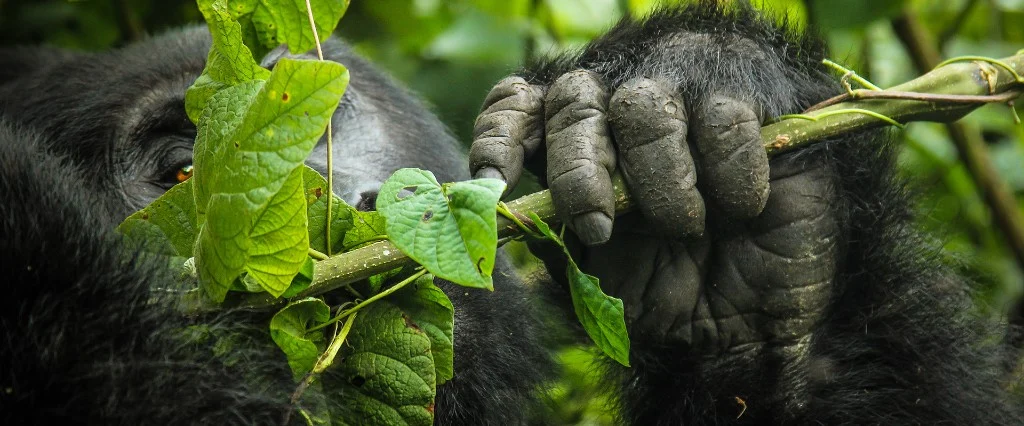
Mountain gorillas primarily consume plant matter. Their natural diet consists of a wide variety of forest vegetation selected according to availability, nutritional needs, and habitat conditions.
Core foods include:
- Leaves
- Shoots
- Stems
- Bamboo
- Roots
- Bark
- Pith
- Wild celery
- Nettles
- Herbaceous vegetation
Unlike some other gorilla populations, fruit is a relatively minor dietary component for mountain gorillas because of habitat-specific availability.
Mountain Gorillas Are Herbivores
Mountain gorillas are classified as predominantly herbivorous primates. Their digestive systems are adapted for processing fibrous vegetation rather than meat-based diets.
Their body size sometimes causes people to assume they require animal protein, but their nutrition comes largely from plant biomass.
Daily Food Intake
Because plant matter is relatively low in calories compared with animal-based food, mountain gorillas must consume substantial quantities daily.
Adult mountain gorillas may spend many hours feeding each day to meet energy requirements.
Food intake varies depending on:
- Age
- Sex
- Body size
- Reproductive status
- Seasonal availability
- Habitat conditions
Main Food Categories
Leaves
Leaves form one of the most important components of the mountain gorilla diet. Forest vegetation provides abundant foliage year-round in many habitats.
Leaves contribute:
- Fiber
- Water content
- Micronutrients
- Bulk energy
Shoots
Tender shoots are easier to digest and often nutritionally attractive. Gorillas selectively harvest young growth when available.
Stems
Stems provide fibrous material and structural nutrients. Mountain gorillas are capable of processing tough plant tissues.
Bamboo
In some habitats, especially parts of the Virunga ecosystem, bamboo shoots can be seasonally important.
Roots
Roots may be consumed depending on habitat access and food availability.
Bark
Bark contributes roughage and additional nutritional value in some feeding contexts.
Wild Celery
Wild celery is frequently cited among important mountain gorilla foods and is often associated with feeding observations.
Nettles
Mountain gorillas skillfully consume nettles despite their defensive plant structures.
Do Mountain Gorillas Eat Fruit?
Fruit consumption is limited compared with some lowland gorilla populations because fruit abundance is lower in their montane habitats.
Where available, fruit may supplement diet diversity.
Do Mountain Gorillas Eat Insects?
Mountain gorillas may occasionally ingest insects, but insects are not a major dietary foundation.
Their nutritional strategy remains overwhelmingly plant-based.
Do Mountain Gorillas Eat Meat?
Mountain gorillas are not predators and do not rely on meat consumption for normal survival.
This distinguishes them strongly from carnivorous mammals despite their impressive physical power.
Hydration and Water Intake
Mountain gorillas rarely need to drink standing water because much of their hydration comes from moisture-rich vegetation.
Their habitat environment also supports hydration through humidity and plant water content.
Feeding Behaviour
Mountain gorilla feeding behaviour reflects intelligence, selectivity, and ecological adaptation.
Selective Feeding
Gorillas do not simply consume random vegetation. They select specific plants and plant parts based on nutritional value, digestibility, and availability.
Movement While Feeding
Groups often move gradually through habitat while feeding, balancing energy conservation with food access.
Social Feeding Dynamics
Feeding occurs within group structure, with individual spacing and social awareness maintained.
Silverback Feeding Patterns
Silverbacks consume larger quantities due to body size and dominance. Their energy demands differ substantially from juveniles or females.
Female Feeding Patterns
Adult females require nutritional support for reproduction, lactation, and infant care.
Juvenile Feeding Behaviour
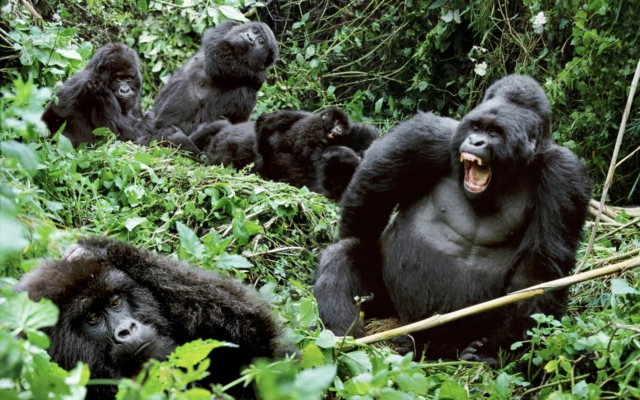
Young gorillas learn food preferences, plant recognition, and feeding techniques through observation and experimentation.
Infant Feeding Development
Infants initially depend on maternal milk before gradually incorporating vegetation into their diet.
Seasonal Diet Variation
Mountain gorilla diet changes with habitat seasonality and plant availability.
Seasonal variation may influence:
- Food type selection
- Movement patterns
- Daily feeding duration
- Habitat use intensity
Habitat Differences in Diet
Bwindi Diet Characteristics
Bwindi Impenetrable National Park’s biodiversity supports broad dietary diversity with numerous plant species — a key reason it anchors many gorilla safari experiences.
Virunga Diet Characteristics
Mgahinga Gorilla National Park and wider Virunga habitats may feature different vegetation dynamics including bamboo importance. Compare parks on our best places to see mountain gorillas page.
Digestive Adaptations
Mountain gorillas possess digestive systems adapted to fibrous plant diets.
Adaptations include:
- Large digestive capacity
- Microbial fermentation support
- Efficient plant matter processing
- Tolerance for fibrous vegetation
How Diet Supports Strength
One of the most common questions is how mountain gorillas become so powerful on a plant-based diet.
The answer lies in:
- Large food volume intake
- Efficient digestion
- Evolutionary physiology
- Muscular adaptation
- Consistent nutrient access
Diet and Conservation
Mountain gorilla survival depends on habitat quality because food availability is habitat-dependent.
Threats to food systems include:
- Habitat destruction
- Deforestation
- Human encroachment
- Ecological degradation
Mountain Gorilla Diet vs Other Gorillas
Mountain Gorillas
- Highly herbivorous
- Limited fruit intake
- Montane vegetation dependent
Lowland Gorillas
- Greater fruit consumption
- Different forest ecology
- Different dietary patterns
Interesting Diet Facts
- Mountain gorillas can spend much of the day feeding
- They obtain much hydration from plants
- Diet varies by habitat
- Infants learn through observation
- Large body size is supported by vegetation