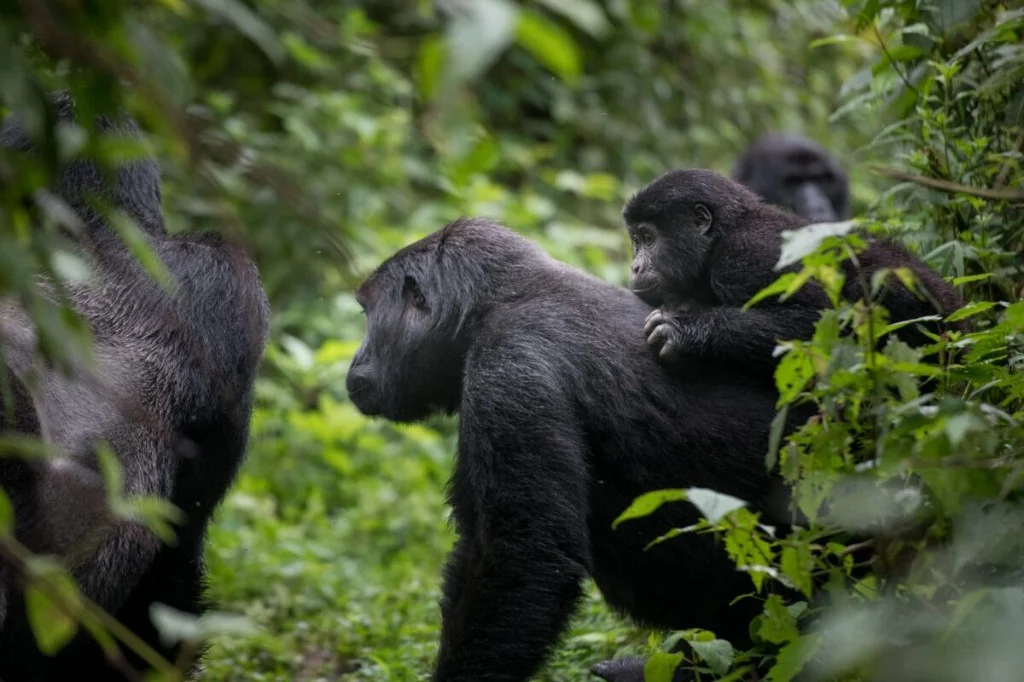
The mountain gorilla is one of the world’s most remarkable wildlife species and among the most emotionally compelling animals travelers can encounter in Africa. Powerful yet gentle, rare yet increasingly protected, mountain gorillas represent one of conservation’s most inspiring recovery stories. Found only in select montane forests of East and Central Africa, these great apes attract wildlife enthusiasts, photographers, researchers, and safari travelers from around the world.
Encountering a mountain gorilla in the wild is unlike a typical safari sighting. Instead of observing wildlife from a vehicle across open plains, gorilla trekking requires walking through dense forest under expert guidance before spending a precious hour with a habituated gorilla family. The result is a deeply immersive wildlife experience that many describe as life changing.
What Is a Mountain Gorilla?
The mountain gorilla (Gorilla beringei beringei) is a subspecies of the eastern gorilla and one of humanity’s closest living relatives, sharing approximately 98% of human DNA. Mountain gorillas are distinguished by their thick fur, robust build, and adaptation to cool high-altitude environments.
- Kingdom: Animalia
- Phylum: Chordata
- Class: Mammalia
- Order: Primates
- Family: Hominidae
- Genus: Gorilla
- Species: Gorilla beringei
- Subspecies: Gorilla beringei beringei
Physical Characteristics
Mountain gorillas are among the largest living primates. Adult males are substantially larger than females and develop immense muscular strength.
Size and Weight
Adult silverbacks can weigh between 135 and 220 kilograms, while females generally range from 70 to 110 kilograms. Standing upright, a dominant male can exceed 1.7 meters in height.
Fur and Climate Adaptation
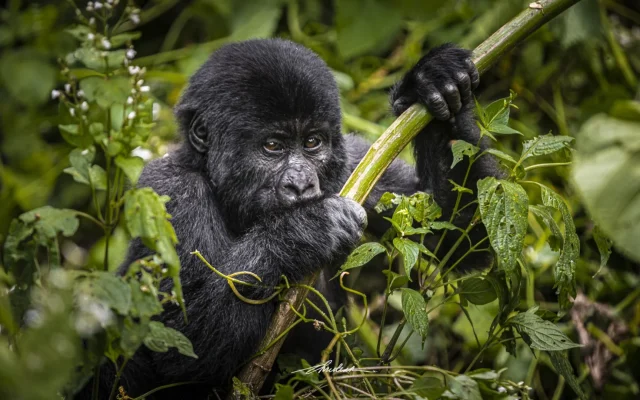
The dense black coat of a mountain gorilla helps protect it from cold mountain temperatures. Unlike lowland gorillas that inhabit warmer forests, mountain gorillas evolved for misty, elevated habitats.
Silverback Development
Mature males develop silver hair across the back, signaling adulthood, dominance, and breeding status.
Strength
Mountain gorillas possess extraordinary upper body strength, allowing them to navigate steep terrain, manipulate vegetation, and protect their groups.
Where Mountain Gorillas Live
Mountain gorillas exist in only two isolated wild populations.
Bwindi Impenetrable National Park, Uganda
Bwindi is one of the most important mountain gorilla habitats in the world and supports numerous habituated families across Buhoma, Ruhija, Rushaga, and Nkuringo sectors.
Virunga Massif
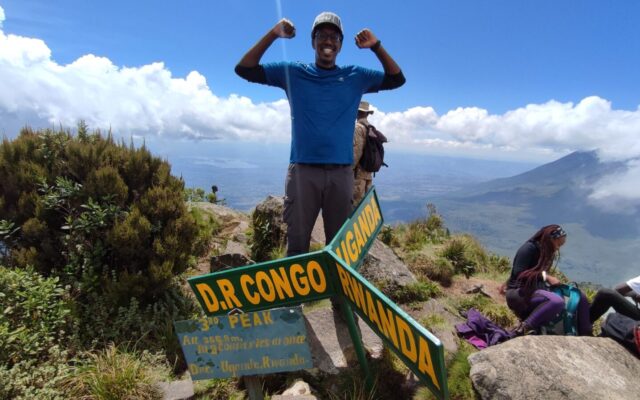
The Virunga mountain ecosystem spans Uganda, Rwanda, and the Democratic Republic of Congo, including Mgahinga Gorilla National Park, Volcanoes National Park, and Virunga National Park.
Habitat and Ecosystem
Mountain gorillas inhabit montane and cloud forests generally between 2,200 and 4,300 meters above sea level. These environments are humid, densely vegetated, and rich in plant material.
The ecosystem provides:
- Food resources
- Nesting material
- Protective vegetation cover
- Microclimate stability
- Social movement corridors
Social Structure
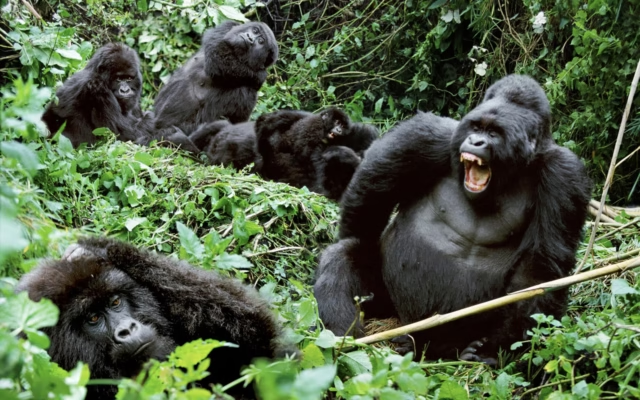
Mountain gorillas are highly social animals that live in stable family groups led by dominant silverbacks.
Typical Group Composition
- One dominant silverback
- Adult females
- Juveniles
- Infants
- Occasional subordinate males
Group sizes vary from a handful of individuals to more than 20 members.
Role of the Silverback
The silverback is central to group stability. He determines movement routes, mediates conflict, protects vulnerable members, and often fathers offspring within the group.
Communication and Intelligence
Mountain gorillas demonstrate sophisticated communication through vocalizations, posture, facial expressions, and physical displays.
Common communication methods include:
- Grunts
- Hoots
- Barks
- Roars
- Chest beating
- Eye contact cues
They also show memory, social awareness, emotional sensitivity, and problem-solving capability.
Diet
Mountain gorillas are primarily herbivorous. Their daily diet consists mostly of fibrous vegetation.
Common Foods
- Leaves
- Shoots
- Stems
- Bamboo
- Roots
- Bark
- Wild celery
- Nettles
They may occasionally consume insects, though animal matter is not a major dietary component.
Behaviour
Daily Routine
Mountain gorillas generally follow a rhythm of feeding, resting, social interaction, movement, and nest-building.
Play Behaviour
Young gorillas wrestle, chase, climb, and tumble, building social bonds and physical skills.
Grooming
Grooming strengthens relationships and contributes to social cohesion.
Chest Beating
Contrary to common myth, chest beating is not always aggressive. It can be a display of strength, confidence, or communication.
Reproduction and Family Life
Females mature earlier than males and generally give birth to one infant after approximately 8.5 months of gestation.
Infants depend heavily on maternal care, and social group stability significantly influences survival.
Lifespan
Mountain gorillas may live 35 to 40 years in the wild, with longevity affected by health, social status, environmental pressure, and human-related threats.
Threats to Survival
Despite population recovery, mountain gorillas remain vulnerable.
- Habitat loss
- Human encroachment
- Disease transmission
- Snares
- Political instability
- Illegal activity near protected areas
Conservation Success Story
Mountain gorilla conservation is one of the most hopeful stories in wildlife protection. Coordinated efforts by governments, conservation groups, veterinarians, rangers, and tourism stakeholders have contributed to population recovery.
Major conservation mechanisms include:
- Protected national parks
- Veterinary intervention
- Community benefit tourism
- Anti-poaching patrols
- Research monitoring
- Tourism regulation
Population Status
The global mountain gorilla population now exceeds 1,000 individuals, making them one of the few great ape populations to show measurable recovery.
Why Mountain Gorillas Matter
Mountain gorillas matter ecologically, economically, scientifically, and culturally.
They support tourism economies, indicate ecosystem health, attract conservation funding, and deepen understanding of primate evolution and social intelligence.
Mountain Gorilla Trekking
Mountain gorilla trekking is the premier way to observe these primates responsibly in the wild. Visitors trek through protected forests with trained guides and spend limited time observing habituated families.
Treks vary in duration depending on gorilla movement, terrain, weather, and assigned group location.
What Makes Gorilla Trekking Unique?
- Immersive forest experience
- Close wildlife observation
- Highly regulated ethical tourism
- Expert ranger interpretation
- Direct conservation contribution
Best Countries to See Mountain Gorillas
Uganda
Ideal for value, biodiversity, longer safari combinations, and gorilla habituation experiences.
Rwanda
Strong for luxury travelers and short-access gorilla trekking from Kigali.
Democratic Republic of Congo
Appeals to adventurous travelers seeking remote experiences, subject to current travel conditions.
Best Time to See Mountain Gorillas
Mountain gorillas can be seen year-round, but dry seasons generally offer easier trekking conditions.
- June to September
- December to February
Wet seasons offer lush scenery, fewer crowds, and different photography conditions.
Safari Experiences
- 3 Day Gorilla Trekking Safari
- Luxury Gorilla Safari
- Gorilla and Chimpanzee Safari
- Uganda Wildlife Safari
- Fly-in Gorilla Trekking
Quick Facts
- One of the rarest great apes in the world
- Shares roughly 98% DNA with humans
- Lives only in East/Central Africa
- Mostly herbivorous
- Lives in family groups
- Led by silverbacks
- Endangered but recovering