Jackson’s hartebeest — Uganda safari guide for travelers planning wildlife encounters.
Jackson's hartebeest is one of East Africa's most architecturally distinctive antelopes — a high-shouldered, reddish-brown grazer whose sloping silhouette and horned profile look almost sculpted against the open sky. For Uganda safari travellers, it carries an extra distinction: this is a Kidepo Valley specialty, the only national park in the country where Alcelaphus buselaphus jacksoni occurs in the wild. Spot a herd on the Narus grasslands and you are seeing a mammal that separates Kidepo from every other savannah circuit in Uganda.
Scientifically, Jackson's hartebeest sits within the broader hartebeest species alongside Coke's, Lelwel, and other regional forms. Taxonomists still debate whether Jackson's represents a stable subspecies or a geographic blend between neighbouring hartebeest types — a discussion that reflects how dynamic East African savannah evolution has been across the Rift Valley. What is not in debate is the animal's field identity: elongated forehead, hollow horn bases, endurance build, and a grazing lifestyle tuned to ecotones between woodland and open plain.
What Is Jackson's Hartebeest?
Jackson's hartebeest belongs to the family Bovidae and the tribe Alcelaphini — the same group that includes wildebeest, topi, and blesbok. These are antelopes built for sustained running on open terrain, with specialised skulls that help them extract nutrition from grasses other grazers pass over.
- Kingdom: Animalia
- Phylum: Chordata
- Class: Mammalia
- Order: Artiodactyla
- Family: Bovidae
- Genus: Alcelaphus
- Species: Alcelaphus buselaphus
- Subspecies: Alcelaphus buselaphus jacksoni
Across East Africa, Jackson's hartebeest ranges through parts of Kenya and Tanzania, with Uganda's population confined to the northeast. That geographic isolation inside Uganda makes Kidepo essential for anyone building a complete national mammal checklist.
Relationship to Coke's and Lelwel Hartebeest
Jackson's hartebeest is often described as intermediate between Coke's hartebeest to the south and Lelwel hartebeest to the north. From Lake Baringo toward Mount Kenya, animals tend toward the Lelwel type; toward the southern Rift, Coke's influence is stronger. Jackson's form occupies the transition — which is why some references treat it as a hybrid lineage rather than a neatly bounded subspecies.
For safari visitors, the practical takeaway is simpler: in Kidepo you are looking at a hartebeest type you will not see in Murchison Falls or Queen Elizabeth, where other antelope dominate the plains.
Physical Characteristics
Build and Silhouette
The most striking feature is the body profile — shoulders higher than the hindquarters, creating a forward-leaning slope that distinguishes hartebeest from kob, waterbuck, and topi at a glance. The head is long and narrow, mounted on a distinctive neck angle that improves grazing reach.
Coat and Markings
The coat is warm reddish brown with lighter underparts. Darker patches appear on the forehead, legs, and sometimes the shoulders. Males are typically darker than females, especially as they age.
Horns on Both Sexes
Unlike many antelopes, both males and females carry horns. These rise from prominent pedicels on the forehead and curve forward and outward before sweeping back. Male horns are heavier; female horns are slimmer but equally characteristic.
Size
Adults stand roughly 120 centimetres at the shoulder. Males weigh around 150 to 180 kilograms; females are somewhat smaller. The frame is lean and leggy — built for distance rather than bulk.
Where Jackson's Hartebeest Live in Uganda
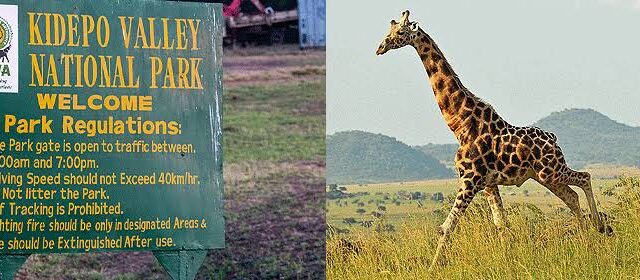
In Uganda, Jackson's hartebeest occur only in Kidepo Valley National Park. The Narus Valley's permanent water and mosaic of grassland, acacia woodland, and scrub ecotones provide ideal habitat. Herds are often reported near woodland–savannah edges and sometimes associate with female waterbuck groups — a field clue guides use on morning drives.
Kidepo's isolation in the Karamoja region has helped maintain populations of species poorly represented elsewhere in Uganda, including cheetah, greater kudu, and this hartebeest form. That biogeographic uniqueness is a major reason experienced Africa travellers rank Kidepo among the continent's underrated savannah parks.
Habitat and Ecology
Jackson's hartebeest favour boundaries between open grassy plains and parkland woodland or scrub. During dry seasons they concentrate along drainage lines for water; after rains they spread into higher, thinly grassed woodlands with fresh growth. Territories typically span at least two plant communities with access to water — but not immediately beside it, which reduces predator ambush risk.
Red oat grass and whistling-thorn acacia associations are typical of the landscapes they use in East Africa. In Kidepo, the combination of Narus wetlands, surrounding ridges, and predator-rich plains creates a complete savannah system where hartebeest remain a visible, ecologically important grazer.
Social Structure and Behaviour
Hartebeest are gregarious, forming herds that commonly number 20 to 40 animals, though larger aggregations occur seasonally. Males defend territories during breeding periods, displaying and sparring with horns. Outside the rut, sexual segregation is less rigid, but territorial behaviour peaks when females are receptive.
They are diurnal, feeding most actively in early morning and late afternoon, resting in shade at midday. When alarmed, their flight is a distinctive series of bounds — fast, efficient, and memorable on a first Kidepo drive.
Diet
Jackson's hartebeest are selective grazers. They consume most grass species and all parts of the grass plant — leaves, stems, and blades — while avoiding a few species such as Cynodon favoured by other herbivores. Broad-leaf browse accounts for less than five percent of intake. Their low food intake relative to body size is offset by skull and muzzle adaptations that extract nutrition from fibrous, even senile, grasses during dry months.
Reproduction
In Uganda, breeding often peaks around May at the end of the rainy season, though timing varies regionally. Gestation lasts roughly eight months, producing a single calf. Calves grow quickly when nutrition is good, but predation pressure in Kidepo's lion country keeps survival challenging.
Predators
Lions are the primary predator in Kidepo, with leopard and spotted hyena taking calves and weaker adults. Cheetah — rare elsewhere in Uganda — also occur in Kidepo and may target young or isolated hartebeest on open plains. Hartebeest survive through vigilance, herd cohesion, and speed across short-grass country.
Conservation Status
The hartebeest species is listed Least Concern globally, yet several subspecies have declined severely and one — the bubal hartebeest — is extinct north of the Sahara. Jackson's populations face habitat loss, poaching, and livestock competition outside protected areas. In Kenya's Laikipia region, research has documented dramatic declines where predator restoration and land-use change intersect. Uganda's Kidepo stronghold underscores why park protection and tourism revenue matter for long-term persistence.
Why Jackson's Hartebeest Matters
Ecologically, hartebeest are part of the grazer guild that sustains Kidepo's predators and shapes grassland structure. For tourism, they are a signature mammal that rewards travellers who make the journey to Uganda's remote northeast — proof that the country's wildlife portfolio extends far beyond gorillas and the western savannah circuit.
Seeing Jackson's Hartebeest on Safari
Game drives in the Narus Valley are the primary viewing method. Pair this overview with our where to see Jackson's hartebeest, behaviour, and safari experiences guides to plan seasons, sectors, and Kidepo itineraries.
Quick Facts
| Scientific name | Alcelaphus buselaphus jacksoni |
|---|---|
| Uganda range | Kidepo Valley National Park only |
| Horns | Both sexes |
| Peak activity | Dawn and late afternoon |
| Diet | Selective grazer |
| Related to | Coke's and Lelwel hartebeest; wildebeest (Alcelaphini) |
| IUCN (species) | Least Concern |
| Best viewing | Narus Valley game drives |