Jackson’s hartebeest facts — expert Uganda safari guide from local planners who know permits, parks, and realistic routing.
Jackson's hartebeest stands apart on any East African game drive — not because it is rare everywhere, but because its profile is instantly recognisable once you have seen it. High shoulders, a sloping back, elongated forehead, and horns on both sexes give Alcelaphus buselaphus jacksoni a look unlike kob, waterbuck, or topi. In Uganda, that distinctiveness carries extra weight: Kidepo Valley is the only place in the country to find them. This guide covers essential habitat, biology, and taxonomy — with links to where to see Jackson's hartebeest and Kidepo safari experiences.
A Hartebeest Built for the Rift Valley
Among African antelopes, hartebeest occupy a specialist niche. They are not the largest grazers on the plain, nor the fastest in a single sprint, but they combine endurance, selective feeding, and open-country awareness in a package that has persisted across savannah Africa for millennia. Jackson's form is the expression of that lineage in the transition zone between northern and southern hartebeest types — which is why field guides sometimes describe it as a living bridge between Coke's and Lelwel hartebeest.
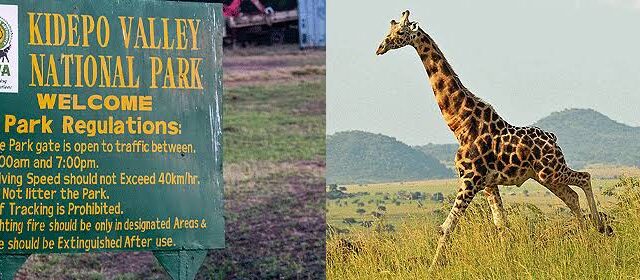
For checklist-oriented travellers in Uganda, seeing Jackson's hartebeest is proof you reached Kidepo — a park whose mammal roster includes species absent from Murchison Falls and Queen Elizabeth.
Scientific Classification
Jackson's hartebeest is the subspecies Alcelaphus buselaphus jacksoni within the species Alcelaphus buselaphus. It belongs to the tribe Alcelaphini alongside wildebeest (Connochaetes), topi, and blesbok — antelopes whose evolution favoured long-distance running and grassland nutrition extraction.
Taxonomic status remains debated. Some authorities treat Jackson's as synonymous with Lelwel hartebeest; others emphasise its intermediate morphology across a hybrid zone. Safari visitors need not resolve the debate to appreciate the animal — but understanding the Coke's/Lelwel context explains why horn shape and coat tone can vary across East African parks.
Physical Description
Silhouette and Build
The hartebeest body plan is unique: forequarters elevated, hindquarters lower, head carried on a angled neck that improves ground-level grazing. The effect is a forward-tilted profile visible at long range — useful for guides scanning mixed herds on the Narus plains.
Coat Colour
Jackson's hartebeest wear a reddish-brown coat with lighter underparts and darker facial and leg markings. Males darken with age. The tone sits between the richer red of some kob and the tawny bulk of waterbuck, helping experienced observers separate species in ecotone habitats.
Horns and Sexual Dimorphism
Both sexes grow horns from hollow pedicels on the elongated forehead — a hallmark of the group. Male horns are thicker and more heavily ridged; female horns are slimmer but equally curved. During territorial disputes, males clash horns in ritualised combat audible across open ground.
Body Size
Shoulder height reaches roughly 120 centimetres. Males weigh approximately 150 to 180 kilograms; females are lighter. The legs are long and slender relative to body mass, favouring sustained flight over rocky or uneven savannah.
Speed, Senses, and Survival
Hartebeest rely on sharp eyesight and herd vigilance. When alarmed they explode into a bounding run that can exceed 55 kilometres per hour — fast enough to escape many ambushes if the warning comes early. Their open-country habitat offers few hiding places, so early detection is everything.
Range and Distribution
Jackson's hartebeest occur in Kenya, Tanzania, and Uganda across savannah and lightly wooded highlands. Populations are concentrated in protected areas — Maasai Mara, Amboseli, Serengeti margins, Laikipia conservancies, and Uganda's Kidepo Valley National Park, which is the country's sole national-park stronghold.
Unlike Uganda kob or bushbuck, Jackson's hartebeest have no viable population in Murchison Falls, Queen Elizabeth, or Lake Mburo. That geographic fact alone makes them a Kidepo specialty worth planning for.
Ecological Role
As selective grazers, Jackson's hartebeest influence which grasses dominate short-grass plains and ecotone edges. Their feeding complements bulk grazers like buffalo and selective browsers like giraffe. In Kidepo, healthy hartebeest numbers support lion and hyena populations — part of the predator–prey drama that makes the Narus Valley so compelling at dawn.
Lifespan and Reproduction
Wild hartebeest may live into their teens, though predation limits most individuals. Females typically produce one calf after about eight months of gestation. In Uganda, calving often aligns with the end of the rains around May, when grass quality peaks and cover helps conceal newborns.
IUCN Conservation Status
The hartebeest species is classified Least Concern globally, but subspecies and local populations tell a more nuanced story. Bubal hartebeest are extinct; Tora and Lelwel forms are critically endangered or endangered in parts of their range. Jackson's populations have declined significantly in some Kenyan landscapes facing habitat fragmentation and predator restoration dynamics. Inside Kidepo, protection remains the key safeguard for Uganda's animals.
How Jackson's Hartebeest Compare to Similar Antelopes
- Uganda kob: Smaller, uniformly built, lyre horns on males only; widespread across Uganda savannah parks
- Topi: Darker, more compact; similar Alcelaphini build but different horn shape
- Waterbuck: Larger, shaggier, white ring on rump; more tied to wetland edges
- Coke's hartebeest: Southern Rift form; not found in Uganda
Why Safari Travellers Seek Jackson's Hartebeest
Hartebeest reward attentive viewers — not because they are elusive, but because they embody Kidepo's biogeographic identity. Photographers love the horn profile against big sky; mammal enthusiasts love the checklist exclusivity; repeat Africa travellers love a species that still feels genuinely regional in Uganda.
Quick Reference Facts
- Scientific name: Alcelaphus buselaphus jacksoni
- Uganda park: Kidepo Valley only
- Horns: Both sexes, on pedicels
- Top speed: ~55–70 km/h (bounding gait)
- Gestation: ~8 months
- IUCN (species): Least Concern
- Peak activity: Early morning and late afternoon
- Related forms: Coke's and Lelwel hartebeest