Jackson’s hartebeest habitat — expert Uganda safari guide from local planners who know permits, parks, and realistic routing.
Jackson's hartebeest habitat is the sunlit savannah mosaic of East Africa — open grassland, lightly wooded parkland, and scrub ecotones where short grazing, shade, and visibility overlap. Understanding where they live explains why Kidepo Valley National Park is Uganda's only reliable site, how herds share landscapes with waterbuck, and why dawn game drives on the Narus plains deliver such consistent sightings. Explore related guides on Jackson's hartebeest facts, behaviour, and best places to see hartebeest in Uganda.
Ecotone Specialists
Jackson's hartebeest are not deep-forest antelopes and they are not pure-desert survivors. They thrive at ecotones — boundaries between open grassy plains and parkland woodland or scrub. These transition zones deliver short, nutritious grass, scattered shade for midday rest, and enough visibility to detect lions and hyena at distance.
Field observers in Kidepo often find hartebeest along woodland margins and savannah edges rather than in the centre of the densest tree cover. That preference shapes which game-drive loops produce the best encounters — routes that cross mixed habitat rather than only open pan or only thick bush.
Short-Grass Preference
Hartebeest are selective grazers that favour short-grass areas maintained by herbivory, fire, and seasonal regrowth. Their elongated muzzle and specialised skull allow them to harvest leaf blades and sheaths efficiently — an adaptation that keeps them feeding productively when plains look dry and heavily grazed.
Research across Africa shows hartebeest can extract nutrition from tall, senile grasses that defeat less specialised grazers. In Kidepo's variable rainfall regime, that flexibility matters: herds remain in the system even when fresh green shoots are localised.
Water Dependence and Seasonal Movement
Jackson's hartebeest drink regularly when water is available and are often found near drainage lines during dry months. However, they avoid camping immediately beside water — territories typically include access to water but not too close, reducing ambush risk from predators that hunt cover near springs.
During rains, herds spread into higher, thinly grassed woodlands with fresh growth. As pans dry, they contract toward the Narus River system and remaining pools — a pattern that makes dry-season Kidepo drives especially productive for mammal viewing across species.
Vegetation Types
Typical Jackson's hartebeest habitat includes:
- Open grass savannah on valley floors and rolling plains
- Acacia–grassland mosaics with whistling thorn and scattered trees
- Woodland edges and scrub transitions
- Drainage-line grasslands with green regrowth after rain
- Red oat grass associations on nutrient-rich soils
They generally avoid closed canopy forest except when moving between grazing blocks.
Territory Structure
Male territories during breeding often span at least two plant communities with water access — a habitat requirement documented across hartebeest studies in East Africa. That multi-community need reinforces why ecotones are not optional for the species; they are structural habitat features that males defend and females traverse while grazing.
Altitude and Climate in Kidepo
Kidepo Valley lies in Uganda's semi-arid northeast, roughly 900 to 1,200 metres above sea level, with a climate drier than the western savannah belt. Rainfall is often unimodal or weakly bimodal compared with Queen Elizabeth, producing sharper dry-season concentrations at water.
Temperature extremes are moderate by African standards, but grass quality — driven by rain timing — remains the primary driver of herd distribution. Travellers who understand that pulse can time drives when hartebeest are most visible on open ground.
Kidepo Valley Ecosystem
Narus Valley
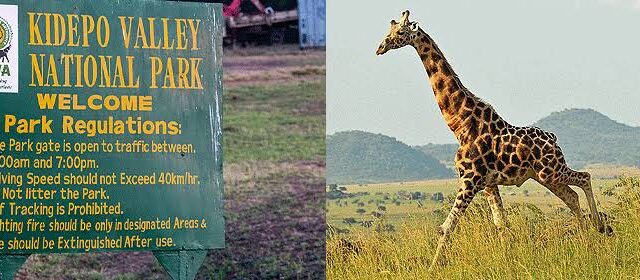
The Narus Valley is Kidepo's wildlife heart — permanent water, open plains, and woodland fingers reaching into grassland. Hartebeest, buffalo, elephant, zebra, and waterbuck share this matrix, with lions and hyena hunting the edges. Most visitor sightings occur here on established game-drive circuits.
Kidepo Valley Floor
The drier Kidepo River valley to the north holds seasonal wildlife concentrations and dramatic scenery. Hartebeest may appear on transit between grazing areas, though Narus remains the primary viewing zone for most itineraries.
Woodland Margins
Scattered combretum and acacia woodland around the Narus perimeter create the ecotone structure hartebeest favour. Guides often scan these edges early morning when herds leave cover to feed.
Association with Other Species
In Kidepo, Jackson's hartebeest are sometimes reported mixed with female waterbuck herds — a useful field clue when scanning mixed groups at distance. They may also graze near zebra, Uganda kob, and buffalo, forming the multi-species savannah scenes that define remote Kidepo game drives.
Predator–Prey Habitat Overlap
Hartebeest choose plains lions also hunt. Short grass feeds hartebeest and exposes stalking predators — the same trade-off kob face on the Kasenyi Plains. Kidepo's healthy predator populations depend on grazers like hartebeest remaining abundant inside the park boundary.
Habitat Threats
Outside protected areas, conversion of savannah to agriculture, livestock encroachment, and poaching reduce usable range. Inside parks, boundary pressure from pastoral communities, invasive plants, and climate-driven shifts in rainfall timing can alter grass regrowth. For Uganda, maintaining Kidepo as a large, intact savannah block is the single most important habitat intervention for Jackson's hartebeest.
Safari Viewing and Habitat Ethics
Stay on designated tracks, avoid pushing animals off preferred grazing edges, and follow ranger guidance near water points where multiple species concentrate. Responsible tourism supports the habitat mosaic hartebeest require — open plain, woodland edge, and reliable water in one protected landscape.
Planning Your Visit
For habitat-focused viewing, prioritise dawn drives across Narus ecotones in the dry season, combine with our best time to see Jackson's hartebeest guide, and build Kidepo days into northern circuits via Uganda safari packages.