Understanding golden monkey habitat explains their diet, troop movement, endangered status, and why Mgahinga Gorilla National Park is so important to Albertine Rift conservation. These monkeys are not generalist forest dwellers — they are specialists of cool, misty mountain ecosystems where bamboo dominates the canopy.
Where Do Golden Monkeys Live?
Wild golden monkeys survive in only two isolated population blocks within the central Albertine Rift:
- The Virunga Massif — spanning Uganda, Rwanda, and the Democratic Republic of Congo
- The Gishwati forest remnant in Rwanda (Gishwati–Mukura National Park)
No confirmed populations exist outside these fragments. Habitat continuity between countries makes cross-border conservation essential.
Albertine Rift Context
The Albertine Rift is one of Africa’s most biodiverse and threatened ecoregions — a chain of mountains and rift valleys along the western edge of the East African Plateau. Golden monkeys share this landscape with mountain gorillas, endemic birds, and hundreds of plant species found nowhere else. Protecting golden monkey forest protects a much wider web of rift-endemic life.
Elevation and Climate
Golden monkeys occupy a narrow elevational band, generally between 2,100 and 3,550 metres above sea level. At these altitudes, temperatures are cool, rainfall is high, and mist is frequent. The climate supports dense bamboo stands and mixed montane vegetation that shape every aspect of monkey ecology.
Bamboo Forest — The Core Habitat
Within the Virunga Massif, golden monkeys are most closely associated with Yushania bamboo (often referred to as high-altitude bamboo). Bamboo provides year-round leaves and seasonal shoots that fuel large troop populations. When bamboo regenerates after flowering cycles, food availability can shift dramatically — influencing where troops feed and how far rangers must walk during tracking excursions.
Mgahinga Gorilla National Park, Uganda
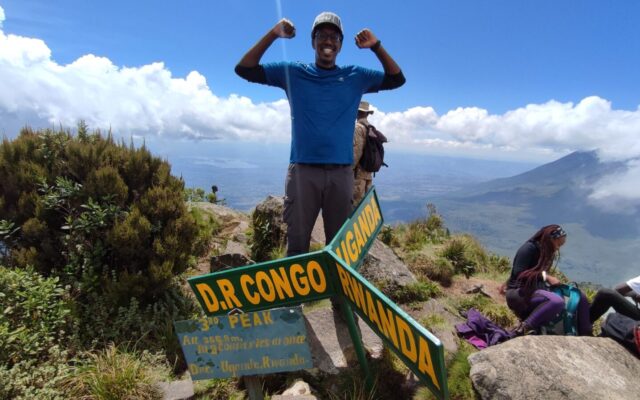
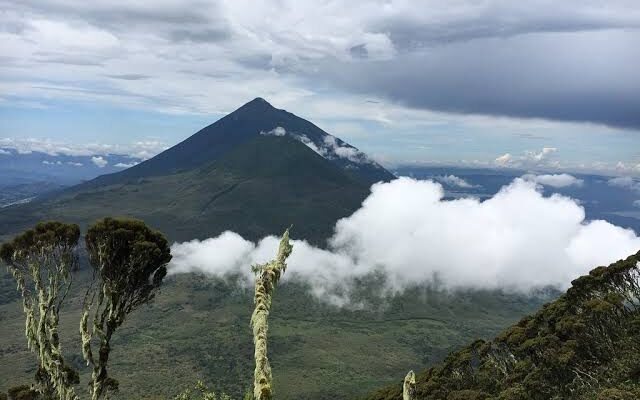
Mgahinga is Uganda’s smallest national park and its only golden monkey site. Nestled on the slopes of the Virunga volcanoes — Muhavura, Gahinga, and Sabinyo — the park protects montane forest, bamboo zones, and volcanic grassland interfaces. Habituated golden monkey troops range through bamboo on the lower volcanic slopes, often within reach of the park’s trekking trails.
Why Mgahinga Habitat Matters
- Only Ugandan refuge for the subspecies
- Contiguous with Volcanoes National Park (Rwanda) and Virunga (DRC)
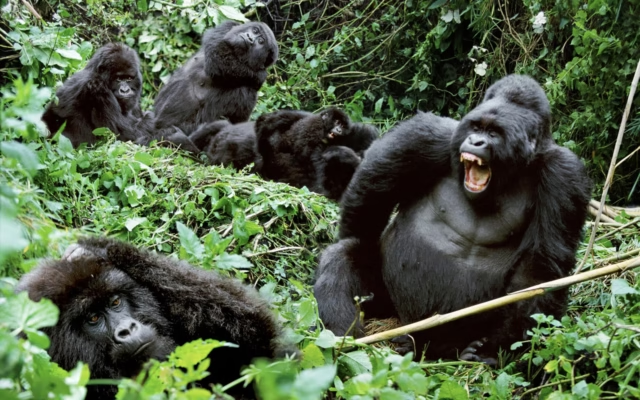
- Shared ecosystem with mountain gorillas and endemic birds
- Community buffer zones under active co-management programmes
Virunga Massif — Regional Habitat Block
The Virunga Massif covers roughly 450 square kilometres across three countries. Golden monkeys move through bamboo and mixed forest on the volcanic slopes, using elevation gradients to access food through the seasons. Habitat quality in any one country affects the regional meta-population — conservation cannot succeed in isolation.
Volcanoes National Park, Rwanda
Rwanda’s Volcanoes National Park holds the largest share of Virunga golden monkeys. Bamboo-dominated slopes support numerous troops, and tracking is a well-established tourism product alongside gorilla trekking.
Virunga National Park, DRC
The Congolese sector of the massif still holds golden monkeys, though access and survey work have been complicated by insecurity. Habitat protection remains critical even where tourism is limited.
Gishwati Forest — A Second Refuge
Rwanda’s Gishwati forest is a much smaller, separate population in tropical montane forest dominated by fruit-producing trees rather than bamboo. Golden monkeys here show dietary flexibility, feeding more heavily on fruits and leaves. This forest was reduced to a tiny remnant by past deforestation; restoration efforts aim to stabilise the population and reconnect habitat corridors where possible.
Forest Structure and Daily Use
Golden monkeys use the canopy intensively. Bamboo stems, interlocking branches, and forest edges provide feeding stations, escape routes, and sleeping sites. Troops may descend to lower vegetation to exploit seasonal fruits or herbs, but bamboo zones remain the ecological anchor in the Virunga population.
Seasonal Habitat Changes
Rainfall and temperature shifts influence bamboo shoot production and fruiting of companion tree species. During shoot season, monkeys may concentrate in dense bamboo stands; in drier months, troops range more widely along forest margins. Rangers who monitor habituated groups understand these seasonal patterns and adjust trek expectations accordingly.
Habitat Threats
Golden monkey habitat faces persistent pressure:
- Agricultural encroachment on forest edges
- Bamboo harvesting for local use
- Fire on volcanic slopes during dry spells
- Snares set for other animals
- Climate variability affecting bamboo cycles
Read more on our golden monkey conservation page and plan visits during stable trekking conditions via best time to see golden monkeys.
Why Habitat Protection Drives Tourism
Regulated golden monkey safaris depend entirely on intact bamboo forest. Permit revenue funds patrols, habitat restoration, and community projects that reduce pressure on park boundaries. Visiting Mgahinga on a combined primate itinerary — golden monkeys plus gorilla trekking — directly supports the ecosystems both species require.
Planning Your Habitat Experience
Travellers who understand habitat context appreciate the trek more deeply. You are not walking generic forest — you are entering a rare Albertine Rift bamboo ecosystem that exists in only a handful of places on the planet. Pack for mud, mist, and mountain chill; the same conditions that shape golden monkey survival also define the atmosphere of one of Uganda’s most memorable primate walks.