The golden monkey is one of Uganda’s most visually striking primates — a small, flame-furred Albertine Rift endemic that moves through bamboo canopy with remarkable energy and grace. Endangered and range-restricted, golden monkeys survive in only a handful of protected forests along the Virunga volcanoes. For safari travellers, they offer something different from the great apes: a lighter trek, a livelier encounter, and one of the most memorable add-on experiences in southwestern Uganda.
Encountering golden monkeys in the wild is not a passive game-drive sighting. Like mountain gorilla trekking, it means walking into montane forest under expert ranger guidance — but the pace, scale, and atmosphere differ sharply. Troops rustle through bamboo overhead, juveniles chase one another between stems, and the golden-orange fur catches mountain light in a way that delights photographers and first-time primate visitors alike.
What Is a Golden Monkey?
The golden monkey (Cercopithecus mitis kandti) is an endangered subspecies of blue monkey found only in the central Albertine Rift. It is recognised by vivid golden-orange pelage, a long balancing tail, and sociable troop life in high-altitude bamboo forest.
- Kingdom: Animalia
- Phylum: Chordata
- Class: Mammalia
- Order: Primates
- Family: Cercopithecidae
- Genus: Cercopithecus
- Species: Cercopithecus mitis
- Subspecies: Cercopithecus mitis kandti
Physical Characteristics
Golden monkeys are medium-sized primates built for arboreal life — agile, light, and constantly in motion.
Size and Weight
Adults typically weigh between four and seven kilograms, with males slightly larger than females. Their compact frame contrasts sharply with the immense bulk of mountain gorillas sharing the same park.
Colouration
Long golden hair mixed with orange along the back and flanks gives the species its common name. The face retains darker blue-grey tones typical of the blue monkey group — a striking combination in green bamboo.
Tail and Movement
A long tail aids balance on narrow bamboo stems. Troops leap, run, and climb with a speed that makes tracking encounters feel dynamic compared with ground-based gorilla viewing.
Where Golden Monkeys Live
Golden monkeys survive in only two isolated wild populations in the Albertine Rift.
Virunga Massif
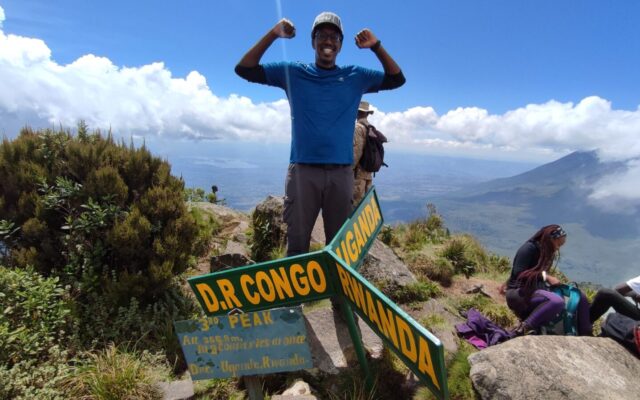
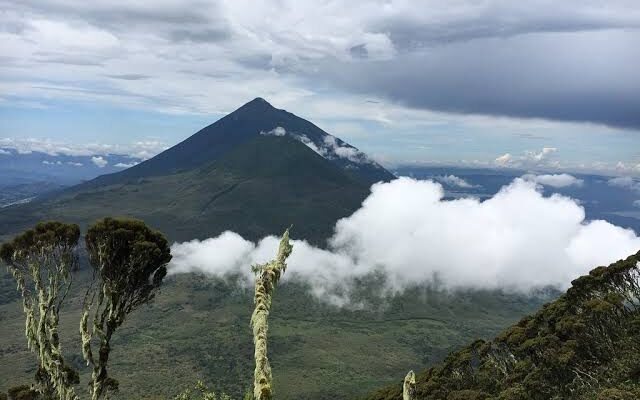
The primary population spans the volcanic slopes of Uganda, Rwanda, and the Democratic Republic of Congo — including Mgahinga Gorilla National Park in Uganda and Volcanoes National Park in Rwanda.
Gishwati Forest, Rwanda
A much smaller separate population persists in the Gishwati forest remnant within Gishwati–Mukura National Park — montane forest rather than bamboo-dominated volcanic slope.
Habitat and Ecosystem
Golden monkeys inhabit cool, misty mountain forest generally between 2,100 and 3,550 metres above sea level. In the Virunga population, bamboo dominates the core habitat.
The ecosystem provides:
- Bamboo shoots and leaves for year-round foraging
- Canopy structure for arboreal movement
- Seasonal fruits and flowers at forest margins
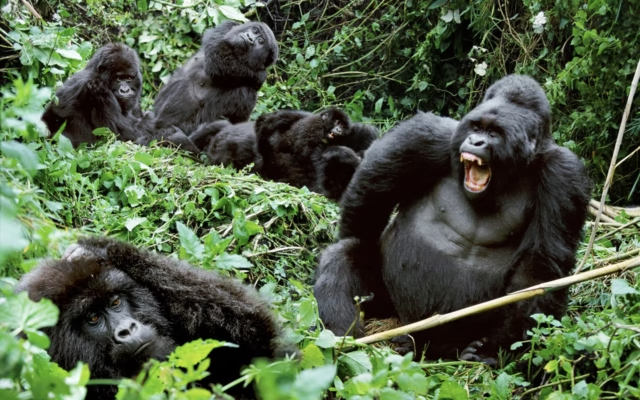
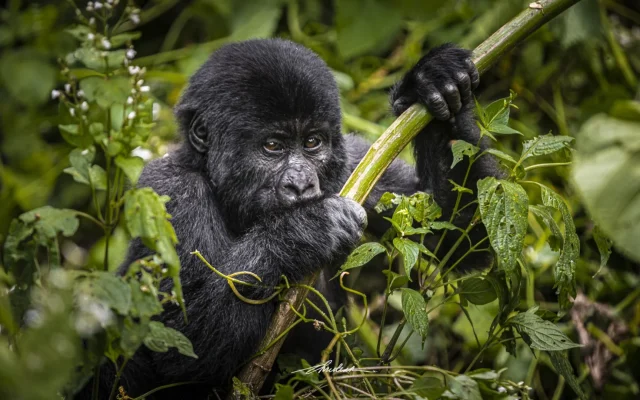
- Shared volcanic landscape with mountain gorillas
- Albertine Rift endemic biodiversity
Learn more in our golden monkey habitat guide.
Social Structure
Golden monkeys live in large troops that can exceed a hundred individuals, led by a dominant alpha male.
Typical Troop Composition
- One alpha male
- Multiple adult females
- Juveniles and infants
- Subordinate males
Troops forage in spread-out subgroups while maintaining vocal contact — creating the animated tracking scenes visitors remember.
Communication and Behaviour
Golden monkeys communicate through chirps, trills, and alarm calls, reinforced by grooming, play, and body posture. Juveniles wrestle and chase in the canopy; adults strip bamboo shoots with practised efficiency.
Explore full detail on our behaviour page.
Diet
Golden monkeys are primarily herbivorous, with bamboo shoots and leaves forming the dietary backbone in the Virunga population.
Common Foods
- Bamboo shoots
- Bamboo leaves
- Seasonal fruits
- Flowers and lichens
- Herbaceous sprouts
- Occasional small invertebrates
See our golden monkey diet guide for seasonal feeding patterns.
Conservation Status
Golden monkeys are classified as Endangered. Habitat loss, fragmentation, and human pressure across the Albertine Rift have reduced their range dramatically. Global estimates suggest roughly 2,000 to 4,000 individuals remain.
Regional conservation action plans coordinate protection across Uganda, Rwanda, and the DRC. Read more on our conservation page.
Golden Monkey Tracking in Uganda
Golden monkey tracking at Mgahinga is the only way to see this species in Uganda. Visitors trek through bamboo forest with rangers to habituated troops, then observe regulated behaviour for up to one hour.
Tracking is generally shorter and less strenuous than gorilla trekking — making it an ideal second primate morning on a Virunga itinerary.
What Makes Golden Monkey Tracking Special?
- Endangered Albertine Rift endemic
- Vivid colour and active canopy movement
- Lower permit cost than gorillas
- Same park as Mgahinga gorilla trekking
- Experiential tourism with researchers available
- Strong photography appeal in bamboo forest
Combining With Gorilla Trekking
Mgahinga is one of Africa’s few parks where gorilla trekking and golden monkey tracking coexist. Many travellers trek gorillas at Mgahinga or nearby Bwindi, then add golden monkeys as a lighter follow-on trek. Plan permits via our gorilla permit guide.
Best Time to See Golden Monkeys
Golden monkeys can be tracked year-round. Dry seasons — June to September and December to February — generally offer firmer trails and better photography conditions.
See our best time to see golden monkeys guide for monthly planning.
Safari Experiences
- 3–5 Day Mgahinga Primate Safari
- Gorilla and Golden Monkey Combination
- Luxury Virunga Primate Safari
- Budget Golden Monkey Add-On
- Fly-in Bwindi and Mgahinga Safari
Quick Facts
- Endangered Albertine Rift endemic
- Uganda population only at Mgahinga
- Bamboo forest specialist
- Troops of up to 100 or more
- Tracking available year-round
- Pairs naturally with gorilla trekking
- Global population roughly 2,000–4,000