Golden monkey conservation is a race against habitat loss in one of Africa’s most densely populated rural landscapes. With only two surviving wild populations and an Endangered IUCN listing, every protected hectare of bamboo forest in the Albertine Rift matters — especially at Mgahinga Gorilla National Park, Uganda’s only refuge for the subspecies.
Conservation Status
Cercopithecus mitis kandti is classified as Endangered because of its small range, fragmented habitat, and declining historical distribution. Global population estimates of roughly 2,000 to 4,000 individuals reflect intensive survey work across the Virunga Massif and Gishwati, but numbers remain precarious relative to habitat pressure.
Historical Range Contraction
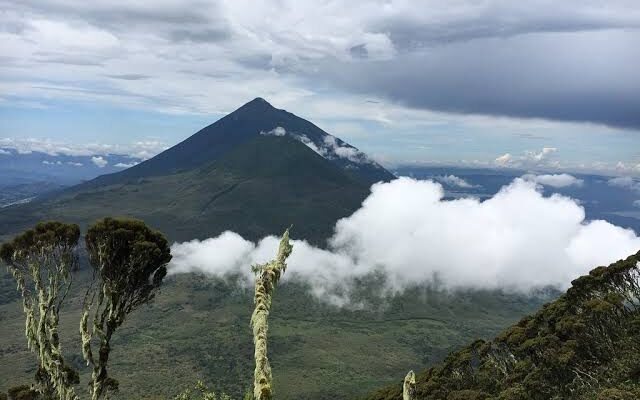
Since the 1950s, golden monkey habitat has shrunk dramatically. Rwanda’s Gishwati forest lost roughly ninety-eight percent of its original cover before restoration efforts began. Within the Virunga Massif, bamboo zones and montane forest have been cleared, degraded, or isolated by agriculture on steep volcanic slopes. The monkey’s modern distribution is a fraction of its historical Albertine Rift range.
Regional Conservation Action Plan
In 2023, conservationists, park authorities, researchers, and community representatives from Uganda, Rwanda, and the DRC published a Regional Golden Monkey Conservation Action Plan (2023–2028) through the IUCN Species Survival Commission. The plan coordinates monitoring, habitat protection, threat mitigation, and tourism standards across all three countries where Virunga populations persist.
Key Threats
- Habitat loss and fragmentation from farming and settlement on forest margins
- Bamboo harvesting for construction and local use
- Snares intended for other wildlife that injure primates
- Human disturbance along park boundaries
- Disease risk from proximity to people and livestock
- Political instability affecting patrol capacity in parts of the DRC
Mgahinga — Uganda’s Front Line
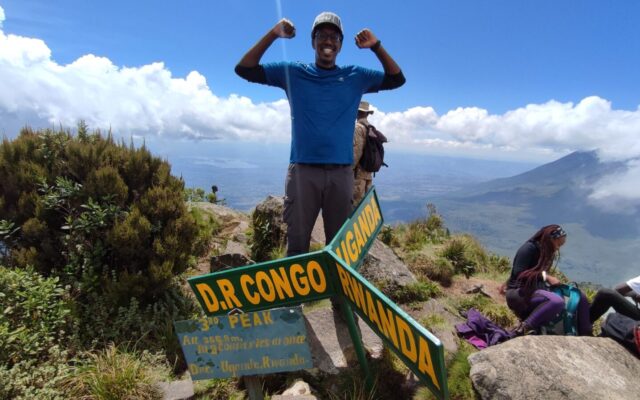
Mgahinga Gorilla National Park protects Uganda’s entire golden monkey population within the broader Virunga ecosystem. Uganda Wildlife Authority manages patrols, tourism regulation, and community revenue-sharing programmes that give neighbouring households a stake in forest protection. Because the park is small, effective buffer-zone management is critical.
Tourism as a Conservation Tool
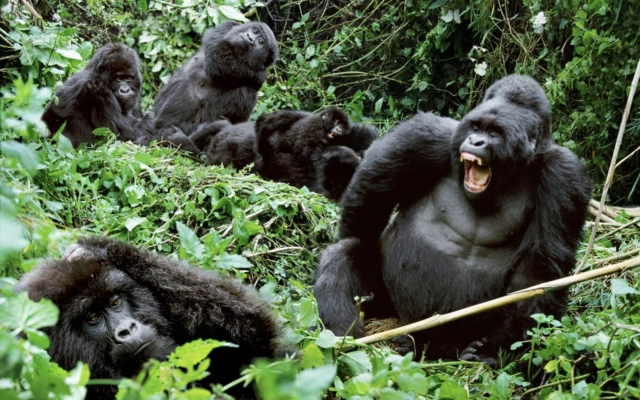
Regulated golden monkey tracking generates permit revenue for ranger salaries, habitat maintenance, and community projects. When combined with gorilla trekking, tourism creates a diversified income stream that values living forest over short-term resource extraction. Experiential tourism with semi-habituated troops additionally funds research time in the field.
Habituation and Welfare
Habituation must be gradual and ranger-led to avoid stressing troops or increasing disease transmission. Uganda follows protocols that limit group size, contact duration, and visitor behaviour. Ethical habituation balances tourism access with troop health — a model refined alongside decades of mountain gorilla conservation learning.
Research and Monitoring
Scientists track troop size, ranging patterns, diet shifts, and responses to bamboo flowering events. Long-term data from the Virunga Massif inform park zoning and identify corridors where habitat restoration could reconnect isolated groups. Research at Gishwati monitors a separate population with different forest ecology.
Community Engagement
High human population density around the Virunga volcanoes means conservation only succeeds when local communities benefit. Revenue sharing, employment as porters and guides, and conservation education programmes reduce illegal entry and resource harvesting. Mgahinga’s Batwa cultural trail complements primate tourism by presenting indigenous forest heritage in a regulated format.
Cross-Border Cooperation
Golden monkeys do not recognise national borders. Troops may range across Uganda, Rwanda, and the DRC within the massif. Joint patrol planning, data sharing, and aligned tourism standards — advanced through the regional action plan — treat the Virunga population as one ecological unit.
Gishwati Restoration
Rwanda’s Gishwati remnant demonstrates both the cost of deforestation and the potential for recovery. Reforestation, anti-poaching, and stricter protection have stabilised a tiny population that once faced extinction. The Gishwati story reinforces why preventing further loss in Mgahinga and Volcanoes is cheaper than restoring forest after collapse.
Climate and Bamboo Cycles
Bamboo periodic flowering and die-back can temporarily reduce food for Virunga golden monkeys. Climate variability may alter these cycles. Adaptive management — maintaining diverse montane vegetation and protecting fruiting forest at lower elevations — builds resilience into the system.
How Travellers Can Help
Choose licensed operators, follow ranger instructions, avoid single-use plastic in the park, and book combined itineraries that spread tourism value across Mgahinga, Bwindi, and community lodges. Explore responsible options on our golden monkey safaris page and learn when conditions best support low-impact visits via best time to see golden monkeys.
Outlook
Golden monkeys will not recover without sustained habitat protection, regional cooperation, and tourism that funds parks rather than displacing them. The regional action plan offers a roadmap; visitor permits and international attention supply fuel. For Uganda, protecting Mgahinga’s bamboo slopes is synonymous with protecting the golden monkey itself.
What Success Looks Like
Conservation success means stable or growing troop counts in the Virunga Massif, intact bamboo corridors between countries, reduced snaring, and communities earning tangible benefits from primate tourism. Every regulated trek at Mgahinga contributes to that picture — particularly when visitors combine golden monkeys with gorilla trekking and choose operators committed to park rules and local employment.