Understanding sitatunga habitat explains their behaviour, diet, movement patterns, conservation needs, and why wetland walks are such a distinctive Uganda wildlife experience. For swamp ecology context, pair this guide with sitatunga behaviour and where to see sitatunga in Uganda.
Where Do Sitatunga Live?
Wild sitatunga occupy permanent freshwater swamps, marshes, and floodplains across sub-Saharan Africa. They avoid open savannah, desert, and montane forest without wetland components. Their distribution is fragmented — a mosaic of swamp patches rather than continuous range.
- Central and West African rainforest margins
- Southern savanna wetland systems
- Lake Victoria and Kyoga papyrus corridors
- Congo Basin and Zambezi floodplain fringes
Sitatunga Geographic Range
Sitatunga occur naturally from Gambia and Senegal east to Ethiopia, and south through the Congo Basin to Angola, Zambia, and northern Botswana. Uganda sits within the central African swamp belt where papyrus systems remain relatively extensive along forest edges and lake shores.
Bigodi Wetland Sanctuary Habitat
Bigodi Wetland Sanctuary protects roughly eight kilometres of Magombe Swamp papyrus at the eastern edge of Kibale National Park. This community-managed corridor links forest primates with open swamp specialists — including sitatunga, otters, and prolific waterbirds.
Key habitat characteristics include:
- Dense monospecific papyrus stands
- Boardwalk-accessible channels and pools
- Forest fringe browse at swamp margins
- Wildlife corridor function for Kibale mammals
- Community-regulated edge farming buffer
KAFRED guides know sitatunga feeding sections along the trail where channel edges meet thicker cover — the micro-habitats that make Bigodi Uganda's signature sitatunga walk.
Mabamba Bay Wetland Habitat
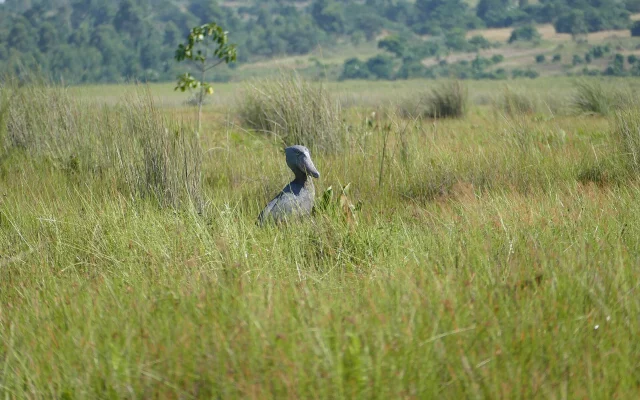
Mabamba Bay on Lake Victoria's northwestern shore is famous for shoebill stork, but its papyrus channels also support sitatunga. Dawn canoe access through tall reeds mirrors the sitatunga's preferred structural environment — though sightings are less predictable than primate boardwalks at Bigodi.
Katonga Wildlife Reserve Habitat
Katonga Wildlife Reserve protects wetland–savannah mosaic along the Katonga River system in central-western Uganda. Papyrus channels and seasonal floodplain here support sitatunga searched by canoe and guided swamp walks — a quieter alternative for travelers routing between Kampala and Lake Mburo.
Murchison Falls Papyrus Margins
The Nile–Lake Albert delta and other papyrus fringes in Murchison Falls National Park hold sitatunga records, especially where swamp adjoins river channels. Delta boat cruises may scan edges where sitatunga feed — usually as a bonus on broader safari itineraries.
Habitat Types
Papyrus Swamp
Stands of Cyperus papyrus dominate many prime sitatunga sites. Tall stems provide cover, food, and floating mat structure. Uganda's western and Lake Victoria wetlands are archetypal.
Reed and Sedge Marsh
Phragmites reeds, sedges, and antelope grass (Echinochloa pyramidalis) support sitatunga where papyrus is absent or mixed. These marshes occur in seasonal floodplains and river backwaters.
Swamp Forest Clearings
Marshy openings within riverine forest and mangrove fringes (in coastal West Africa) extend sitatunga range into thicker cover with browse opportunities at margins.
Floodplain Fringe
Where permanent swamp meets seasonal grassland, sitatunga use depth gradients — retreating to core swamp when water rises and exploiting edges when it falls.
Water and Vegetation Structure
Sitatunga prefer habitat with both standing water and emergent vegetation tall enough to conceal a large antelope. Pure open water without cover is avoided; so is dry land far from swamp refuge. The sweet spot is knee- to chest-deep marsh with floating mats and channel networks.
Climate Conditions
Sitatunga swamp habitat experiences:
- High rainfall in equatorial and tropical zones
- Seasonal water-level fluctuation
- Humid, stable microclimates within papyrus
- Cool dawn and dusk feeding windows
- Midday heat driving rest on platforms
Altitude and Distribution in Uganda
Uganda sitatunga occur mainly at low to moderate elevations — Lake Victoria basin margins, Katonga valley, and Albertine rift swamp corridors roughly 1,000 to 1,500 metres. They are absent from high montane bogs and arid northeastern savannah.
Ecological Role in Wetlands
As mixed feeders, sitatunga influence plant structure through grazing and browsing. Their pathways aerate mat edges and create micro-channels. They serve as prey for leopard and as flagship species for wetland tourism that funds community protection — especially at Bigodi.
Habitat Threats
Sitatunga habitat faces pressures common to African wetlands:
- Drainage for agriculture and settlement
- Papyrus harvesting beyond sustainable limits
- Pollution and sedimentation from upland erosion
- Climate-driven shifts in rainfall and water level
- Fragmentation isolating swamp patches
Learn more on our sitatunga conservation page.
Why Habitat Protection Matters
Papyrus swamps store carbon, filter freshwater, regulate floods, and support fish nurseries alongside megafauna. Protecting sitatunga habitat protects entire watershed services — not one species in isolation. Uganda's National Wetlands Conservation Policy and community by-laws at Bigodi reflect this broader ecological logic.
Comparing Uganda Sitatunga Habitats
- Bigodi — boardwalk papyrus at Kibale edge; best visitor infrastructure
- Mabamba — Lake Victoria canoe channels; shoebill plus sitatunga bonus
- Katonga — river swamp mosaic; canoe search in central Uganda
- Murchison delta — Nile papyrus; seasonal bonus on boat cruises
Planning a Habitat-Focused Visit
Travelers serious about sitatunga ecology should allow dawn timing, waterproof footwear, and at least one dedicated wetland walk — not a rushed add-on after chimp trekking. Two to three hours at Bigodi with a quiet group dramatically improves encounter quality. Combine with best time to see sitatunga guidance for seasonal water levels.