
Sitatunga FAQs and Answers — quick answers on biology, swamp habitat, Bigodi Wetland Sanctuary, viewing tips, and safari planning. Explore where to see sitatunga, behaviour, best time to visit, and safari experiences for deeper guides.
- What is a sitatunga?
A sitatunga (Tragelaphus spekii) is a semi-aquatic spiral-horned antelope specialised for life in African papyrus swamps and permanent wetlands. Males carry shaggy coats and spiral horns; females are smaller and hornless. Sitatunga are known for splayed hooves, strong swimming, and shy crepuscular behaviour. Uganda's signature site is Bigodi Wetland Sanctuary near Kibale National Park.
- Where do sitatunga live in Uganda?
Sitatunga inhabit papyrus swamps and marsh corridors across Uganda, including Bigodi Wetland Sanctuary, Mabamba Bay, Katonga Wildlife Reserve, and papyrus margins in Murchison Falls National Park. See our where to see sitatunga guide for site comparisons.
- Are sitatunga endangered?
Sitatunga are classified Least Concern globally on the IUCN Red List, but many populations are declining locally due to wetland drainage, snaring, and bushmeat hunting. Uganda's community sanctuaries such as Bigodi help maintain visible populations. Learn more on our sitatunga conservation page.
- What do sitatunga eat?
Sitatunga are mixed feeders. They graze young papyrus shoots, reeds, sedges, and swamp grasses, and browse shrubs and forbs at forest margins — especially when they leave water at night. See our sitatunga diet guide for seasonal feeding detail.
- How big is a sitatunga?
Males stand roughly 75 to 100 centimetres at the shoulder and may weigh 80 to 120 kilograms. Females are smaller, typically 70 to 90 centimetres at the shoulder and 50 to 70 kilograms. Males develop spiral horns up to about 90 centimetres along the curve.
- Why do sitatunga have splayed hooves?
Sitatunga hooves are elongated and widely splayed — like snowshoes on soft mud and floating vegetation. This adaptation lets them walk and feed in swamp substrate that would trap ordinary antelope hooves.
- Can sitatunga swim?
Yes. Sitatunga are strong swimmers. When alarmed they may submerge until only nostrils and eyes remain above the surface — a key antipredator behaviour described on our sitatunga behaviour page.
- How long do sitatunga live?
Sitatunga may live 15 to 20 years in protected wetland habitat. Snaring, predation, and habitat loss shorten average lifespan in disturbed areas.
- Are sitatunga dangerous to humans?
Sitatunga are shy herbivores and avoid humans. They are not aggressive, but like all wild animals they may panic if cornered. Follow boardwalk rules and guide instructions at Bigodi and other sites.
- What is the best place to see sitatunga in Uganda?
Bigodi Wetland Sanctuary near Kibale Forest is Uganda's best-known sitatunga destination — a KAFRED community boardwalk through Magombe Swamp papyrus. Mabamba Bay and Katonga Wildlife Reserve offer additional chances.
- When is the best time to see sitatunga?
Dawn and dusk are peak activity times. Sitatunga are resident year-round, but early-morning Bigodi walks outperform midday visits. Dry seasons (June–September and December–February) generally improve trail comfort. See best time to see sitatunga.
- Is sitatunga viewing guaranteed at Bigodi?
No. Sitatunga are shy and crepuscular — sightings are possible but never guaranteed. Experienced KAFRED guides know regular feeding sections and many groups see one on a well-timed walk, but partial views or no view are normal outcomes.
- Can I see sitatunga on a game drive?
Rarely. Sitatunga live in deep papyrus swamps reached on guided boardwalks and canoe trips, not on open savannah game loops. Bigodi, Mabamba, and Katonga are the practical approaches.
- Can sitatunga safaris combine with chimpanzee trekking?
Yes — this is the classic western Uganda pairing. Morning chimpanzee trekking at Kibale and a Bigodi wetland walk on the same or following day is among the most popular formats. Dawn Bigodi on a second morning optimises sitatunga odds.
- How much does a Bigodi walk cost?
Bigodi Wetland Sanctuary fees are modest compared with gorilla or chimp permits — typically in the tens of US dollars per person, paid to KAFRED community guides. Exact fees change; confirm with your operator when booking a sitatunga safari.
- What should I wear for a sitatunga walk?
Wear mud-tolerant closed shoes, long trousers, insect repellent, and a rain jacket. Neutral colours help. Bring binoculars and a dry bag for electronics on canoe trips at Mabamba.
- Do only male sitatunga have horns?
Yes. Only males carry spiral horns. Females are smaller, reddish-brown, and hornless — but share the same splayed swamp-adapted feet.
- What predators hunt sitatunga?
Leopard are the main predators where swamp meets forest. Lions and wild dogs take sitatunga where swamp adjoins savannah in other African countries. Deep water and cover provide primary defence.
- Why is Bigodi important for sitatunga conservation?
KAFRED community management protects Magombe Swamp through boardwalk tourism, guide employment, village bylaws, and school funding — keeping papyrus habitat intact for sitatunga and other wetland wildlife. Read more on conservation.
- Can I photograph sitatunga?
Yes, with patience and a telephoto lens. Sitatunga often offer only brief, partial views at channel edges. Avoid flash, stay on the boardwalk, and never pursue animals off-trail for closer shots.
Safari packages to see Sitatunga
Bookable itineraries below include parks and activities where you are most likely to encounter Sitatunga in the wild.
16 Days Uganda Adventure Safari
You visit
Entebbe (Start, End)
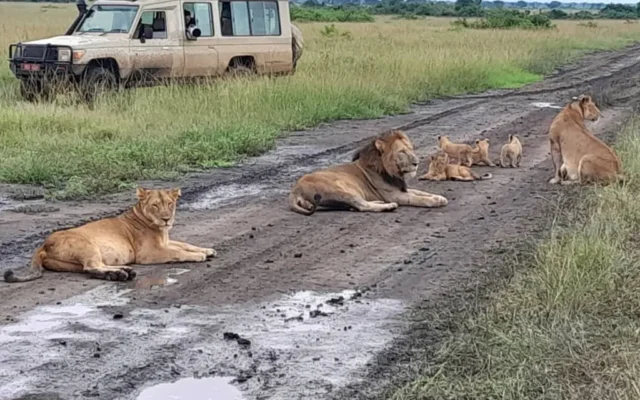
The 16-day Uganda adventure safari layers adrenaline on top of classic wildlife: Nile rafting at Jinja, Sipi Falls abseiling, Rwenzori day hikes, savannah game drives, chimp and gorilla trekking, and…
 Best
Seller
Best
Seller
5 Day Gorilla & Chimp Safari
You visit
Kibale Forest, Bwindi Forest, Entebbe
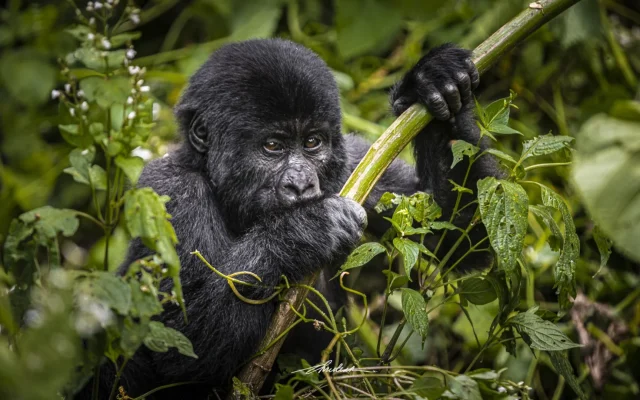
Combine Bwindi gorilla trekking with Kibale chimpanzee tracking.
 Best
Seller
Best
Seller
6 Days Uganda Gorillas, Chimpanzees & Wildlife Safari
You visit
Kibale Forest, Queen Elizabeth NP, Bwindi Forest, Entebbe
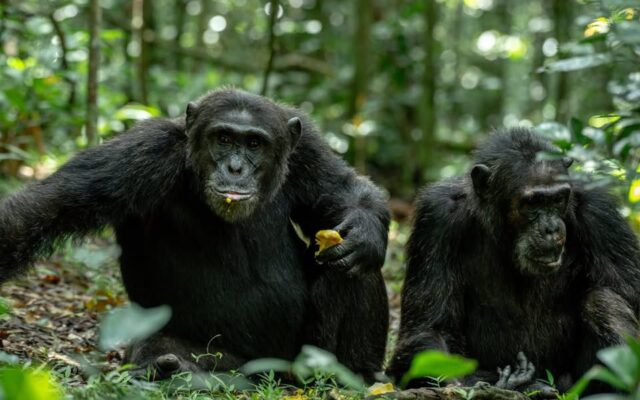
Primates plus plains in six days: Kibale chimps, Queen Elizabeth savannah, Bwindi gorillas and a Lake Mburo finale for zebra — the full Uganda highlight reel without rushing Kidepo or Murchison.
1 Day Shoebill Safari — Mabamba Swamp
You visit
Entebbe (Start, End)
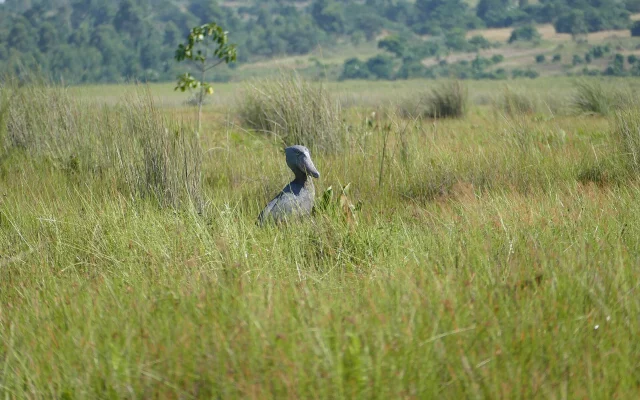
Mabamba Bay on Lake Victoria is one of the most reliable places in Africa to see the shoebill stork — a towering, prehistoric-looking bird that hunts lungfish in papyrus channels. The wetland is a Ram…