The sitatunga is one of Africa's most remarkable antelopes and among the most specialised large mammals travelers can encounter on a Uganda safari. Shy yet superbly adapted, semi-aquatic yet surprisingly graceful in deep swamp, sitatunga represent a completely different wildlife experience from savannah game drives. Found across central African wetlands from Gambia to Botswana, these spiral-horned antelopes survive almost exclusively where papyrus, reeds, and permanent marsh keep the ground soft and the cover dense — and Uganda's western swamp corridors rank among the best places on the continent to search for them.
Encountering a sitatunga in the wild is unlike spotting kob on open plains. Instead of scanning from a 4x4, sitatunga viewing usually means walking a community boardwalk through papyrus at dawn, or poling quietly through channels where a dark shape may slip between reed stems without a sound. The animal may pause at the swamp edge, splayed hooves gripping mud, before melting back into cover. The result is a patient, intimate wetland experience that rewards preparation — and stays with you long after the boardwalk ends.
What Is a Sitatunga?
The sitatunga (Tragelaphus spekii) is a medium-sized spiral-horned antelope and the most aquatic member of the tragelaphine group that includes bushbuck and nyala. Named for its swamp lifestyle rather than savannah speed, the sitatunga is built for floating vegetation, submerged pathways, and the cool hours when papyrus channels come alive with birds and primates.
- Kingdom: Animalia
- Phylum: Chordata
- Class: Mammalia
- Order: Artiodactyla
- Family: Bovidae
- Subfamily: Bovinae
- Genus: Tragelaphus
- Species: Tragelaphus spekii
Physical Characteristics
Sitatunga show strong sexual dimorphism. Adult males are shaggy, dark brown, and carry white vertical body stripes with impressive spiral horns. Females are smaller, reddish-brown, and hornless — but share the same swamp-adapted feet and quiet temperament.
Size and Weight
Males stand roughly 75 to 100 centimetres at the shoulder and may weigh 80 to 120 kilograms. Females are noticeably smaller, typically 70 to 90 centimetres at the shoulder and 50 to 70 kilograms. Both sexes appear larger in thick coat and swamp context than their weight alone suggests.
The Splayed Hoof
The sitatunga's most famous adaptation is its elongated, widely splayed hooves — functionally like snowshoes on soft mud. These distribute weight across floating vegetation and swamp edges where ordinary antelope would sink and stall. On firm ground, sitatunga look awkward; in water, they are transformed.
Horns and Coat
Male horns spiral one to one-and-a-half turns, reaching up to 90 centimetres along the curve in exceptional individuals. The shaggy male coat and pale body stripes help break up outline in reed beds. Females rely on reddish camouflage and smaller size to vanish into papyrus shadows.
Where Sitatunga Live
Sitatunga inhabit permanent swamps and marsh systems across sub-Saharan Africa. Their range is tied strictly to suitable wetland — they do not survive in open savannah or arid bush.
Uganda — A Swamp Wildlife Stronghold
Uganda supports sitatunga in papyrus corridors linked to Lake Victoria, the Katonga River system, and forest-edge swamps of the Albertine Rift. Key visitor sites include Bigodi Wetland Sanctuary near Kibale Forest, Mabamba Bay on Lake Victoria, Katonga Wildlife Reserve, and papyrus margins in Murchison Falls National Park.
Broader African Range
Beyond Uganda, sitatunga occur from Gambia and Senegal through the Congo Basin to Angola, Zambia, and northern Botswana — always in association with extensive freshwater swamp, reed bed, or flooded forest habitat.
Habitat and Ecosystem
Sitatunga depend on tall, dense wetland vegetation — especially monospecific papyrus stands, Phragmites reeds, sedges, and swamp grasses bordering lakes and slow rivers. These ecosystems are among Africa's most productive and carbon-rich, supporting hundreds of bird species, primates, otters, and fish alongside the sitatunga.
The ecosystem provides:
- Floating and emergent food plants
- Cover from predators and human disturbance
- Water refuge for swimming escape
- Wildlife corridors between forest and open water
- Community livelihoods through regulated ecotourism
Social Structure
Sitatunga are semi-social and non-territorial. Females and young may associate in small groups, while adult males tend to be solitary and avoid one another outside brief mating periods. Swamp productivity allows relatively high local densities where habitat remains intact.
Typical Group Composition
- Adult females and calves in loose groups
- Subadult males sometimes with females
- Adult males largely solitary
- No lek or savannah territory system
Communication and Senses
Sitatunga rely on cryptic behaviour more than dramatic display. They move along established swamp pathways with numerous side branches to feeding grounds and forest edges. When alarmed, they may bark softly or crash through reeds — but their first defence is silence and submergence.
Diet
Sitatunga are selective mixed feeders. They graze young papyrus and reed shoots, sedges, and grasses within the swamp, and browse shrubs, forbs, and forest-edge plants when they leave water at night.
Common Foods
- Young papyrus shoots
- Reeds and sedges
- Swamp grasses
- Leaves and buds of swamp shrubs
- Occasional crops near wetland margins
Behaviour
Swimming and Hiding
Sitatunga are strong swimmers. When seriously threatened, they submerge until only nostrils and eyes remain above the surface — a behaviour that astonishes first-time observers.
Vegetation Platforms
During hot hours, sitatunga rest on trampled platforms of dried vegetation they create by circling repeatedly on floating mats — swamp beds that keep them above water while concealed in reeds.
Activity Pattern
Sitatunga are primarily crepuscular — most active at dawn and dusk — though they may feed at any hour where human disturbance is low.
Reproduction and Life History
Females typically produce a single calf after roughly seven to eight months of gestation. Calves are hidden in dense swamp cover, and maternal care is prolonged compared with open-plain antelopes. Slow reproduction makes populations vulnerable to sustained hunting pressure.
Lifespan
Sitatunga may live 15 to 20 years in the wild where habitat and protection allow. Predation, snaring, and wetland loss shorten lives in disturbed areas.
Threats to Survival
Despite a global Least Concern listing, sitatunga face serious local declines.
- Wetland drainage and agricultural encroachment
- Snare trapping along regular swamp pathways
- Bushmeat hunting in unprotected marshes
- Habitat fragmentation isolating populations
- Disturbance from unregulated access
Conservation and Community Tourism
Uganda's community-led model at Bigodi Wetland Sanctuary — managed by KAFRED (Kibale Association for Rural and Environmental Development) — shows how boardwalk tourism, guide employment, and village by-laws can protect sitatunga habitat while funding schools and conservation patrols. Similar community logic supports Mabamba's wetland guides.
Population Status
Global sitatunga numbers remain difficult to census in dense swamp, but the species is considered widespread yet declining in many regions. Uganda's protected corridors and community sanctuaries maintain important populations visible to responsible tourism.
Why Sitatunga Matter
Sitatunga matter ecologically as wetland indicator species, economically as attractions on Bigodi and birding circuits, and culturally as symbols of intact papyrus systems. Their presence signals a functioning swamp — one that stores carbon, filters water, and supports extraordinary biodiversity.
Sitatunga Viewing in Uganda
Sitatunga viewing is the premier way to appreciate swamp ecology on foot. Visitors walk guided boardwalks and swamp trails with trained community guides, scanning papyrus edges and channels where sitatunga feed at dawn and dusk.
What Makes Sitatunga Viewing Unique?
- Immersive wetland walking experience
- Specialist antelope unlike any savannah species
- Combines with Kibale chimp trekking and birding
- Community conservation through permit fees
- Patient wildlife reward for attentive observers
Best Sites in Uganda
Bigodi Wetland Sanctuary
The classic sitatunga destination — a KAFRED-managed boardwalk through Magombe Swamp at the edge of Kibale Forest.
Mabamba Bay
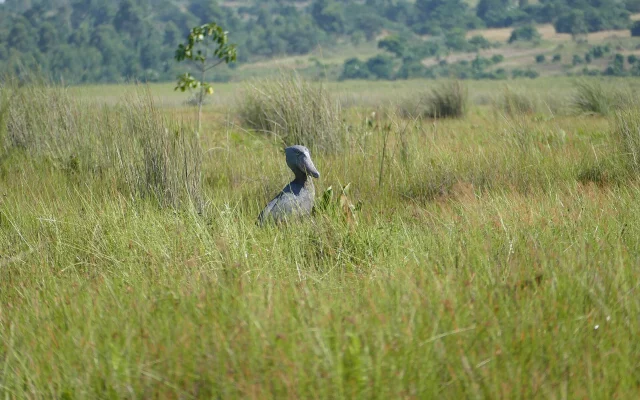
Best known for shoebill, but sitatunga occasionally slip through dawn canoe channels.
Katonga Wildlife Reserve
Central Uganda swamp reserve where canoe-assisted sitatunga searching rewards patient visitors.
Best Time to See Sitatunga
Sitatunga can be searched year-round, but dawn walks and drier trail months generally improve comfort and sighting odds.
- June to September
- December to February
- First and last light daily
Safari Experiences
- Bigodi Wetland Walk Safari
- Kibale Chimp and Sitatunga Safari
- Mabamba and Bigodi Wetland Safari
- Western Uganda Primate and Swamp Safari
- Uganda Birding and Sitatunga Safari
Quick Facts
| Scientific name | Tragelaphus spekii |
|---|---|
| IUCN | Least Concern globally, declining locally |