Rothschild’s giraffe habitat — expert Uganda safari guide from local planners who know permits, parks, and realistic routing.
Explore this species across our facts guide, where to see page, and safari planning resources — centred on Murchison Falls and Kidepo Valley.
Rothschild's giraffes are savannah specialists — browsers shaped by open woodland, seasonal rainfall, and the availability of tall acacia and riverine trees. Understanding their habitat explains why Uganda's northern parks deliver such reliable game-drive sightings, and why conservation of these landscapes is inseparable from giraffe survival.
This guide explores the ecosystems Rothschild's giraffes depend on, how habitat shapes daily movement, and what travellers should expect across Murchison Falls and Kidepo Valley.
What Habitat Do Rothschild's Giraffes Prefer?
Rothschild's giraffes thrive in:
- Open woodland savannah
- Acacia-dominated plains
- Riverine corridors and escarpment edges
- Mixed grassland with scattered tall trees
- Areas with accessible browse between 2 and 5 metres height
They are not forest giraffes. They need visibility, space to move, and a reliable supply of woody browse — exactly the conditions found on the northern bank of Murchison Falls and in Kidepo's Narus Valley.
Murchison Falls: Uganda's Premier Giraffe Landscape
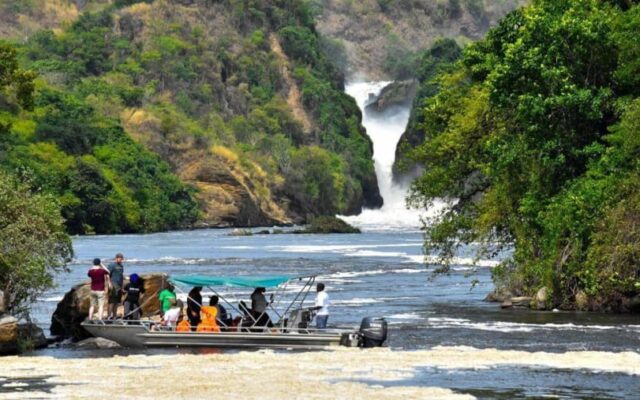
Murchison Falls National Park spans the Victoria Nile as it forces through the Rift Valley escarpment. The northern bank — accessed by ferry from Paraa — holds the park's richest savannah and the bulk of its Rothschild's giraffe population.
Northern Bank Savannah
Open plains dotted with acacia, borassus palm, and riverine forest strips create ideal browsing conditions. Giraffes move between woodland edges and open grassland, often visible from kilometres away — a major advantage for game drives and photography.
Buligi Circuit
The Buligi peninsula between the Albert and Victoria Nile channels is the park's most celebrated game-drive loop. Rothschild's giraffes feed here daily alongside elephant, buffalo, Uganda kob, Jackson's hartebeest, and oribi. Dawn drives on Buligi are a cornerstone of any Murchison itinerary.
Riverine Escarpment
Taller trees along the Nile escarpment provide dry-season browse when grassland forage declines. Giraffes use these corridors predictably, and guides often position vehicles along escarpment tracks for backlit morning portraits.
Kidepo Valley: Remote Giraffe Habitat
Kidepo Valley National Park occupies Uganda's far northeast — a semi-arid landscape of golden plains, granite kopjes, and the permanent Narus River. Rothschild's giraffes here inhabit a visually dramatic setting quite different from Murchison's riverine savannah.
Narus Valley
The Narus is Kidepo's lifeline — a permanent water source that concentrates wildlife through the dry season. Giraffes browse along valley edges and cross open plains between acacia stands, often with zebra, buffalo, and elephant in the same frame.
Kopje and Plains Mosaic
Scattered rocky outcrops and open grassland create layered backgrounds prized by landscape photographers. Giraffes against Kidepo's vast skies and distant mountains deliver images impossible to replicate in busier parks.
Vegetation and Browse Species
Rothschild's giraffes depend on specific tree and shrub species:
- Acacia species — primary browse staple
- Combretum and Terminalia — seasonal supplements
- Borassus palm — occasional browse in Murchison
- Riverine figs and broadleaf trees — dry-season reserves
Guides who know which trees are in leaf during your travel month can predict giraffe locations with impressive accuracy.
Seasonal Habitat Use
Habitat use shifts with rainfall:
Dry Season (December–February, June–September)
Shorter grass improves visibility. Giraffes concentrate near the Nile in Murchison and along the Narus in Kidepo. Water-dependent browse species draw animals to river corridors — simplifying game-drive planning.
Wet Season (March–May, October–November)
Lush grass and dispersed browse spread giraffes across wider areas. Sightings remain common but may require more driving. The trade-off is emerald scenery, dramatic skies, and fewer vehicles — excellent for photographers who want atmosphere over convenience.
Altitude and Climate
Murchison's northern bank sits at roughly 600–900 metres above sea level; Kidepo ranges from 900 to 2,750 metres on its margins. Both climates are warm to hot, with giraffes most active in early morning and late afternoon when temperatures are moderate. Midday heat pushes giraffes into scattered shade — a natural rhythm that shapes drive scheduling.
Ecological Role in the Savanna
As mega-browsers, Rothschild's giraffes:
- Prune tree canopies, shaping woodland structure
- Disperse seeds through dung across wide ranges
- Create browse opportunities for smaller herbivores below
- Serve as sentinel species — their height aids predator detection
Healthy giraffe populations indicate functioning savannah ecosystems with adequate tree cover and connectivity.
Habitat Threats
Despite recovery within protected areas, habitat pressures persist:
- Settlement and agriculture outside park boundaries
- Charcoal production and wood harvesting
- Invasive plant species altering browse composition
- Climate variability affecting tree phenology
Uganda Wildlife Authority and partners including the Giraffe Conservation Foundation monitor habitat condition and giraffe distribution through aerial surveys and individual photographic identification.
Habitat and Safari Planning
For the highest-probability giraffe encounters, plan:
- Minimum two nights in Murchison for dawn and afternoon drives on the northern bank
- At least one full day on the Buligi circuit or Delta tracks
- Three to four nights in Kidepo for Narus Valley morning and afternoon loops
- Dry-season travel if giraffe photography is your primary goal
Combine habitat knowledge with skilled guiding — the combination that turns a good safari into an exceptional one. See our where to see guide for park-by-park comparisons.