Rothschild’s giraffe — Uganda safari guide for travelers planning wildlife encounters.
The Rothschild's giraffe is one of Africa's most graceful savannah giants and among the most photogenic mammals you can encounter on a Uganda game drive. Towering above acacia woodland, moving in loose groups across open plains, and distinguished by pale coat patches and cream-coloured "stockings" below the knee, this endangered subspecies represents both a conservation success story and a quintessential safari sight.
Unlike the immersive forest treks required for gorillas or chimpanzees, Rothschild's giraffe encounters happen from the comfort of a 4x4 on classic savannah tracks — with Murchison Falls National Park offering some of the most reliable and rewarding sightings on the continent. For photographers, the combination of height, clean backgrounds, and soft northern light makes giraffes a favourite subject from the first morning drive.
What Is a Rothschild's Giraffe?
The Rothschild's giraffe (Giraffa camelopardalis rothschildi) is a subspecies of the northern giraffe, historically named for zoologist Lord Walter Rothschild. Genetic research now recognises it as part of the broader Nubian giraffe complex, but the name Rothschild's remains widely used in Uganda — especially for the pale, white-stockinged populations of Murchison Falls and Kidepo Valley.
- Kingdom: Animalia
- Phylum: Chordata
- Class: Mammalia
- Order: Artiodactyla
- Family: Giraffidae
- Genus: Giraffa
- Species: Giraffa camelopardalis
- Subspecies: Giraffa camelopardalis rothschildi
Physical Characteristics
Rothschild's giraffes are immediately recognisable in the field — a skill worth developing before your first game drive.
Coat Pattern
Large, rectangular orange-brown patches sit on a cream or off-white background. The edges are less jagged than Masai giraffe patches and less geometric than reticulated giraffe lines. The defining field mark is the absence of markings on the lower legs, creating the famous "white stocking" appearance.
Height and Build
Adult males may exceed 5.5 metres in height; females are somewhat smaller. Long legs, a towering neck, and a heavy but elegant frame make giraffes the tallest land mammals on Earth. Despite the neck's length, giraffes have the same seven cervical vertebrae as all mammals — each enormously elongated.
Tongue and Teeth
A dark, prehensile tongue up to 50 centimetres long helps giraffes strip leaves from thorny acacia branches. Thick saliva and tough mouth tissues protect against thorns that would deter most browsers.
Where Rothschild's Giraffes Live in Uganda
Uganda holds one of the most important remaining populations of this subspecies anywhere in Africa.
Murchison Falls National Park
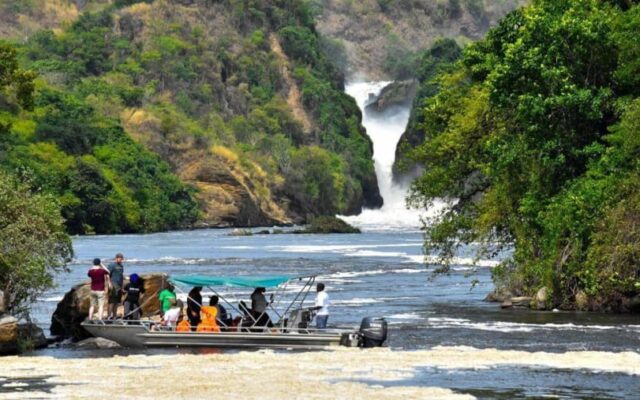
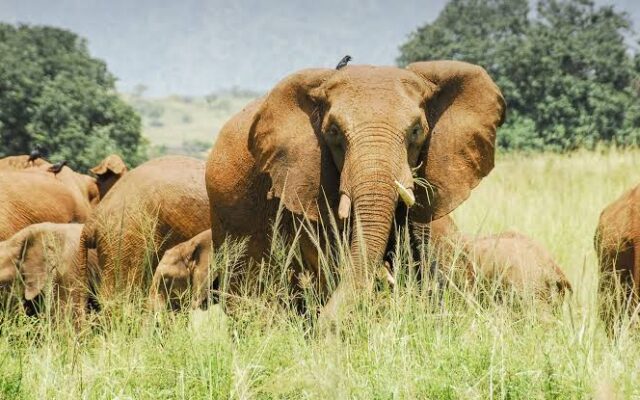
The northern bank of the Victoria Nile supports Uganda's largest Rothschild's giraffe population. The Buligi circuit, Delta Point tracks, and riverine escarpment drives offer excellent visibility. Giraffes share the landscape with elephant, buffalo, lion, leopard, hartebeest, and Uganda kob — a full savannah experience in a single park.
Kidepo Valley National Park
Remote, dramatic, and far less visited than Murchison, Kidepo's Narus Valley holds a reinforced Rothschild's giraffe population rebuilt through conservation translocations. Sightings here feel exclusive — giraffes against kopje-studded plains and golden grass.
Habitat and Ecosystem Role
Rothschild's giraffes inhabit open woodland savannah, acacia plains, and riverine corridors where tall browse is available. As selective browsers, they shape vegetation structure, prune tree canopies, and disperse seeds through their dung — contributing to healthy savannah dynamics alongside elephants and antelope.
Social Structure and Behaviour
Giraffes live in flexible fission-fusion groups. Mothers and calves form nursery groups; adult males may wander alone or engage in necking contests to establish dominance. On game drives, giraffes often tolerate vehicles on established tracks, allowing extended observation and photography when guides approach respectfully.
Diet
Rothschild's giraffes feed primarily on leaves, shoots, seed pods, and bark — with acacia species forming a staple across Uganda's northern parks. They browse up to five metres high, accessing a food layer unavailable to most herbivores. Water is obtained largely from foliage, though giraffes will drink at rivers and waterholes when conditions require.
Conservation Status
Rothschild's giraffe is classified as Endangered. Uganda's story is one of remarkable recovery: from fewer than 300 individuals in 2010 to more than 2,400 today, driven by Uganda Wildlife Authority protection, Giraffe Conservation Foundation monitoring, anti-poaching patrols, and strategic translocations to reinforce small populations at Kidepo Valley and beyond.
Why Rothschild's Giraffes Matter
Ecologically, giraffes maintain savannah structure and seed dispersal. Economically, they anchor photographic tourism in Murchison and Kidepo — supporting ranger salaries, lodge employment, and community revenue. Symbolically, they represent what focused conservation can achieve when governments, NGOs, and responsible tourism align.
Best Way to See Rothschild's Giraffes
Classic morning and afternoon game drives on the northern bank of Murchison Falls remain the gold standard. Dawn light on the Buligi circuit, telephoto lenses ready, and a skilled guide who reads giraffe movement patterns deliver encounters that stay with travellers long after the safari ends. Kidepo suits those seeking remoteness and landscape photography with giraffes as a headline species.
Best Time to Visit
Giraffes are visible year-round, but dry seasons (December–February and June–September) offer shorter grass, animals near the Nile, and optimal photographic light. Wet months bring lush scenery and fewer vehicles — a different but equally rewarding aesthetic.
Safari Experiences
- Murchison Falls Giraffe & Big Game Safari
- Kidepo Valley Photographic Safari
- Nile Boat Cruise & Giraffe Game Drive
- Uganda Northern Circuit Wildlife Safari
- Fly-in Murchison Falls Safari
Quick Facts
- Tallest land mammal on Earth
- Endangered subspecies with recovering Uganda populations
- Identified by pale patches and white leg stockings
- Best seen on game drives in Murchison Falls and Kidepo Valley
- Uganda holds Africa's most important stronghold
- Excellent photographic safari subject
- Primarily a browser — acacia specialist
- Conservation recovery from ~300 to 2,400+ in Uganda