Rothschild’s giraffe conservation — expert Uganda safari guide from local planners who know permits, parks, and realistic routing.
Explore this species across our facts guide, where to see page, and safari experiences — supporting protection through visits to Murchison Falls and Kidepo Valley.
Rothschild's giraffe conservation in Uganda is one of the most encouraging wildlife recovery narratives in East Africa. Two decades ago, the subspecies faced genuine risk of national extinction. Today, thanks to Uganda Wildlife Authority leadership, Giraffe Conservation Foundation science, anti-poaching investment, and revenue from responsible tourism, populations have rebounded to more than 2,400 individuals — with Murchison Falls anchoring global survival.
This guide explains the conservation status, threats, recovery strategies, translocation programmes, and how your safari directly supports protection.
Conservation Status
Rothschild's giraffe (Giraffa camelopardalis rothschildi) is classified as Endangered as a distinct subspecies. Genetic research has merged Rothschild's into the broader Nubian giraffe taxon (G. c. camelopardalis), which carries a Critically Endangered IUCN listing — underscoring that Uganda's recovery work protects more than a local population; it safeguards a globally significant genetic lineage.
Historic Decline in Uganda
Giraffes once ranged across much of northern Uganda. Political instability during the 1970s and 1980s, breakdown of wildlife law enforcement, and bushmeat poaching devastated populations. By the early 2000s, Rothschild's giraffes survived in only two protected areas — Murchison Falls and Kidepo Valley — with combined numbers perilously low.
Around 2010, fewer than 300 individuals remained in the country. The subspecies was listed as Endangered on the IUCN Red List, triggering urgent coordinated action.
Population Recovery: A Conservation Success
Uganda's Rothschild's giraffe population now exceeds 2,400 individuals — an eightfold increase in roughly fifteen years. Key recovery factors include:
- Strengthened anti-poaching patrols in Murchison and Kidepo
- Individual photographic monitoring and aerial surveys
- National Giraffe Conservation Strategy and Action Plan (2020–2030)
- Strategic translocations to reinforce small populations
- Tourism revenue supporting Uganda Wildlife Authority operations
- Partnership with the Giraffe Conservation Foundation (GCF) since 2013
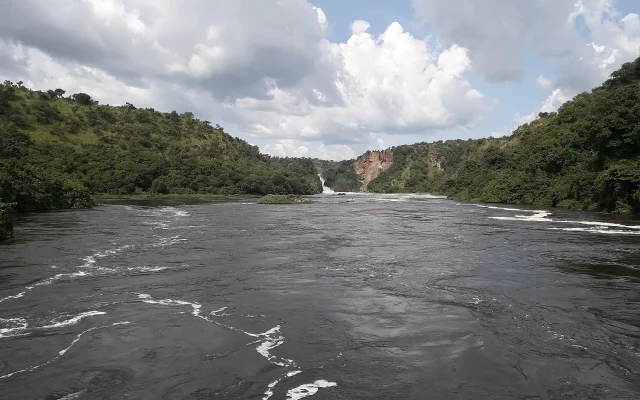
Murchison Falls National Park north of the Nile holds the overwhelming majority of Uganda's giraffes — making it arguably the most important single site for this subspecies anywhere in Africa.
Major Threats
Poaching and Snares
Although giraffes are not always the primary target, wire snares set for antelope injure and kill giraffes — especially calves. Bushmeat demand and illegal hunting during periods of insecurity have historically driven decline. Ranger patrols and snare removal programmes remain essential daily work.
Habitat Loss
Settlement expansion, charcoal production, and agricultural encroachment outside park boundaries reduce woodland browse and connectivity. Protected area integrity in Murchison and Kidepo is the foundation of recovery — but buffer-zone community engagement is equally critical.
Small Population Vulnerability
Kidepo's population, though rebuilt, remains demographically vulnerable to inbreeding, disease, and catastrophic events. This is precisely why conservation translocations from Murchison have been prioritised.
Insecurity in Border Regions
Kidepo's proximity to international borders has historically complicated enforcement. Improved security and dedicated ranger presence have allowed populations to stabilise and grow.
Taxonomic and Global Context
While Uganda's populations grow, Nubian/Rothschild's giraffes in South Sudan, Ethiopia, and Kenya face continued decline. Uganda's success is therefore globally significant — the country may hold more than 60% of the remaining Nubian giraffe complex in the wild.
Conservation Translocations
Translocation has been central to Uganda's giraffe strategy:
Kidepo Valley Reinforcement
Kidepo's giraffe population crashed to only three individuals by the 1990s. Initial supplementation from Kenya, followed by Uganda-led translocations — including 14 giraffes moved from Murchison in 2018 — have rebuilt the population to 80 or more today. Post-translocation monitoring confirms survival, reproduction, and population growth.
Lake Mburo and Pian Upe Reintroductions
Giraffes were reintroduced to Lake Mburo National Park and Pian Upe Wildlife Reserve using Murchison as the source population — expanding the number of protected populations from two in 2015 to five by 2024. These translocations reduce extinction risk by avoiding single-site dependency.
Murchison South Bank
Giraffes historically occurred south of the Nile but were locally extirpated. Reintroduction to the southern bank restores full-park distribution and ecological function.
Monitoring and Research
The Giraffe Conservation Foundation conducts individual-based photographic identification in Murchison — recognising giraffes by unique coat patterns, similar to cheetah spot profiling. This monitoring tracks:
- Population abundance and trend
- Survival and reproduction rates
- Movement between feeding areas
- Translocation outcomes in Kidepo, Lake Mburo, and Pian Upe
Science drives adaptive management — translocation timing, anti-poaching deployment, and habitat interventions all respond to data.
National Giraffe Conservation Strategy
Uganda's National Giraffe Conservation Strategy and Action Plan (2020–2030) sets strategic objectives:
- Maintain and grow Murchison as a source population
- Reinforce and establish viable populations across protected areas
- Reduce poaching and human-wildlife conflict
- Engage communities in conservation benefits
- Strengthen cross-border cooperation
Role of Tourism in Conservation
Every park entry fee, concession payment, and safari booking supports the infrastructure of conservation:
- Ranger salaries and patrol equipment
- Vehicle maintenance for anti-poaching units
- Community revenue-sharing programmes
- Lodge employment in gateway towns
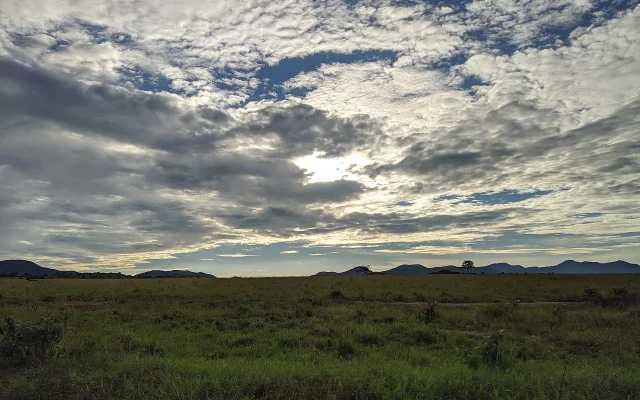
Photographic safaris and game drives in Murchison and Kidepo are not passive wildlife watching — they are direct investment in the protection of an endangered subspecies. Choosing a licensed Uganda operator ensures logistics and fees align with national park regulations.
How Travellers Can Help
- Visit Murchison Falls and Kidepo on regulated game drives
- Follow guide instructions on approach distances and track use
- Share images with conservation organisations when requested (coat-pattern ID aids monitoring)
- Avoid purchasing bushmeat or wildlife products
- Choose operators committed to ethical, low-impact safaris
Looking Ahead
Uganda's Rothschild's giraffe recovery demonstrates that focused intervention works. Continued success depends on sustained ranger investment, habitat security, community partnership, and the tourism revenue that keeps protected areas financially viable. For travellers, the opportunity is rare: witness an endangered subspecies in growing numbers, on open savannah, through one of Africa's most accessible and photogenic safari experiences.