WildlifeRothschild’s Giraffe

FAQs — Rothschild’s Giraffe

Rothschild’s giraffe faqs

Rothschild's Giraffe FAQs and Answers — use the questions below for quick answers on identification, Murchison Falls game drives, Kidepo Valley sightings, conservation, photography, and safari planning. Explore where to see Rothschild's giraffes, best time to visit, and safari experiences for deeper guides — or request a quote for a tailored itinerary.

What is a Rothschild's giraffe?

The Rothschild's giraffe (Giraffa camelopardalis rothschildi) is an endangered giraffe subspecies distinguished by pale, rectangular coat patches on a cream background and no markings below the knees — giving the appearance of white stockings. In Uganda, it is one of the flagship mammals of Murchison Falls National Park and Kidepo Valley National Park. See our Rothschild's giraffe facts page for identification and biology.

Where can I see Rothschild's giraffes in Uganda?

The best places to see Rothschild's giraffes in Uganda are Murchison Falls National Park (especially the northern bank Buligi circuit) and Kidepo Valley National Park (Narus Valley game drives). Murchison holds the country's largest population and most reliable sightings. Our where to see Rothschild's giraffes guide compares both parks in detail.

How many Rothschild's giraffes are left in Uganda?

Uganda's Rothschild's giraffe population has recovered dramatically from fewer than 300 individuals around 2010 to an estimated 2,400 or more today, thanks to sustained conservation by Uganda Wildlife Authority and partners including the Giraffe Conservation Foundation. The vast majority occur in Murchison Falls National Park, with a growing reinforced population in Kidepo Valley.

Are Rothschild's giraffes endangered?

Yes. Rothschild's giraffe is classified as Endangered as a distinct subspecies. Although Uganda's populations have increased substantially, the subspecies remains highly threatened across its historic range in East Africa. Learn more on our Rothschild's giraffe conservation page.

How do you identify a Rothschild's giraffe?

Look for pale orange-brown patches with softer edges on a cream-coloured background, and critically — unmarked lower legs that appear like white or cream stockings. This distinguishes them from reticulated giraffes (sharp net-like lines) and Masai giraffes (darker, jagged patches extending to the hooves).

Why is Murchison Falls famous for giraffes?

Murchison Falls National Park protects Uganda's — and one of Africa's — most important Rothschild's giraffe populations. Open savannah on the northern bank, especially the Buligi circuit, offers excellent visibility for game drives and photography. Giraffes often feed near acacia woodland and river corridors alongside elephant, buffalo, and antelope.

Can I photograph Rothschild's giraffes on a game drive?

Yes — Rothschild's giraffes are among the best photographic subjects on a Uganda savannah safari. Their height, pale coat, and tolerance of vehicles on established tracks make them ideal for telephoto and portrait compositions on dawn and late-afternoon drives in Murchison and Kidepo. See our giraffe safari experiences for itinerary ideas.

What do Rothschild's giraffes eat?

Rothschild's giraffes are browsers, feeding mainly on leaves, shoots, seed pods, and bark from acacia and other savannah trees. Their long necks and prehensile tongues allow them to reach foliage beyond the reach of most herbivores. Diet shapes daily movement — guides often locate giraffes near favoured browse trees. More detail on our giraffe diet page.

How tall is a Rothschild's giraffe?

Adult Rothschild's giraffes stand up to 5.5–6 metres tall, making them the tallest land mammals on Earth. Males are typically taller and heavier than females. Newborn calves are already around 1.8 metres tall at birth and can stand within an hour.

How long do Rothschild's giraffes live?

In the wild, Rothschild's giraffes may live 20 to 25 years, though longevity depends on habitat security, predation pressure on calves, disease, and human-related threats. Protected populations in Uganda's national parks generally fare better than fragmented herds elsewhere.

Do Rothschild's giraffes live in herds?

Rothschild's giraffes form loose, fluid groups rather than tight herds. Individuals join and leave groups freely — a social system biologists call fission-fusion. You may see nursery groups of mothers and calves, small mixed groups, or solitary adult males. Explore more on our giraffe behaviour page.

What is giraffe necking?

Necking is a behaviour where male giraffes swing their necks and heads against each other to establish dominance and access to females. Encounters range from gentle rubbing to powerful blows. It is most common when females are in oestrus and is occasionally witnessed on game drives — always at a respectful distance.

Are Rothschild's giraffes the same as Nubian giraffes?

Recent genetic research by the Giraffe Conservation Foundation and partners has shown that Rothschild's giraffe is genetically indistinguishable from the Nubian giraffe (G. c. camelopardalis), and the two are now treated as one taxonomic unit in scientific literature. Travellers and field guides still widely use the name Rothschild's giraffe for Uganda's pale, white-stockinged populations — especially at Murchison and Kidepo.

Were giraffes translocated to Kidepo Valley?

Yes. Kidepo's Rothschild's giraffe population declined to only a handful of individuals by the 1990s. Conservation translocations — including 14 giraffes moved from Murchison Falls in 2018 — have helped rebuild the population to 80 or more today. This is a key part of Uganda's national giraffe conservation strategy.

What is the best time to see giraffes in Murchison Falls?

The dry seasons (roughly December–February and June–September) generally offer the best Rothschild's giraffe sightings in Murchison — shorter grass, animals concentrated near the Nile, and excellent morning light on the Buligi circuit. Giraffes are visible year-round. See our best time to see Rothschild's giraffes guide.

Can I see giraffes on a Murchison Falls boat cruise?

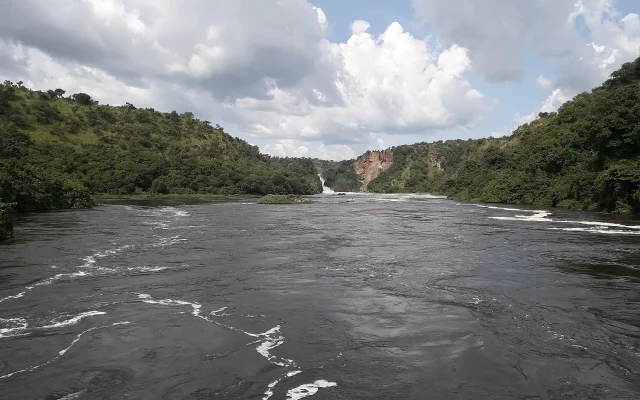
Giraffes are primarily seen on land-based game drives on the northern bank. However, you may spot giraffes on the riverine escarpment from a Nile launch cruise — a classic Murchison combination that pairs boat wildlife with dedicated giraffe drives on the Buligi or Delta tracks.

Are Rothschild's giraffes found in Queen Elizabeth National Park?

No. Rothschild's giraffes are not present in Queen Elizabeth National Park. In Uganda, wild populations occur in Murchison Falls, Kidepo Valley, Lake Mburo (reintroduced), and Pian Upe Wildlife Reserve (reintroduced). For the largest and most accessible populations, plan a Murchison Falls safari.

What threats do Rothschild's giraffes face?

Major threats include habitat loss, poaching (including snares and bushmeat hunting), civil insecurity in border regions, and small population vulnerability in isolated parks like Kidepo. Uganda's recovery story demonstrates that active ranger patrols, monitoring, and translocations can reverse decline. Details on our conservation page.

How does tourism help giraffe conservation in Uganda?

Regulated safari tourism generates park revenue, employment, and community benefits that underpin anti-poaching patrols and habitat protection. Photographic safaris and game drives in Murchison and Kidepo directly support Uganda Wildlife Authority operations. Choosing a licensed operator ensures fees and logistics align with conservation goals.

What safari packages include Rothschild's giraffe viewing?

Most Murchison Falls safari packages and Kidepo Valley itineraries include game drives where Rothschild's giraffes are a headline species. Options range from budget overland trips to luxury fly-in safaris. Browse our giraffe safari experiences or Uganda safari packages for curated routes.

Is Kidepo Valley good for giraffe photography?

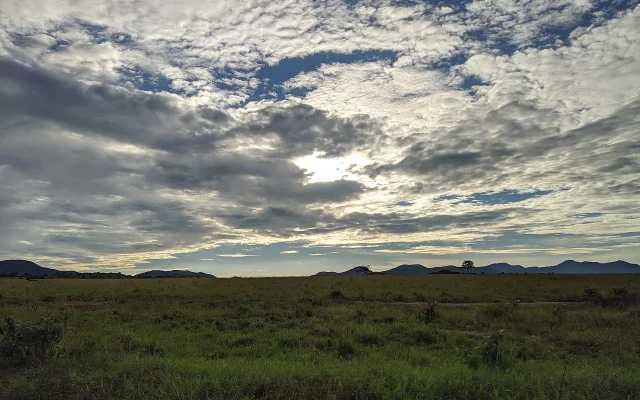
Kidepo Valley is outstanding for photographers seeking dramatic landscapes and uncrowded game drives. Rothschild's giraffes in the Narus Valley often appear against open plains and kopje backdrops — a different aesthetic from Murchison's riverine savannah. The trade-off is remoteness and higher logistics cost, best suited to 4–5 day dedicated itineraries.

Do giraffes need to drink water daily?

Giraffes can absorb much of their moisture from browse and do not need to drink daily. When they do drink, they must splay their front legs awkwardly to reach the water — a vulnerable position and a memorable photographic moment if you are fortunate enough to witness it near a waterhole or river.

How long is a giraffe pregnancy?

Female Rothschild's giraffes have a gestation period of approximately 14 to 16 months, after which a single calf is born. Calves remain close to their mothers for extended periods and are a common and heartwarming sight on Uganda game drives during the calving season.

Can I combine giraffe viewing with gorilla trekking?

Yes — many travellers combine a southwest primate circuit (Bwindi gorillas, Kibale chimps) with a northern savannah extension to Murchison Falls for Rothschild's giraffes, elephants, and Nile boat cruises. As a DMC we route these combinations to minimise backtracking — typically 10–14 days for both highlights.

What should I pack for a giraffe photographic safari?

Bring a telephoto lens (200–600mm ideal), bean bag or window mount for vehicle stability, neutral clothing, sun protection, and dust covers for gear. Dawn drives offer the best light on the Buligi circuit. Midday heat pushes giraffes into scattered woodland shade — plan active drives for early morning and late afternoon.

Safari packages to see Rothschild’s Giraffe

Bookable itineraries below include parks and activities where you are most likely to encounter Rothschild’s Giraffe in the wild.

View all packages
7 Day Uganda Wildlife & GorillaBestSeller

7 Day Uganda Wildlife & Gorilla

7 days

Uganda · Nile, chimps, wildlife & gorillas

You visit

Murchison Falls, Kibale Forest, Queen Elizabeth NP, Bwindi Forest, Entebbe

Seven days with gorillas: the wildlife tour above plus Bwindi trekking on Day 6 — the single most booked private itinerary for Uganda Safari Tours guests who want chimps, savannah and gorillas in one…

3 Day Murchison Falls Safari

3 Day Murchison Falls Safari

3 days

Uganda · Nile boat & Big Five potential

You visit

Murchison Falls, Entebbe

Our classic 3-day Murchison Falls safari follows the park’s most proven circuit: dramatic falls, savannah game drives north of the Nile, and the famous boat trip where the river narrows below the casc…

18 Days Uganda Wildlife Safari

18 Days Uganda Wildlife Safari

18 days

Uganda · Extended wildlife circuit

You visit

Entebbe (Start, End)

The ultimate 18-day Uganda wildlife safari — every savannah park, both chimp forests, gorillas, and the remote northeast. After Murchison and Kidepo, the route sweeps through Kibale, Queen Elizabeth,…

4 Days Kidepo Valley Safari

4 Days Kidepo Valley Safari

4 days

Uganda · Remote wilderness

You visit

Entebbe (Start, End)

Kidepo Valley is Uganda's most remote park — semi-arid savannah against the Morungole Mountains near the South Sudan border. Cheetah, ostrich and large lion prides roam the Narus Valley; the drier Kid…

Get a free quote