Oribi habitat is a careful balance between feeding and hiding — open grass for grazing, taller patches for concealment, and enough visibility to detect predators before they close. Understanding that mosaic explains where oribi appear on Uganda game drives and why fire, rainfall, and savannah management shape their abundance. Explore related guides on oribi facts, behaviour, and best places to see oribi.
Grassland Specialists
Oribi are not forest antelopes. They inhabit open grasslands, lightly wooded savannah, floodplain margins, and montane grasslands up to roughly 2,000 metres above sea level — landscapes where grass height stays mostly between 10 and 100 centimetres, with scattered bushes providing escape cover.
They avoid steep slopes and extremely dense woodland, preferring country where they can graze in the open yet vanish into taller grass within seconds when alarmed.
The Short-Grass / Tall-Grass Mosaic
Field ecology describes oribi as favouring short grasses for feeding and taller grass patches for hiding. This dual requirement makes them sensitive to habitat homogenisation — plains that are either uniformly overgrazed or uniformly tall support fewer oribi than a managed mosaic.
In Uganda's national parks, burning, herbivory by buffalo and zebra, and seasonal flooding maintain the patchwork oribi depend on — often without visitors realising the management story behind a simple pair sighting on track.
Fire-Adapted Savanna
Oribi are among the mammals that benefit from savannah fire. Once flames pass and rains follow, they return quickly to feed on tender green shoots — higher in protein and digestibility than senescent grass. Park authorities use controlled burning in some sectors; oribi are indirect beneficiaries alongside other grazers.
Recently Burned Areas
Guides in Murchison Falls and Kidepo Valley sometimes find oribi concentrated on darkened plains where regrowth is vivid green — excellent for photography and for observing feeding behaviour at close vehicle range.
Water and Floodplain Edges
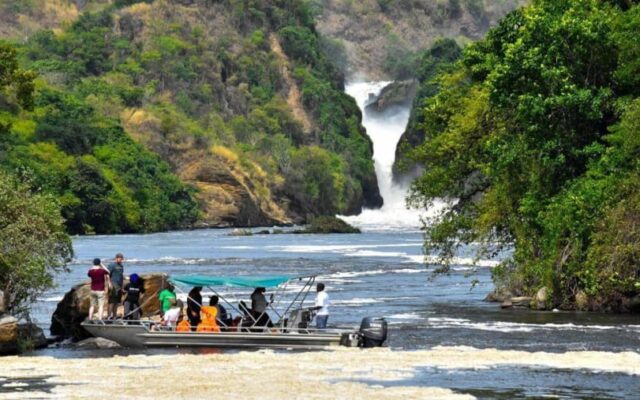
While less water-dependent than Uganda kob or waterbuck, oribi use habitats near rivers, lakes, and seasonal wetlands where grass stays green longer into dry months. Nile-margin savannah in Murchison and lake-fringe hills in Lake Mburo illustrate the pattern: oribi within reach of moisture but not confined to swamp.
Vegetation Types
Typical oribi habitat in Uganda includes:
- Open Borassus palm grassland on Murchison's north bank
- Acacia–grassland mosaics on Lake Mburo hills
- Narus Valley short-grass plains in Kidepo
- Floodplain meadows after seasonal inundation
- Scattered bush savannah with visibility corridors
Altitude and Climate
Across Africa, oribi occur from sea level to about 2,000 metres. In Uganda they are primarily a lowland to mid-elevation savannah species — tropical climate with bimodal rainfall in western parks and a drier regime in Kidepo. Grass quality, driven by rain timing and fire, matters more than temperature alone for seasonal distribution.
Population Density
Densities vary widely — often two to ten individuals per square kilometre, rising higher on productive tropical grasslands with reliable rainfall. Uganda park populations are healthy within protected boundaries, though oribi are rarely the target of formal census programmes compared with elephants or lions.
Overlap With Larger Grazers
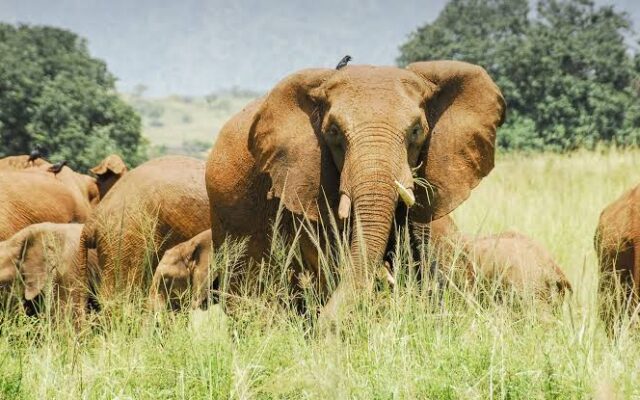
Oribi share habitat with buffalo, hartebeest, Uganda kob, topi, zebra, and warthog. Larger species sometimes crop grass in ways that stimulate the short regrowth oribi prefer — partial facilitation rather than pure competition. Predator vigilance may also improve when multiple species graze the same plain.
Park Ecosystems — Where Habitat Meets Tourism
Murchison Falls National Park
The north bank's Borassus grasslands and Buligi circuit savannah are textbook oribi country — wide views, mixed grass heights, and reliable pair sightings on dawn drives.
Kidepo Valley National Park
Narus Valley grasslands offer remote oribi habitat with dramatic scenery and low vehicle traffic — ideal for travellers who want savannah intimacy without crowds.
Lake Mburo National Park
Compact acacia hills and open valleys create accessible oribi habitat minutes from the gate — perfect for short safaris and walking routes where permitted.
Cover as a Habitat Requirement
Predator pressure shapes oribi habitat choice as much as grass nutrition. Plains with zero cover suit feeding but raise mortality risk; plains with only tall rank grass hide predators too well. The optimal landscape offers both — and Uganda's better game-drive sectors deliver exactly that trade-off.
Habitat Threats
Outside parks, conversion of savannah to cropland, bush encroachment from suppressed fire, and livestock overgrazing reduce suitable mosaic habitat. Snaring along park boundaries targets oribi because they are small and approachable on foot — another reason protected-area integrity matters disproportionately for this species.
Safari Viewing and Habitat Ethics
Stay on designated tracks, avoid driving into tall-grass cover that may hide resting oribi or concealed predators, and follow ranger guidance in burn-recovery zones. Responsible tourism supports the habitat management oribi need.
Planning Your Visit
Pair this habitat guide with best time to see oribi and safari experiences to match seasons with the grassland conditions that put pairs on open plains at dawn.