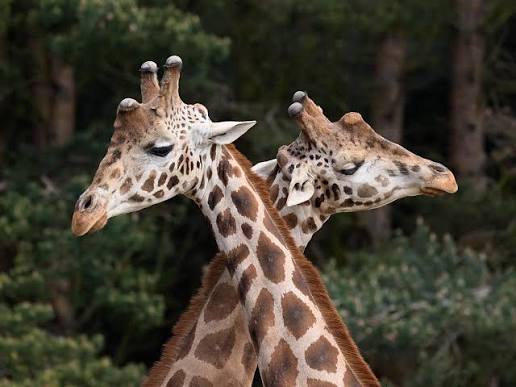
Nubian giraffe diet — expert Uganda safari guide from local planners who know permits, parks, and realistic routing.
Explore this species across our facts guide, habitat page, and behaviour guide — with sightings centred on Murchison Falls game drives.
Despite their immense size, Nubian giraffes are selective, efficient browsers — not grazers. Their diet shapes daily movement across Murchison's northern savannah and Kidepo's Narus Valley, which in turn shapes where guides position vehicles for the best game-drive encounters with this Critically Endangered subspecies.
This guide covers what Nubian giraffes eat, how they feed, seasonal dietary shifts, and the practical implications for safari planning and photography in Uganda.
Are Nubian Giraffes Herbivores?
Yes. Nubian giraffes are obligate browsers — they feed almost exclusively on woody plant material. Grass forms a negligible part of their diet. Their entire physiology, from the prehensile tongue to the towering neck, is adapted for harvesting leaves, shoots, and pods from trees and tall shrubs between two and five metres above ground.
Primary Food Sources
Across Uganda's northern parks, Nubian giraffes consume:
- Acacia leaves and shoots — the dietary staple on Buligi and Narus drives
- Seed pods — important seasonal nutrition, especially in drier months
- Bark — supplementary browse when leaf availability drops
- Combretum and Terminalia foliage — secondary species in woodland mosaics
- Riverine broadleaf species — dry-season reserves along the Nile and Narus
Acacia dominates because it is abundant in Murchison and Kidepo, palatable, and within the giraffe's exclusive reach. The giraffe–acacia relationship is one of the defining ecological partnerships of East African savannah — and the reason woodland edges along game-drive tracks are so productive.
How Giraffes Feed
Feeding is a slow, deliberate process visible on most morning drives:
- The giraffe selects a branch, using height to access canopy foliage.
- The dark prehensile tongue wraps around the twig.
- A pull of the head strips leaves; thick saliva protects against acacia thorns.
- Leaves are processed by a four-chambered stomach adapted for browse rather than grass.
A feeding giraffe is a stationary photographic subject — often the best opportunity for sharp, well-composed images on the Buligi circuit.
Daily Food Intake
Adult Nubian giraffes may consume 30 to 75 kilograms of foliage daily, spread across many hours of intermittent browsing. They alternate feeding bouts with walking, rumination, and rest — a rhythm visible across a full morning drive. Guides who know favoured acacia stands return to the same areas day after day with reliable results.
Water Requirements
Giraffes do not need to drink daily. Moisture from leaves and shoots sustains them through extended dry periods — an adaptation critical in semi-arid Kidepo and during Murchison's long dry season. When they drink at rivers or waterholes, the vulnerable splay-legged posture makes them cautious and alert. Witnessing drinking behaviour is uncommon but unforgettable.
Seasonal Diet Shifts
Dry Season
When grassland browse declines, giraffes concentrate along riverine corridors where taller trees retain foliage. This is why dry-season game drives on Murchison's northern bank and Kidepo's Narus Valley deliver such consistent sightings — diet and habitat use converge at permanent water.
Wet Season
New leaf flush across acacia woodland disperses feeding giraffes across wider areas. Nutritional quality improves, calving may increase, and nursery groups become more visible — though animals may require more driving to locate.
Diet and Predation
Calves are most vulnerable to lion and hyena predation while mothers browse. Nursery groups where adults take turns watching young are common in Murchison. The height advantage of adults does not protect calves at ground level — another reason stable, protected habitat in large parks matters for population recovery.
Competition with Other Herbivores
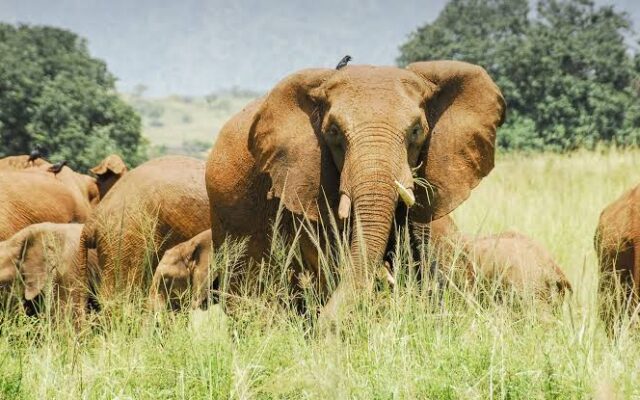
Elephants also browse woody plants but overlap partially rather than fully with giraffes. Giraffes access higher branches; elephants may push over shrubs or strip lower bark. Uganda kob, hartebeest, and buffalo graze below the browse layer — complementary rather than competing niches that make Murchison's northern savannah extraordinarily diverse on a single drive.
Diet and Safari Planning
Practical tips for giraffe-focused itineraries:
- Schedule dawn drives when giraffes leave overnight woodland and begin active feeding
- Request Buligi circuit or Narus Valley loops where acacia edges are densest
- Pause at feeding groups — stationary subjects reward patient photographers
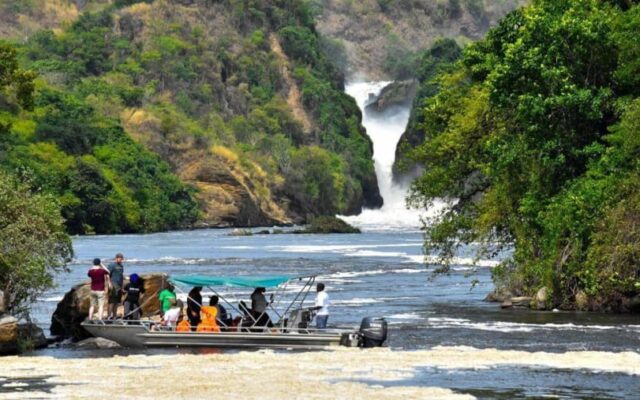
- Pair afternoon drives with Nile launch cruises in Murchison for a full northern day
See where to see Nubian giraffes and safari experiences for routes that prioritise browse-rich habitats.
Conservation Link
Healthy acacia woodland inside protected areas is essential for sustaining Uganda's 2,400+ Nubian giraffes. Habitat loss outside park boundaries remains a threat; every regulated safari visit to Murchison Falls and Kidepo Valley supports the ranger patrols and monitoring that keep browse landscapes secure. Learn more on our conservation page.