Best time to see nubian giraffe — expert Uganda safari guide from local planners who know permits, parks, and realistic routing.
Pair seasonal planning with our where to see guide and safari experiences — focused on Murchison Falls and Kidepo Valley game drives.
Nubian giraffes can be seen year-round in Uganda's northern parks — but season, time of day, and park choice significantly affect sighting quality, photographic light, track conditions, and how busy the Buligi circuit feels. This guide helps you align travel dates with your priorities, whether that is maximum giraffe density, golden-hour photography, or quieter wet-season landscapes.
Can You See Nubian Giraffes Year-Round?
Yes. Murchison Falls and Kidepo Valley maintain resident Nubian giraffe populations that do not migrate out of the parks. Game drives deliver sightings in every month. The question is not whether you will see giraffes on a well-planned northern itinerary, but how the experience will look and feel — which is where seasonal planning matters.
Uganda's Dry Seasons — Peak Giraffe Viewing
Two dry windows offer the most favourable conditions for Nubian giraffe game drives and photography:
June to September (Long Dry Season)
The most popular safari period in Uganda. Advantages include:
- Shorter grass — giraffes visible at greater distances across Buligi and Narus
- Animals concentrated near the Nile (Murchison) and Narus River (Kidepo)
- Reliable sunshine and excellent dawn/dusk light for pale-coat photography
- Drier tracks on northern loops and escarpment roads
- Calving season overlap — nursery groups common
Trade-offs: higher lodge demand, busier game-drive circuits, and premium pricing at popular Murchison camps. Book early for peak months (July–August).
December to February (Short Dry Season)
A second excellent window, often slightly less crowded than mid-year:
- Similar visibility and wildlife concentration benefits
- Warm temperatures and clear skies
- Strong photographic light, especially January mornings on the northern bank
- Good road conditions for the drive from Kampala to Murchison
Christmas and New Year periods see a modest visitor spike, but overall this remains a prime Nubian giraffe safari season.
Wet Seasons — Lush Landscapes and Fewer Vehicles
March to May (Long Rains)
Rainfall peaks across northern Uganda. Considerations:
- Taller grass may reduce distant visibility — more driving to locate giraffes
- Tracks on Buligi can become muddy; 4x4 essential
- Lush green scenery and dramatic storm skies reward landscape photographers
- Fewer visitors — quieter camps and exclusive-feeling drives
- Lower lodge rates at some properties
Giraffes remain present and active; skilled guides adapt routes to woodland edges where browse concentrates.
October to November (Short Rains)
A transitional period with mixed conditions:
- Intermittent showers rather than continuous rain
- Renewed vegetation attracts dispersed feeding giraffes
- Good value at lodges between peak seasons
- Excellent atmospheric photography when storms clear at sunset
Best Time of Day for Giraffe Game Drives
Regardless of season, time of day matters as much as month:
Dawn (6:00–9:00)
Peak activity as giraffes leave overnight woodland and begin feeding. Warm lateral light on the Buligi circuit is ideal for portraits and full-body silhouettes. This is the single best window for Nubian giraffe photography in Murchison.
Midday (11:00–15:00)
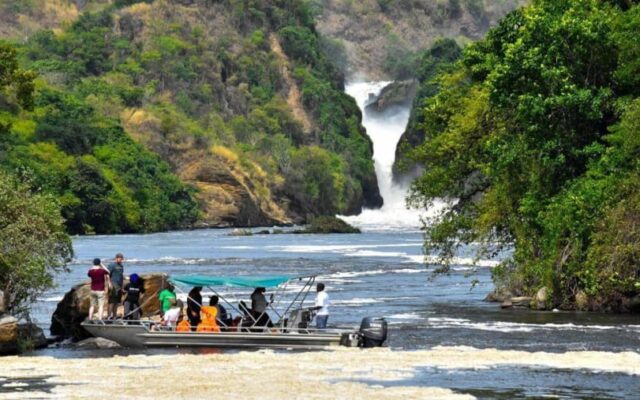
Reduced movement; giraffes rest in scattered shade. Useful for relaxed portrait work on stationary subjects but harsh overhead light limits dramatic compositions. Many itineraries schedule Nile boat cruises or travel during this window.
Late Afternoon (16:00–18:30)
Second activity peak and golden-hour light. Afternoon drives on the northern bank or Narus Valley rival dawn for photographic quality — especially for backlit acacia and river escarpment scenes.
Murchison vs Kidepo Seasonal Notes
Murchison Falls
Dry-season concentration along the Nile maximises encounter rates for first-time visitors. Wet season spreads giraffes but pairs well with fewer crowds and lower rates. Ferry access to the northern bank operates year-round; allow extra time during heavy rains.
Kidepo Valley
The Narus River guarantees dry-season wildlife concentration — critical in this semi-arid park. April–May rains can make remote tracks challenging; fly-in access via Apoka airstrip becomes especially attractive. June–September and December–February remain peak windows for giraffe-focused Kidepo safaris.
Photography Season Tips
- Best light: June–August and December–February dawns on Buligi
- Best atmosphere: April and October–November storm skies
- Best nursery groups: Late dry season calving peaks (July–August, January–February)
- Best exclusivity: Wet-season weekdays in Murchison; most months in Kidepo
Combining Giraffes with Other Uganda Highlights
Seasonal planning for Nubian giraffes often intersects with gorilla trekking (year-round), chimp trekking (best in drier forest months), and Nile boat cruises (year-round). A common 10–14 day grand circuit places primate parks in the first week and Murchison dry-season drives in the second — optimising both forest trails and savannah visibility. See where to see and safari experiences for integrated routes.
Month-by-Month Summary
- January–February: Excellent — short dry season, strong light, nursery groups
- March–May: Wet — lush scenery, fewer crowds, more driving required
- June–September: Peak — best visibility and photography, book early
- October–November: Transitional — good value, variable weather, dramatic skies
- December: Excellent — holiday demand rises but conditions remain prime
For tailored advice on your travel month, request a quote — we align Buligi and Narus drive scheduling with your priorities and the seasonal conditions that shape Nubian giraffe encounters.