Explore this species across our facts guide, where to see page, and safari experiences — supporting protection through visits to Murchison Falls and Kidepo Valley.
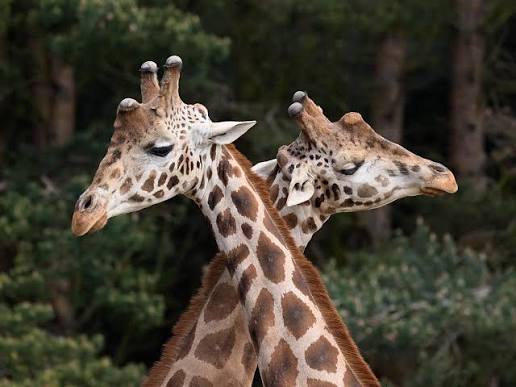
Nubian giraffe conservation presents a striking contrast: Critically Endangered globally, yet recovering strongly in Uganda. Two decades ago the subspecies faced genuine risk of national extinction. Today, thanks to Uganda Wildlife Authority leadership, Giraffe Conservation Foundation science, anti-poaching investment, and revenue from responsible tourism, populations exceed 2,400 individuals — with Murchison Falls anchoring the largest surviving population in the subspecies' natural range.
This guide explains conservation status, threats, recovery strategies, translocation programmes, and how your safari directly supports protection of one of Africa's highest-priority mammal lineages.
Conservation Status
The IUCN lists the Nubian giraffe (Giraffa camelopardalis camelopardalis) as Critically Endangered, reflecting an estimated 95% population decline over three generations across its historic range in East Africa and the Sahel. Remnant wild populations persist in small, isolated pockets in western Ethiopia and South Sudan — numbering perhaps 650 individuals globally outside Uganda's recovery zone.
Uganda's success does not remove the Critically Endangered classification; it demonstrates that focused intervention can reverse decline where governance, habitat security, and partnerships align. The Rothschild's ecotype seen on Murchison game drives is genetically part of this same taxon — covered also in our Rothschild's giraffe guide.
Historic Decline in Uganda
Nubian giraffes once ranged across much of northern Uganda, western Kenya, southern South Sudan, and parts of Ethiopia. Political instability during the 1970s and 1980s, collapse of wildlife law enforcement, and bushmeat poaching devastated populations. By the early 2000s, only two natural populations remained — Murchison Falls and Kidepo Valley — with combined numbers perilously low.
Around 2010, fewer than 300 individuals remained in Uganda. The situation triggered urgent coordinated action between UWA and international partners.
UWA and Giraffe Conservation Foundation Partnership
Since 2013, the Giraffe Conservation Foundation has worked with UWA under a Memorandum of Understanding to deliver science-based giraffe conservation. Programmes include:
- Individual photographic identification and population monitoring
- Aerial surveys and abundance estimates
- Translocation planning following IUCN guidelines
- Post-translocation GPS satellite tracking (on selected cohorts)
- Support for Uganda's National Giraffe Conservation Strategy and Action Plan (2020–2030)
This partnership transformed data-poor management into adaptive, evidence-based conservation — the foundation of Uganda's recovery curve.
Population Recovery: A National Success Story
Uganda's Nubian giraffe population now exceeds 2,400 individuals — an eightfold increase in roughly fifteen years. Key recovery factors include:
- Strengthened anti-poaching patrols in Murchison and Kidepo
- Snare removal and ranger capacity building
- Strategic translocations to reinforce small populations and re-establish historic range
- Tourism revenue supporting UWA operations and community benefit-sharing
- Habitat protection within expanded park management frameworks
Murchison Falls north of the Nile holds the overwhelming majority — making Uganda indispensable to Nubian giraffe survival worldwide.
Major Threats
Poaching and Snares
Wire snares set for antelope injure and kill giraffes — especially calves. Bushmeat demand and illegal hunting during periods of insecurity historically drove decline. Daily ranger patrols and snare removal remain essential.
Habitat Loss
Settlement expansion, charcoal production, and agricultural encroachment outside park boundaries reduce woodland browse and connectivity. Protected area integrity in Murchison and Kidepo is the foundation of recovery.
Small Population Vulnerability
Kidepo's population, though rebuilt to 80+ individuals, remains demographically vulnerable. Translocations from Murchison — including 14 giraffes in 2018 — reduce extinction risk at individual sites.
Global Context
While Uganda's populations grow, Nubian giraffes in South Sudan and Ethiopia face continued decline from conflict, poaching, and habitat fragmentation. Uganda may hold more than 60% of the remaining Nubian giraffe complex in secure protected areas — elevating the country's global conservation responsibility.
Conservation Translocations
Kidepo Valley Reinforcement
Kidepo's population crashed to only three individuals by the 1990s. Supplementation from Kenya and subsequent UWA–GCF translocations — including 14 giraffes from Murchison in 2018 — rebuilt numbers to 80 or more. Female-skewed cohorts and young adult age classes were selected to maximise reproductive output, following adapted IUCN translocation guidelines.
Murchison South Bank
In 2016–2017, UWA and GCF translocated 37 Nubian giraffes across the Nile to re-establish the southern bank population — restoring historic distribution and reducing single-bank dependency.
Lake Mburo and Pian Upe
Reintroductions to Lake Mburo National Park and Pian Upe Wildlife Reserve — the latter after more than 20 years of local extinction — expanded Uganda from two protected populations in 2015 to five by 2024. These are extralimital or reintroduced populations that diversify national security but do not replace the ecological importance of natural-range herds in Murchison and Kidepo.
Monitoring and Research
GCF photographic identification tracks individual giraffes by unique coat patterns in Murchison — monitoring abundance, survival, reproduction, and translocation outcomes. GPS collars on selected translocated animals assist post-release monitoring. Science drives adaptive management: translocation timing, anti-poaching deployment, and habitat interventions all respond to data.
National Giraffe Conservation Strategy (2020–2030)
Uganda's strategic plan sets objectives to:
- Maintain and grow Murchison as a source population
- Reinforce and establish viable populations across protected areas
- Reduce poaching and human-wildlife conflict
- Engage communities in conservation benefits
- Strengthen cross-border cooperation with Kenya and South Sudan
Role of Tourism in Conservation
Every park entry fee, concession payment, and safari booking supports conservation infrastructure:
- Ranger salaries and patrol equipment
- Anti-poaching vehicle maintenance
- Community revenue-sharing programmes
- Lodge employment in gateway towns such as Pakwach and Kaabong
Game drives in Murchison and Kidepo are direct investment in a Critically Endangered subspecies. Choosing a licensed Uganda operator ensures logistics and fees align with UWA regulations. Browse safari experiences and Uganda safari packages for conservation-aligned itineraries.
How Travellers Can Help
- Visit Murchison Falls and Kidepo on regulated game drives
- Follow guide instructions on approach distances and track use
- Share coat-pattern images with GCF when requested for monitoring
- Avoid bushmeat and illegal wildlife products
- Choose ethical, low-impact safari operators
Looking Ahead
Uganda's Nubian giraffe recovery demonstrates that Critically Endangered status is not a death sentence where protection is sustained. Continued success depends on ranger investment, habitat security, community partnership, and tourism revenue. For travellers, the opportunity is rare: witness a globally threatened subspecies in growing numbers on open savannah — one of Africa's most accessible and photogenic conservation success stories. Plan your visit via where to see and best time to visit.