Mountain reedbuck habitat is the broken green world of Africa's highlands. Where grassland meets rock, where streams cut slope meadows, and where kopjes offer lookout perches, Redunca fulvorufula is at home. Understanding that mosaic explains why sightings cluster on Rwenzori foothill trails, Mount Elgon ridge walks, and Kidepo inselberg drives — and why lowland wetland loops rarely produce this species. Explore mountain reedbuck facts, behaviour, and best places to see reedbuck in Uganda.
Highland Specialists
Unlike bohor reedbuck, which favour moist savannah and swamp margins, mountain reedbuck occupy rocky hillsides, kopjes, montane grasslands, and moorland edges. They need grazing quality plus escape cover — grass tall enough to hide in, rocks close enough to bound behind.
Across Africa, mountain reedbuck occur from roughly 1,500 to 4,000 metres elevation, with local variation. In Uganda, foothill zones between about 1,800 and 3,500 metres on Rwenzori and Mount Elgon, and rocky slopes in Kidepo, define the core envelope.
Geology and Terrain
Broken terrain is non-negotiable. Mountain reedbuck use:
- Granite kopjes and inselbergs (Kidepo)
- Volcanic slope meadows and ridge lines (Mount Elgon)
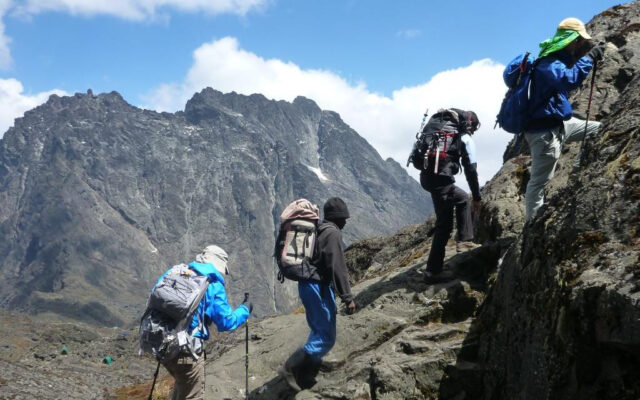
- Glacial valley margins and montane grassland (Rwenzori)
- Rocky escarpments with interspersed tussock grass
- Boulder fields adjacent to grazing lawns
Flat open plains without rock refugia suit Uganda kob and bohor reedbuck better than mountain reedbuck.
Vegetation Types
Typical mountain reedbuck habitat in Uganda includes:
- Montane Themeda and Festuca grasslands
- Alchemilla and tussock meadows on damp slopes
- Ericaceous scrub margins below moorland
- Forest–grassland ecotones on volcano flanks
- Recently burnt patches with fresh grass regrowth
Water on Slopes
Mountain reedbuck drink from streams, springs, and seepages but tolerate drier rocky ground better than wetland reedbuck. In Rwenzori Mountains National Park, meltwater streams and foothill rivers anchor movement. On Mount Elgon, forest streams on lower slopes and moorland runnels higher up provide moisture. Dry seasons still pull animals toward the last reliable seepages — useful for dawn routing.
Altitude and Climate
Rwenzori's equatorial highland climate brings year-round moisture on upper slopes, with bimodal rainfall refreshing foothill grass. Mount Elgon's eastern position adds slightly different seasonality — dry windows around June–August and December–February favour trail access. Kidepo's semi-arid climate contrasts sharply: mountain reedbuck here use rocky slopes where grass persists near inselberg bases.
Park Ecosystems — Uganda's Mountain Reedbuck Landscapes
Rwenzori Mountains National Park
Africa's highest block mountain preserves montane forest, bamboo, heather, and Afroalpine zones. Mountain reedbuck occur on foothill grasslands around Kasese, Nyakalengija, and Ruboni approach trails — and on higher treks where grassland breaks through forest. Multi-day climbers may record reedbuck on zone transitions; day visitors target foothill meadows.
Mount Elgon National Park
An extinct volcano straddling the Kenya border, Mount Elgon offers montane forest, bamboo, and high moorland. Reedbuck inhabit slope grasslands linking forest edge to open highland — often encountered on routes from Sipi Falls and Mbale gateways toward park trails.
Kidepo Valley National Park
Remote northeastern savannah meets inselberg country. Bohor reedbuck occupy Narus Valley meadows; mountain reedbuck use kopjes and rocky slopes above — a textbook elevation split if guides know where to look.
Seasonal Habitat Dynamics
Wet seasons spread reedbuck across lush slope grass with thicker cover — sightings may depend on movement and whistles. Dry seasons contract ranges toward streams and lawn edges, improving visibility on foothill tracks. Fire-maintained grasslands regenerate tender shoots that draw reedbuck to burnt margins — a subtle cue on Elgon and Rwenzori foothill walks.
Habitat Overlap With Other Species
Mountain reedbuck share slopes with bushbuck, oribi on lower meadows, and diverse highland birds. Leopards patrol forest–grass ecotones. On sheer rock, klipspringer may overlap in some East African ranges — in Uganda, reedbuck and klipspringer partition terrain by slope angle and cover type.
Threats to Habitat
Outside parks, foothill grasslands face cultivation, livestock grazing, settlement, and hunting pressure. Inside protected areas, boundary encroachment, illegal fire, and climate shifts affecting grass productivity can reduce carrying capacity. Keeping slope–rock mosaics intact is as important for mountain reedbuck as wetland protection is for bohor reedbuck.
Safari Viewing and Habitat Ethics
Stay on designated trails, avoid chasing alarmed animals uphill, and respect fragile montane soils. Off-trail scrambling erodes slopes and stresses hidden calves. Responsible hiking protects the habitat reedbuck require.
Planning Your Visit
Prioritise dawn on foothill meadows in dry seasons, combine Rwenzori or Elgon treks with local guide knowledge, and read our best time to see mountain reedbuck guide. Build highland days into broader circuits via Uganda safari packages.