The mountain reedbuck is Uganda's highland reedbuck — a compact, grey-coated antelope built for rocky slopes and montane grassland rather than the swamp margins where bohor reedbuck thrive. Scientifically known as Redunca fulvorufula, it belongs to the reduncine tribe of antelopes alongside waterbuck and kob, yet occupies a distinct niche: broken terrain between roughly 1,500 and 4,000 metres where grass meets rock, stream, and escape cover.
For safari travellers, mountain reedbuck reward elevation literacy. They may not headline brochure covers like mountain gorilla or lion, but a pair grazing a Rwenzori foothill meadow at dawn, or a male whistling from a Mount Elgon ridge, often becomes the quiet antelope memory that defines a highland morning.
What Is a Mountain Reedbuck?
The mountain reedbuck is one of three reedbuck species in Africa — smaller and greyer than bohor reedbuck, and tied to hillsides rather than floodplains. First described in the nineteenth century, it is placed in the genus Redunca within the family Bovidae. Uganda hosts two reedbuck species: bohor in lowland wetlands and mountain reedbuck on rocky highlands in Rwenzori Mountains National Park, Mount Elgon National Park, and parts of Kidepo Valley National Park.
- Kingdom: Animalia
- Phylum: Chordata
- Class: Mammalia
- Order: Artiodactyla
- Family: Bovidae
- Genus: Redunca
- Species: Redunca fulvorufula
- East African form: Redunca fulvorufula chanleri
Physical Characteristics
Size and Build
Mountain reedbuck are noticeably smaller than bohor reedbuck. Head-and-body length runs roughly 75 to 110 centimetres. Males stand about 65 to 75 centimetres at the shoulder and weigh 24 to 36 kilograms; females are smaller. The build is light and agile — suited to bounding uphill over rocks rather than pushing through tall wetland grass.
Coat and Markings
The coat is grey to brownish grey with white underparts, inner thighs, and throat. A dark stripe runs down the front of each foreleg. The bushy tail is white underneath. Overall tone is cooler and less yellow than bohor reedbuck — a quick field clue on mixed-elevation drives in Kidepo.
Horns
Only males grow horns — short, smooth, and swept backward, typically 10 to 18 centimetres. They lack the forward hook of bohor reedbuck horns. Females are hornless.
The Whistling Highland Antelope
Like other reedbucks, mountain reedbuck whistle through the nostrils when alarmed — a shrill call that carries across slope meadows. The sound often precedes a stiff-legged bound uphill toward rock cover. On Rwenzori foothill walks or Mount Elgon ridge trails, learning this alarm transforms how you experience highland soundscapes.
Habitat and Elevation
Mountain reedbuck inhabit rocky hillsides, kopjes, montane grasslands, and moorland margins with nearby water. They are not deep-forest antelopes nor wide wetland specialists. Uganda's best habitat lies on Rwenzori foothill grasslands around Kasese and park approach trails, Mount Elgon's volcanic slopes linking Sipi Falls to high moorland, and Kidepo's granite inselbergs above the Narus Valley.
Read more on our habitat page.
Diet
Mountain reedbuck are selective grazers of tender montane grasses and forbs, drinking from streams and seepages but tolerating drier rocky slopes better than bohor reedbuck. Dawn and late-afternoon feeding peaks suit trekkers and hillside drivers. Ecology is detailed on our diet guide.
Social Behaviour
Mountain reedbuck typically occur in small groups of two to six animals — pairs, family units, or bachelor groups. Males defend territories on slopes, advertising with whistles from rocks. Anti-predator strategy emphasises hiding in grass and fleeing uphill — behaviour explored on our behaviour page.
Reproduction
Females produce a single calf after a gestation of roughly seven to eight months. Calves are hidden in cover on slopes; breeding can occur year-round with peaks in rainy periods when grass quality is highest. Males mature at two to three years.
Where Mountain Reedbuck Live in Uganda
Rwenzori Mountains National Park
Foothill grasslands and montane zones on Africa's highest block mountain — reedbuck on multi-day treks and day walks from Kasese and Ruboni trailheads.
Mount Elgon National Park
Volcanic slopes and moorland edges on Uganda's eastern highland circuit — often combined with Sipi Falls and Mbale cultural stops.
Kidepo Valley National Park
Rocky kopjes and slope grasslands above valley meadows — a rare park where bohor and mountain reedbuck occur in different elevation zones.
Compare parks on where to see mountain reedbuck.
Predators and Ecological Role
Leopards, spotted hyenas, and wild dogs prey on mountain reedbuck where they overlap; eagles and other raptors may take young. As mid-tier montane grazers, reedbuck link highland grass productivity to predator ecology and help maintain slope pasture structure alongside bushbuck and duikers.
Conservation Status
The IUCN classifies mountain reedbuck as Least Concern globally, though populations are fragmented and declining in some regions through hunting and habitat loss. Uganda's mountain parks remain important strongholds. See conservation for threats and park management.
Best Time to See Mountain Reedbuck
Year-round viewing is possible on treks and hillside drives. Dry seasons (June–September and December–February) generally improve trail access and morning visibility on slope meadows. Dawn remains the best daily window. Seasonal detail on best time to see mountain reedbuck.
Safari Experiences
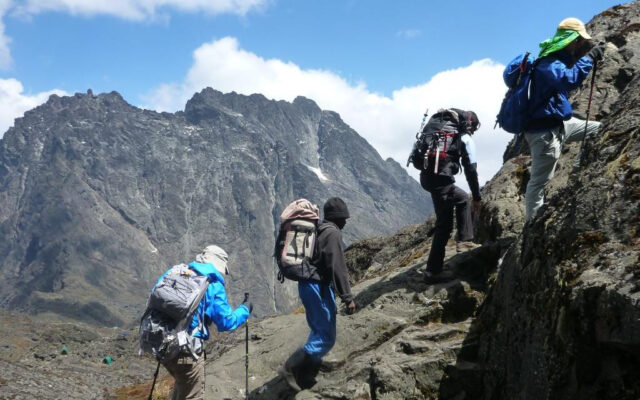
Mountain reedbuck encounters fold into Rwenzori trekking, Mount Elgon hiking, and Kidepo kopje game drives. Explore mountain reedbuck safari experiences and Uganda safari packages.
Quick Facts
| Scientific name | Redunca fulvorufula |
|---|---|
| IUCN | Least Concern |