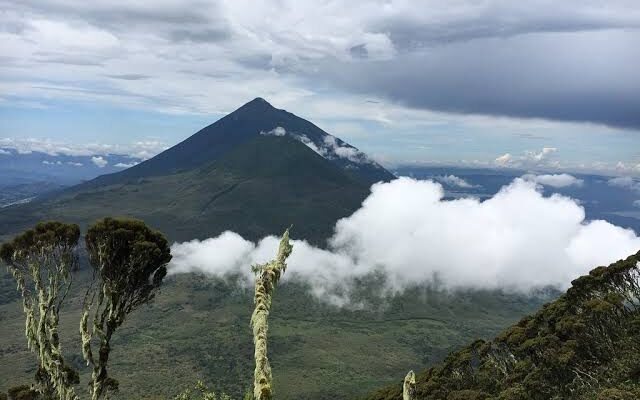
Wildlife L’Hoest’s Monkey

FAQs — L’Hoest’s Monkey

L’hoest’s monkey faqs

L'Hoest's Monkey FAQs and Answers — quick answers on biology, white beard identification, shy behaviour, Bwindi and Kibale viewing, gorilla and chimp combinations, and safari planning. Explore where to see L'Hoest's monkeys, behaviour, best time to visit, and safari experiences.
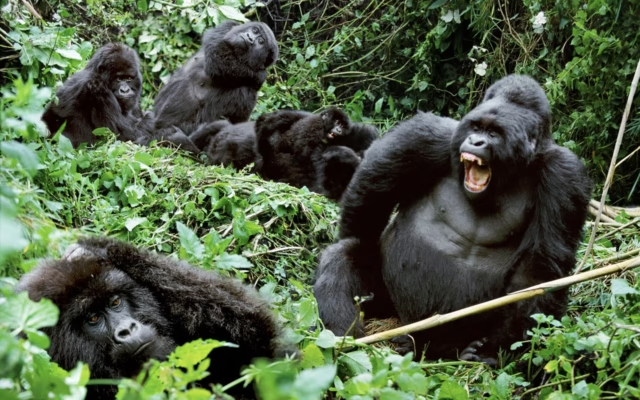

L’hoest’s monkey faqs — expert Uganda safari guide from local planners who know permits, parks, and realistic routing.

Use the accordion below for detailed Q&A pairs. For deeper species coverage, read our facts guide, habitat page, and conservation status — then plan Albertine Rift forest time at Bwindi, Mgahinga, and Kibale via gorilla trekking and chimpanzee trekking permits.

What is L'Hoest's monkey?

L'Hoest's monkey (Allochrocebus lhoesti) is a medium-sized African forest guenon named for its distinctive white cheek ruff and beard contrasting with a dark face. More terrestrial and shy than red-tailed monkeys, it is an Albertine Rift endemic found in Bwindi Impenetrable National Park, Mgahinga, and Kibale National Park.

Where can I see L'Hoest's monkeys in Uganda?

Bwindi Impenetrable National Park and Kibale National Park are the premier destinations — troops appear on gorilla trekking and chimpanzee trekking trails. Mgahinga Gorilla National Park holds montane forest populations on Virunga circuits. See our where to see L'Hoest's monkeys guide.

Why does L'Hoest's monkey have a white beard?

The species' white ruff and cheek beard are its defining field marks — contrasting sharply with the dark face and olive-brown body fur. The pattern aids social recognition within troops and helps observers separate L'Hoest's monkeys from sympatric guenons such as red-tailed monkeys in Kibale.

What do L'Hoest's monkeys eat?

L'Hoest's monkeys are omnivorous mixed feeders — they consume leaves, fruits, flowers, herbs, and invertebrates, often foraging on the forest floor more than strictly arboreal guenons. Seasonal fruiting shapes daily movement. Full detail on our L'Hoest's monkey diet page.

How big is L'Hoest's monkey?

Adults typically weigh between 4 and 7 kilograms, with males slightly larger than females. Body length is roughly 40 to 65 centimetres, plus a medium-length tail — shorter and less conspicuous than the long red tail of sympatric red-tailed monkeys.

How many L'Hoest's monkeys live in a troop?

Troops usually follow a one-male group structure — one adult male with several females, juveniles, and infants, typically numbering 10 to 20 individuals. Bachelor males may travel alone or in small all-male groups on the periphery.

Are L'Hoest's monkeys endangered?

L'Hoest's monkeys are classified Vulnerable on the IUCN Red List — range-restricted to the Albertine Rift with habitat loss and bushmeat pressure across their distribution. Uganda's protected forests at Bwindi, Mgahinga, and Kibale shelter important populations. See our conservation page.

Can I see L'Hoest's monkeys during gorilla trekking?

Yes — occasionally. Bwindi and Mgahinga gorilla trails pass through prime L'Hoest's monkey habitat. Troops are shy and may flee, but patient groups sometimes glimpse white-bearded monkeys foraging in understorey. Many visitors combine mountain gorilla and guenon sightings on the same trek.

Do I need a special permit for L'Hoest's monkeys?

No dedicated permit exists. Sightings occur during gorilla trekking, chimpanzee trekking, guided forest walks, and park nature trails. Standard primate permits and park entry fees apply.

When is the best time to see L'Hoest's monkeys?

L'Hoest's monkeys are visible year-round in Bwindi, Mgahinga, and Kibale. Dry seasons (June–September and December–February) offer firmer forest trails. Early morning walks coincide with peak foraging activity. See best time to see L'Hoest's monkeys.

What is the scientific name of L'Hoest's monkey?

Allochrocebus lhoesti — a forest guenon in the family Cercopithecidae, genus Allochrocebus. The species was formerly placed in Cercopithecus; modern taxonomy recognises it alongside sun-tailed and preuss's monkeys in the genus Allochrocebus.

How do L'Hoest's monkeys differ from red-tailed monkeys?

L'Hoest's monkeys show a white ruff, dark face, and more terrestrial habits — often foraging on the ground. Red-tailed monkeys have a pale nose, white cheek whiskers, and a long red tail, and are more arboreal and approachable. Both occur in Kibale; field guides separate them quickly.

What predators hunt L'Hoest's monkeys?

Leopards, crowned eagles, and chimpanzees are the main predators in Uganda's forests. L'Hoest's monkeys respond with sharp alarm calls and rapid flight — often dropping to the ground and vanishing into dense understorey. Infants are most vulnerable at forest edges.

Are L'Hoest's monkeys shy?

Yes — they are among the more cautious forest guenons in Uganda. Troops freeze or flee when disturbed, unlike habituated red-tailed monkeys that may feed overhead on busy trails. Quiet walking and patient guides improve sighting chances considerably.

Can L'Hoest's monkeys be photographed easily?

They are challenging photographic subjects — shy temperament, dense understorey, and dappled light demand fast lenses and patience. When troops pause to forage on the forest floor, the white beard photographs beautifully against dark foliage. Mid-morning forest walks offer the best chances.

Which Uganda safaris include L'Hoest's monkey viewing?

Any itinerary visiting Bwindi, Mgahinga, or Kibale may include L'Hoest's monkeys. Classic routes pair Bwindi gorillas with Kibale chimps and Queen Elizabeth savannah. Browse L'Hoest's monkey safaris.

Can I combine L'Hoest's monkeys with golden monkey tracking?

Yes on southwestern circuits. Mgahinga holds both L'Hoest's monkeys in montane forest and habituated golden monkeys in bamboo — one of Africa's richest small-primate combinations when paired with gorilla trekking.

What habitat do L'Hoest's monkeys prefer?

Dense montane and lowland rainforest with thick understorey — especially stream-lined gallery forest and bamboo margins between roughly 900 and 2,500 metres elevation. Full ecology on our habitat guide.

How long do L'Hoest's monkeys live?

Wild individuals may live 20 years or more in protected forests where predation and snaring pressure are low. Long-lived females anchor stable one-male groups across years of research at Kibale and Bwindi.

How can tourists help L'Hoest's monkey conservation?

Visit Bwindi, Mgahinga, and Kibale on licensed primate safaris, pay official park fees, follow ranger guidance, and choose operators supporting Uganda Wildlife Authority management. Gorilla and chimp tourism revenue protects the wider forest matrix L'Hoest's monkeys require. More on our conservation page.

Safari packages to see L’Hoest’s Monkey

Bookable itineraries below include parks and activities where you are most likely to encounter L’Hoest’s Monkey in the wild.

View all packages
3 Days Mgahinga Volcanoes Hiking Safari

3 Days Mgahinga Volcanoes Hiking Safari

3 days

Uganda · Gorilla park highlands

You visit

Entebbe (Start, End)

Mount Gahinga (3,474 m) is the gentlest of Mgahinga’s three Virunga volcanoes — a 6–7 hour round trip through bamboo forest to a swamp-filled crater at the summit. This 3-day Mgahinga hiking safari su…

3 Days Mount Muhabura Hike

3 Days Mount Muhabura Hike

3 days

Uganda · Steep Virunga summit day hike

You visit

Entebbe (Start, End)

Mount Muhabura (4,127 m) — “The Guide” in local Rufumbira — is the tallest of Mgahinga’s three volcanoes and the most demanding day hike in the park. The summit holds a small crater lake and, on…

Get a free quote