
Hippopotamus FAQs and Answers — use the questions below for quick answers on biology, danger, boat-safari viewing, and safari planning. Explore hippopotamus facts, where to see hippos, best time to visit, and safari experiences for deeper guides — or request a quote for a tailored Uganda itinerary.
- What is a hippopotamus?
The hippopotamus (Hippopotamus amphibius) is a large semi-aquatic mammal native to sub-Saharan Africa. Often called the common or Nile hippopotamus, it spends daylight hours in rivers and lakes and grazes on grass at night. Despite being herbivorous, hippos are among Africa's most dangerous animals and are a flagship sighting on Uganda boat safaris.
- Where can I see hippos in Uganda?
The best places to see hippos in Uganda are Murchison Falls National Park (Victoria Nile boat cruises), Queen Elizabeth National Park (Kazinga Channel boat safari), and Lake Mburo National Park (lake boat trips). See our where to see hippopotamuses guide for park comparisons.
- Are hippos dangerous?
Yes. Hippos are widely considered among Africa's most dangerous large mammals. They kill more people in Africa than most predators, especially when surprised on land or when their path to water is blocked. Regulated park boat cruises with trained captains are safe when distance and guide instructions are respected. Learn more on our hippopotamus behaviour page.
- How much does a hippopotamus weigh?
Adult hippos typically weigh between 1,300 and 3,200 kilograms. Large bulls may exceed 3 tonnes. Hippos are the third-heaviest land mammals after elephants and white rhinos, and the second-largest by overall size after elephants.
- What do hippopotamuses eat?
Hippos are herbivores that feed almost exclusively on short grasses. They graze mainly at night, consuming up to roughly 40 kg of grass per night, then return to water by dawn. See our hippopotamus diet guide for feeding ecology.
- Why do hippos spend so much time in water?
Hippo skin is thick but sensitive to sun and drying. They lack effective sweat glands and depend on water and mud to stay cool and prevent sunburn. This is why midday boat cruises on the Nile and Kazinga Channel are so productive — hippos remain in the water during the hottest hours.
- Can hippos swim?
Hippos do not swim in the conventional sense. They are too dense to float and instead walk or trot along the river bottom. Their eyes, ears, and nostrils sit on top of the head so they can see and breathe while submerged.
- How long can a hippo hold its breath?
A resting hippo can typically hold its breath for around five minutes underwater. Nostrils and ears close automatically on submersion, allowing periodic underwater rest with reflexive surfacing to breathe.
- Are hippos endangered?
The common hippopotamus is classified as Vulnerable on the IUCN Red List — not yet Endangered, but facing significant declines in parts of Africa due to poaching, habitat loss, and human conflict. Uganda maintains strong populations in key protected areas. Read more on our hippopotamus conservation page.
- What is the best time to see hippos in Uganda?
Hippos can be seen year-round in Uganda's flagship parks. Dry seasons (June–September and December–February) offer easier road access and comfortable boat conditions. Midday river cruises are often the most productive because hippos stay in water. See our best time to see hippopotamuses guide.
- What is the Kazinga Channel?
The Kazinga Channel is a 32-kilometre waterway in Queen Elizabeth National Park connecting Lake George and Lake Edward. It holds one of the densest hippo populations in East Africa and is the centrepiece of the park's famous two-hour boat safari.
- Can I see hippos on a Murchison Falls safari?
Yes. The Victoria Nile in Murchison Falls National Park supports large hippo pods visible on launch cruises toward the falls and along downstream stretches. Crocodiles, elephants, and waterbirds share the same river corridor.
- Are there hippos in Lake Mburo National Park?
Yes. Lake Mburo National Park supports reliable hippo pods along lake shorelines, easily seen on boat cruises and sometimes from game drives at dawn. Despite being Uganda's smallest savannah park, hippo viewing is consistently good.
- How close can boats get to hippos?
Licensed park boat captains maintain safe distances based on animal behaviour — yawning, snorting, or charging signals require retreat. Horizontal proximity can be remarkably close while vertical separation in the boat keeps visitors safe. Never attempt to touch or feed hippos.
- Why do hippos yawn?
Hippo yawning is primarily a threat display, not a sign of sleepiness. Opening the mouth nearly 150 degrees reveals massive jaws and canine teeth intended to intimidate rivals and warn intruders — including boats that approach too closely.
- What is a hippo pod?
A hippo pod (also called a bloat) is a social group typically comprising females, juveniles, and calves associated with a territorial bull in a stretch of river or lake. Pod sizes commonly range from five to thirty animals but may be larger in prime habitat like the Kazinga Channel.
- Do hippos live in groups?
Yes. Hippos are gregarious in water, gathering in pods during the day. Grazing on land at night is generally solitary despite their social water behaviour. Explore social dynamics on our behaviour page.
- What animals share habitat with hippos in Uganda?
On Uganda boat safaris, hippos share waterways with Nile crocodiles, elephants, buffalo, waterbirds, and occasionally shoebills in Murchison's delta region. The Kazinga Channel is especially diverse, with over 600 bird species recorded in Queen Elizabeth National Park.
- Can hippos run fast?
Yes. On land, hippos can reach speeds of around 30 km/h over short distances — much faster than many people expect. This is a critical safety reason to never walk near hippo paths at night or approach them on foot without armed rangers.
- How long do hippos live?
Wild hippos may live 40 to 50 years when undisturbed in protected habitat. Longevity depends on food availability, territorial conflict, poaching pressure, and human-wildlife conflict outside park boundaries.
- Do hippos eat fish or meat?
No. Despite occasional myths, wild hippos are almost entirely grass-eaters. Aquatic plants form a negligible part of their natural diet. They do not hunt fish or scavenge carrion in the wild.
- What is hippo ivory?
Hippo ivory comes from incisor and canine teeth, not elongated tusks like elephants. Poachers target these teeth for illegal trade, contributing to population declines. CITES regulations govern international trade in hippo ivory products.
- Are hippos related to whales?
Yes. Molecular studies show hippos share a relatively recent common ancestor with whales and dolphins (cetaceans). Their closest terrestrial relatives include pigs. The name hippopotamus means "river horse" in Greek, but hippos are not related to horses.
- What is the scientific name of the hippopotamus?
The common hippopotamus is Hippopotamus amphibius. The pygmy hippopotamus (Choeropsis liberiensis) is a separate, much smaller forest species not found in Uganda's major safari parks.
- How many hippos are in the Kazinga Channel?
Exact counts vary by survey, but the Kazinga Channel is widely described as holding one of the highest hippo concentrations in East Africa — often hundreds of individuals visible across a standard two-hour boat cruise. Density is a major reason travellers choose Queen Elizabeth.
- Do I need a permit to see hippos in Uganda?
Hippo viewing is included within national park entry fees and scheduled boat cruise tariffs at Murchison Falls, Queen Elizabeth, and Lake Mburo. Unlike gorilla trekking, no separate hippo permit exists — your safari operator or park gate handles boat bookings.
- Can children go on hippo boat safaris?
Yes. Hippo boat cruises are among the most family-friendly safari activities in Uganda — low physical demand with high wildlife engagement. Children should remain seated under parental supervision and follow captain safety instructions at all times.
- What should I pack for a hippo boat safari?
Essentials include sun protection (hat, sunscreen, sunglasses), a camera with zoom lens, light rain jacket in wet months, and insect repellent. Midday sun on water is intense on the Nile and Kazinga Channel.
- Can hippos capsize boats?
Incidents are extremely rare on regulated park launches operated by trained captains who maintain safe distances. Risk increases with reckless approach or small private vessels ignoring guide advice. Always use licensed park boat services.
- Why are hippos important to ecosystems?
Hippos are wetland ecosystem engineers. Their grazing maintains grasslands, dung enriches aquatic food webs, and trails connect water to feeding areas used by other species. Losing hippos degrades river and lake ecology — see our conservation page.
- Which Uganda safari packages include hippo boat cruises?
Most Murchison Falls, Queen Elizabeth, and Lake Mburo itineraries include hippo boat cruises by default. Browse featured packages on our hippopotamus safaris page or Uganda safari packages hub.
Safari packages to see Hippopotamus
Bookable itineraries below include parks and activities where you are most likely to encounter Hippopotamus in the wild.
 Best
Seller
Best
Seller
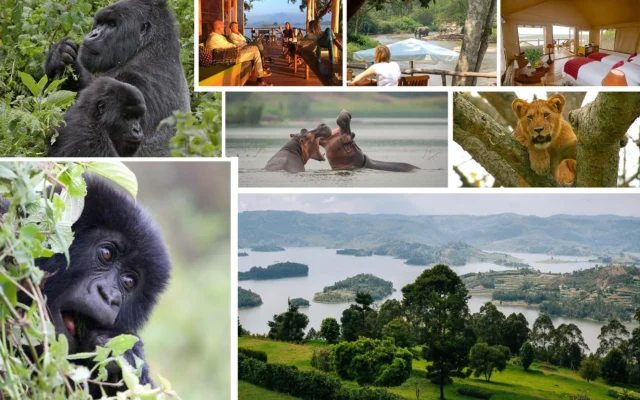
7 Day Uganda Wildlife & Gorilla
You visit
Murchison Falls, Kibale Forest, Queen Elizabeth NP, Bwindi Forest, Entebbe
Seven days with gorillas: the wildlife tour above plus Bwindi trekking on Day 6 — the single most booked private itinerary for Uganda Safari Tours guests who want chimps, savannah and gorillas in one…
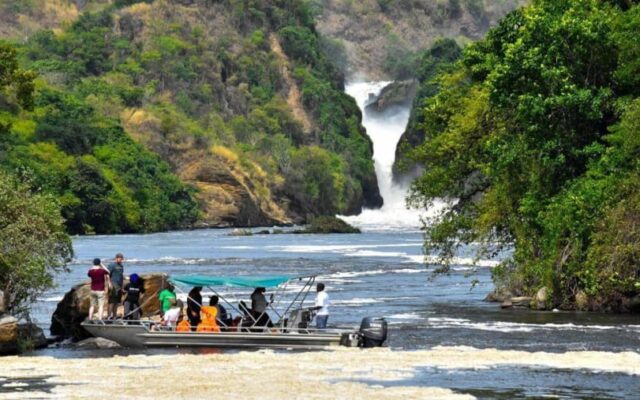
3 Day Murchison Falls Safari
You visit
Murchison Falls, Entebbe
Our classic 3-day Murchison Falls safari follows the park’s most proven circuit: dramatic falls, savannah game drives north of the Nile, and the famous boat trip where the river narrows below the casc…
 Best
Seller
Best
Seller
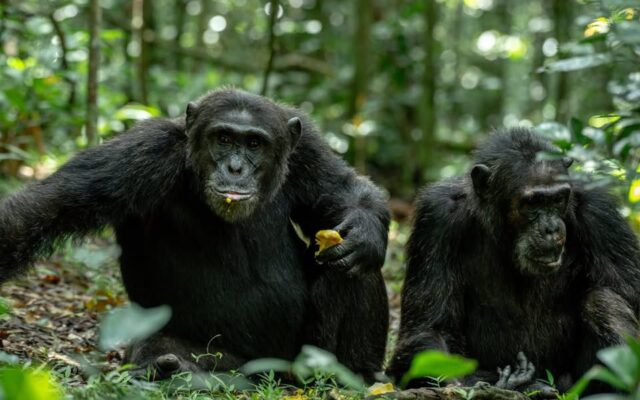
6 Days Uganda Gorillas, Chimpanzees & Wildlife Safari
You visit
Kibale Forest, Queen Elizabeth NP, Bwindi Forest, Entebbe
Primates plus plains in six days: Kibale chimps, Queen Elizabeth savannah, Bwindi gorillas and a Lake Mburo finale for zebra — the full Uganda highlight reel without rushing Kidepo or Murchison.
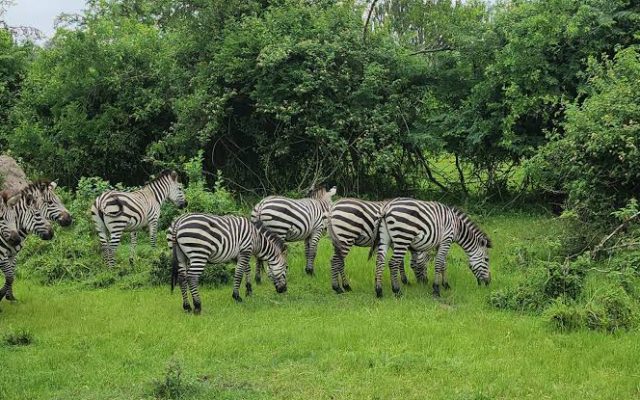
1 Day Lake Mburo Safari
You visit
Uganda Equator, Kayabwe, Lake Mburo, Kampala or Entebbe
This compact 1-day Lake Mburo safari is the closest national-park wildlife experience to Kampala and Entebbe. Lake Mburo is Uganda’s smallest savannah park but one of the most rewarding for a short tr…