Hippopotamus conservation sits at a critical juncture across Africa. The common hippopotamus (Hippopotamus amphibius) is listed as Vulnerable on the IUCN Red List, with populations declining in many range states due to poaching, wetland loss, and human–wildlife conflict. Uganda remains a stronghold where protected rivers and lakes — especially in Murchison Falls, Queen Elizabeth, and Lake Mburo — support visible, tourism-accessible pods. This guide examines threats, protection efforts, and how responsible safari travel supports long-term survival.
IUCN Status: Vulnerable
The IUCN classifies the common hippopotamus as Vulnerable, meaning the species faces a high risk of extinction in the wild if threats continue unchecked. Population estimates for Africa range roughly between 115,000 and 130,000 individuals, with significant regional variation. Some countries report steep declines; others, including Uganda within key parks, maintain relatively robust numbers.
Vulnerable status reflects:
- Documented population declines over three generations
- Continued habitat degradation across the range
- Persistent illegal killing for meat and ivory
- Slow reproductive rate limiting recovery speed
Historical Decline and Range Contraction
Hippos once occurred across much of sub-Saharan Africa wherever permanent water and grazing existed. Colonial-era hunting, wetland drainage, and modern conflict zones eliminated populations from former range. Today, hippos are absent or rare in several countries where they were once common.
Uganda’s network of national parks and wildlife reserves provides refuge, though connectivity between waterways outside protected cores remains a conservation challenge tied to habitat integrity.
Poaching and the Ivory Trade
Hippo canine teeth are made of ivory — denser than elephant ivory in some respects — and enter illegal wildlife markets as substitutes or supplements. Poachers target hippos for teeth, meat, and fat. Because hippos congregate predictably in water, they can be vulnerable to coordinated killing if protection lapses.
Uganda Wildlife Authority anti-poaching patrols, intelligence networks, and park gate revenue help deter illegal activity in flagship reserves. International CITES regulations also govern trade in hippo ivory products.
Habitat Loss and Wetland Degradation
Dam construction, irrigation schemes, agricultural expansion, and pollution alter the rivers and lakes hippos depend on. Siltation, chemical runoff, and water extraction reduce habitat quality even when animals technically remain present. Fragmented wetlands isolate pods genetically and reduce drought resilience.
Protected areas like the Victoria Nile corridor and Kazinga Channel function as ecological anchors — but buffer-zone management determines whether hippos can move safely between feeding and resting sites.
Human–Hippo Conflict
Hippos raid crops, damage fishing gear, and kill people when surprised on land or when paths to water are blocked. Retaliatory killing follows. Fisherfolk and farmers living near hippo paths face genuine livelihood and safety risks.
Conservation strategies include:
- Community wildlife revenue sharing from park fees
- Early-warning systems and controlled access near hippo corridors
- Ranger escorts for vulnerable settlements near park edges
- Education on never blocking a hippo’s route to water
Reproductive Biology and Recovery Limits
Hippos reproduce slowly relative to their size. Females typically produce a single calf after about eight months gestation and may not breed every year under stress. Population recovery from poaching spikes or drought-related die-offs takes years — making prevention cheaper than restoration.
Uganda’s Conservation Framework
Uganda Wildlife Authority manages national parks where hippos are a flagship attraction. Boat cruise concessions, park entry fees, and licensed Uganda safari tourism generate revenue that funds patrols, research, and community programmes.
Murchison Falls National Park
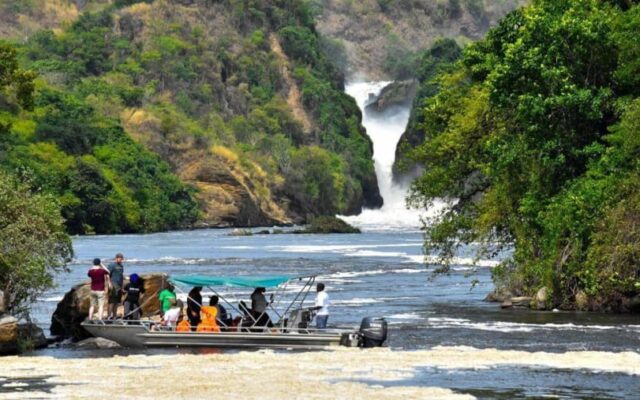
Nile boat tourism creates economic incentives to protect river corridors. Ranger presence along the Victoria Nile deters poaching and monitors hippo–crocodile–elephant dynamics.
Queen Elizabeth National Park
Kazinga Channel boat safaris are among Uganda’s most popular activities. High visitor volume, when managed responsibly, converts hippo visibility into conservation funding — though operators must avoid harassing animals for closer photos.
Lake Mburo National Park
As Uganda’s most accessible compact savannah park, Lake Mburo links hippo protection to southwest tourism circuits including gorilla and chimp extensions — diversifying economic value beyond a single species.
Ecological Importance
Hippos engineer wetlands through grazing, dung nutrient transfer, and path creation. Losing hippos degrades fish productivity, alters grassland structure, and removes a keystone species from river food webs. Their conservation is therefore ecosystem conservation, not single-species trophy management.
Climate Change Considerations
Altered rainfall patterns, prolonged drought, and extreme heat stress aquatic habitat and skin health. Hippos may concentrate in shrinking pools, increasing disease transmission and aggression. Long-term climate adaptation requires maintaining connected wetland networks — not isolated fenced fragments.
Role of Responsible Tourism
Travellers influence outcomes through operator choice:
- Book licensed operators who respect wildlife distance guidelines
- Avoid encouraging captains to chase or corner hippos for photos
- Pay official park and boat fees that fund protection
- Combine visits with community experiences that align local income with wildlife survival
Explore ethical itinerary options on our hippopotamus safaris page.
Research and Monitoring
Aerial surveys, boat counts, and dung surveys help estimate populations, but submerged behaviour complicates accuracy. Ongoing research in Ugandan parks informs carrying capacity for boat tourism and identifies conflict hotspots near park boundaries.
International Cooperation
Hippos cross political boundaries only where waterways connect. Regional cooperation on wetland protection, anti-trafficking enforcement, and shared research benefits transboundary ecosystems — though hippos in Uganda’s interior parks are primarily a national management responsibility.
What Success Looks Like
Conservation success means stable or growing populations inside protected areas, reduced retaliatory killing outside parks, suppressed ivory poaching, and tourism revenue visibly benefiting neighbouring communities. Visitors who plan safaris during the best seasons and follow ranger guidance become part of that success story — ensuring yawning pods on the Nile and Kazinga remain defining images of Uganda for decades to come.
How You Can Help
Choose reputable safari operators, respect wildlife viewing rules, spread awareness about hippo danger and ecological value, and support organisations working on wetland protection. The Vulnerable label is a warning, not a verdict — with sustained effort, Uganda’s river giants can remain a conservation asset rather than a casualty of wetland loss.