The hippopotamus is one of Africa’s most iconic wildlife species and among the most dramatic animals travellers encounter on a Uganda safari. Massive yet deceptively agile in water, herbivorous yet fiercely territorial, hippos shape river ecosystems and define the character of the country’s greatest boat safaris. From yawning bulls half-submerged in the Nile to crowded pods lining the Kazinga Channel, these river giants deliver unforgettable close-range viewing without the long searches required for many other megafauna.
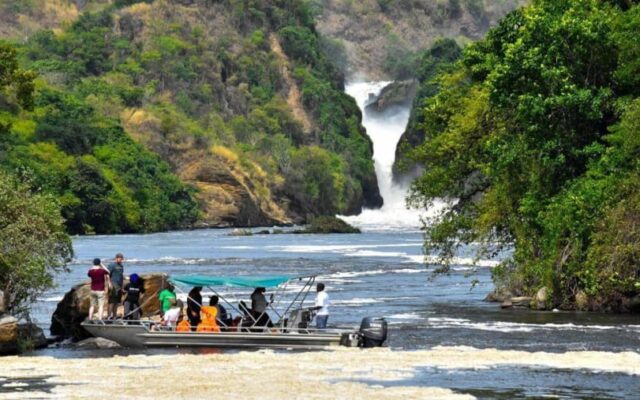
Encountering hippos in Uganda is unlike watching distant animals across open savannah. Regulated boat cruises on the Victoria Nile in Murchison Falls National Park, the Kazinga Channel in Queen Elizabeth National Park, and Lake Mburo in Lake Mburo National Park place you at water level beside pods that may number dozens of individuals. Rangers and boat captains interpret behaviour — yawning displays, vocal honks, calf protection — while crocodiles, elephants, buffalo, and prolific birdlife share the same shorelines.
What Is a Hippopotamus?
The hippopotamus (Hippopotamus amphibius), often called the common hippopotamus or Nile hippopotamus, is a large semi-aquatic mammal native to sub-Saharan Africa. Its name derives from the Ancient Greek for “river horse,” reflecting the hours hippos spend submerged in freshwater. Despite that nickname, hippos are not closely related to horses — their nearest living relatives include whales, dolphins, and pigs.
- Kingdom: Animalia
- Phylum: Chordata
- Class: Mammalia
- Order: Artiodactyla
- Family: Hippopotamidae
- Genus: Hippopotamus
- Species: Hippopotamus amphibius
Physical Characteristics
Hippos are among the largest land mammals alive. Only elephants and white rhinos consistently exceed them in weight.
Size and Weight
Adult hippos typically weigh between 1,300 and 3,200 kilograms, with large bulls at the upper end. Females are smaller but still massively built. A mature hippo can reach roughly 3.5 to 5 metres in length and stand about 1.5 metres tall at the shoulder.
Skin and Aquatic Adaptation
Hippo skin is thick — up to 6 centimetres in places — yet remarkably sensitive. Lacking sweat glands, hippos depend on water and mud to regulate temperature and prevent sunburn. This is why midday boat cruises are so productive: animals remain in the river rather than dispersing across dry land.
Head, Jaws, and Teeth
A hippo’s enormous mouth can gape nearly 150 degrees. Incisors and canines — especially the lower canines — grow continuously and are sought by poachers as ivory substitutes. The eyes, ears, and nostrils sit high on the skull so the animal can see, hear, and breathe while otherwise submerged.
Where Hippos Live
Hippos require permanent deep water close to grazing grasslands. Uganda’s western rift lakes, Nile tributaries, and sheltered park waterways provide ideal conditions.
Murchison Falls National Park
The Victoria Nile supports large hippo populations visible on launch cruises toward the falls and along downstream stretches toward the Lake Albert delta.
Queen Elizabeth National Park
The Kazinga Channel linking Lakes George and Edward holds one of the densest hippo concentrations in East Africa — a centrepiece of any park visit.
Lake Mburo National Park
Despite being Uganda’s smallest savannah park, Lake Mburo supports reliable hippo pods easily seen on lake boat trips and evening drives near shorelines.
Habitat and River Ecology
Hippos are keystone wetland species. Their grazing paths, dung inputs, and nightly movements between water and grassland influence nutrient cycling, vegetation structure, and fish habitat. See our hippopotamus habitat guide for detailed ecology.
Social Structure
Hippos live in groups called pods or bloats, typically comprising females, subadults, and calves associated with a territorial bull. Group sizes vary from a handful to several dozen, and large aggregations are common where water and grazing are abundant — as on the Kazinga Channel.
Role of the Dominant Bull
A territorial male controls a stretch of river or lake shoreline, defending access to females and defining pod composition. Challenges between bulls can be violent, especially in the dry season when waterholes contract.
Communication and Behaviour
Hippos communicate through honks, wheezes, grunts, and splash displays. Yawning — often mistaken for boredom — is typically a threat display revealing formidable jaws and tusks. Explore more on our hippopotamus behaviour page.
Diet
Hippos are herbivores that feed almost exclusively on short grasses, grazing mainly at night. An adult may consume around 40 kilograms of grass per night, travelling several kilometres along established paths between water and feeding grounds. Read our hippopotamus diet guide for feeding ecology.
Reproduction and Calves
Cows give birth in water after an eight-month gestation. Calves nurse on land and in shallow water, staying close to mothers within the pod. Young hippos are vulnerable to crocodiles, lions, and adult males in conflict situations — though protective mothers and pod structure improve survival.
Lifespan
Wild hippos may live 40 to 50 years when undisturbed. Age is often estimated by tooth wear and body size rather than direct observation.
Danger to Humans
Hippos are widely regarded as one of Africa’s most dangerous large mammals. They are unpredictable when disturbed on land or when boats approach too closely without trained guides. Responsible viewing from regulated launches and maintaining distance on foot are essential. Never walk between a hippo and the water.
Conservation Status
The IUCN classifies the common hippopotamus as Vulnerable. Populations have declined in parts of Africa due to poaching, habitat loss, and conflict — though Uganda retains strong numbers in key protected areas. Learn more on our hippopotamus conservation page.
Why Hippos Matter
Hippos support wetland health, drive tourism revenue through boat safaris, and anchor the predator–prey dynamics of river corridors shared with crocodiles, fish eagles, and shoebills. They are also a cultural symbol of African rivers — inseparable from the Nile experience.
Hippo Viewing on Uganda Safaris
The premier way to observe hippos is from a park-regulated boat cruise with a trained captain and ranger interpretation. Nile launches, Kazinga Channel outings, and Lake Mburo boat trips each offer distinct scenery and species combinations.
What Makes Hippo Boat Safaris Unique?
- Close, reliable megafauna viewing
- Excellent photography at water level
- Combines with crocodiles, elephants, and birds
- Productive in midday heat when land game rests
- Accessible for many fitness levels
Best Places to See Hippos in Uganda
The three flagship destinations — Murchison Falls, Queen Elizabeth, and Lake Mburo — anchor most hippo-focused itineraries. Compare parks on our where to see hippopotamuses guide.
Best Time to See Hippos
Hippos are visible year-round, with dry seasons (June–September and December–February) offering easier road access and pleasant boat conditions. See our best time to see hippopotamuses guide for monthly planning.
Safari Experiences
- Murchison Falls Nile boat cruise safaris
- Queen Elizabeth Kazinga Channel packages
- Lake Mburo wildlife and boat safaris
- Combined Uganda wildlife itineraries
Quick Facts
- Second largest land mammal after the elephant
- Semi-aquatic — spends most daylight hours in water
- Herbivorous but highly aggressive when threatened
- IUCN status: Vulnerable
- Can hold breath for several minutes underwater
- Walks on riverbed rather than swimming
- Iconic Uganda viewing on Nile and Kazinga boat cruises