Defassa waterbuck habitat is built around water. These large antelopes do not roam far from rivers, lakes, channels, and permanent wetlands — a constraint that concentrates them along predictable safari routes and shapes everything from herd movement to predator ambush tactics. Explore related guides on defassa waterbuck facts, behaviour, and best places to see waterbuck in Uganda.
Water as the Habitat Anchor
Defassa waterbuck are among the most water-dependent large antelopes in Africa. Physiologically they tolerate dehydration poorly in heat; behaviourally they retreat to rivers and lakes when threatened. This dual dependence means their distribution is patchy across otherwise suitable savannah — they occupy an ecotone band along waterfronts rather than the open plains heartland favoured by Uganda kob.
In practice, if your game drive follows a river, delta, or lake shore, waterbuck sightings become likely. Move deep into dry ridge woodland away from drainage and numbers drop sharply.
Vegetation Types
Typical defassa waterbuck habitat includes:
- Riverine woodland and gallery forest margins
- Moist savannah grassland within a few kilometres of permanent water
- Floodplain meadows and seasonally inundated flats
- Swamp and papyrus edges where grasses stay green
- Lake shores and channel banks — especially in Queen Elizabeth and Lake Mburo
- Acacia–grass mosaics along drainage lines in Kidepo and Murchison
They generally avoid dense forest interior and arid plains far from water, though they may cross open ground between feeding sites and drinking points at dawn and dusk.
Altitude and Climate
In Uganda, defassa waterbuck occur from roughly 700 to 1,400 metres across the savannah belt. Climate is tropical with bimodal rainfall in western parks and a more pronounced dry season in the north. Seasonal flooding in Murchison's delta and Queen Elizabeth's crater-lake zone expands usable grazing along margins; dry months contract herds toward the last green strips beside water.
Habitat Structure and Predator Escape
Waterfront habitat serves two functions: food and refuge. Tall riverside grass provides cover for calves; open banks allow quick access to deep water where lions and hyenas hesitate to follow. Crocodiles remain a risk, but the trade-off favours water escape over open-plain sprinting for many pursued adults.
Park Ecosystems — Uganda's Defassa Strongholds
Murchison Falls National Park
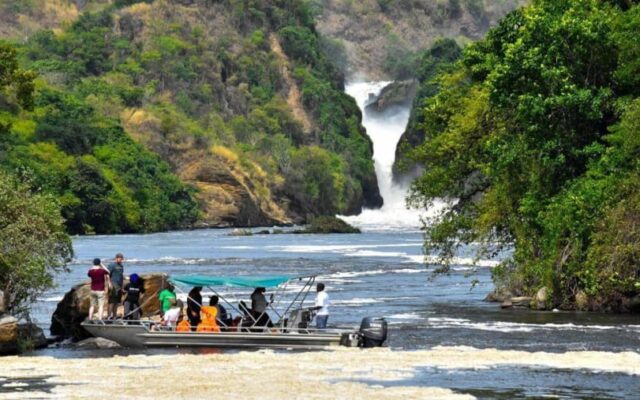
The Victoria Nile and its delta corridors are premier defassa habitat. Buligi game tracks, Paraa sectors, and lake Albert shoreline loops combine riverine woodland with moist grass — exactly the matrix waterbuck prefer. Boat launches en route to the falls pass banks where herds graze in plain view.
Queen Elizabeth National Park
Kazinga Channel margins, crater lake shores, and Ishasha river lines support defassa waterbuck alongside hippo and buffalo. The park's mosaic of wetland edge and savannah makes waterbuck one of the more reliable large antelopes on mixed-species drives.
Kidepo Valley National Park
In far northeastern Uganda, the Narus Valley's seasonal watercourses and remnant permanent pools draw waterbuck into a drier, rugged savannah setting. Densities are lower than in Murchison or Queen Elizabeth, but the valley's wildlife concentrations make encounters rewarding on remote itineraries.
Lake Mburo National Park
Compact lake and wetland systems create accessible waterbuck habitat on short western circuits. Acacia hillsides slope to shores where defassa graze — ideal for travellers combining Mburo with gorilla or chimpanzee parks.
Defassa vs Common Waterbuck — Geographic Habitat Split
Across Africa, defassa waterbuck dominate west of the Gregory Rift while common waterbuck hold east and south. Uganda lies firmly in defassa territory. Travellers comparing photographs from Botswana or South Africa (ringed rumps) with Uganda sightings (solid white patches) are observing a real biogeographic divide, not individual variation.
Seasonal Habitat Use
During rains, waterbuck spread across floodplain grasses and exploit fresh growth away from heavily trampled banks. In dry seasons they concentrate along remaining green strips — improving predictability for game drives if you prioritise river loops at dawn. Fire-maintained savannah near water can produce especially short, nutritious grass favoured for grazing.
Habitat Threats
Outside parks, riverine settlement, livestock pressure, crop expansion, and illegal hunting fragment waterfront habitat. Inside protected areas, invasive plants, boundary encroachment, and climate-driven shifts in rainfall timing can alter grass phenology along margins. Because defassa are sedentary compared to migratory species, local habitat loss hits populations quickly.
Safari Viewing and Habitat Ethics
Stay on designated tracks, avoid crowding animals at narrow river crossings, and follow ranger guidance near soft floodplain soils. Wetland margins are sensitive; responsible vehicle use helps keep waterfront grazing available year after year.
Planning Your Visit
For habitat-focused viewing, schedule dawn drives on Nile and Kazinga circuits, pair Murchison Falls or Queen Elizabeth boat trips with adjacent track loops, and consult our best time to see defassa waterbuck guide. Build routes via Uganda safari packages that emphasise savannah wetlands.