Defassa waterbuck behaviour reflects a life tied to water, cover, and the social tension between herd safety and territorial breeding. Sedentary by antelope standards, these animals form nursery herds, bachelor groups, and lone territorial bulls whose displays shape waterfront dynamics across Uganda's savannah parks. Explore facts, habitat, and where to see defassa waterbuck for the full picture.
Sedentary Nature
Defassa waterbuck are not long-distance migrants. Individuals and groups maintain home ranges centred on reliable water, shifting seasonally with grass quality but rarely undertaking the kind of mass movements seen in some wildebeest or zebra populations. This predictability benefits safari viewing — the same river loops produce repeat sightings year after year.
Social Structure and Herd Types
Waterbuck are gregarious but structured. Typical groupings include:
- Nursery herds: Females, subadults, and calves — the most common sighting on drives
- Bachelor herds: Young and subordinate males expelled from territorial areas
- Territorial males: Dominant bulls holding waterfront or riverside territories from roughly five to nine years of age, peak dominance
Herds often number six to thirty animals, though aggregations may swell seasonally near prime grazing. Spinster groups of females without calves occur occasionally.
Territorial Behaviour in Males
Mature bulls establish territories that include access to water and attractive grazing for females. Territorial defence involves posturing, horn presentation, parallel walks, and clashes that can be heard across quiet river mornings. Young males develop horns around seven to nine months and are increasingly pushed toward bachelor groups as they mature.
Females move through male territories rather than remaining permanently with a single bull — a pattern that differs from lek-breeding kob but still concentrates mating along waterfront resource lines.
Alarm and Flight Behaviour
When disturbed, waterbuck emit snorts and stamp warnings before fleeing. Their escape strategy often leads into water rather than across open plain — a behaviour lions exploit by ambushing near narrow crossings. On game drives, sudden herd movement toward a river is a cue predators may be nearby.
Reaction to Predators
Lions, leopards, spotted hyena, and crocodiles all pose threats. The oily skin secretion may deter some predators from feeding, but waterbuck remain on the menu — especially calves. Adults use horns effectively in close defence. Night-time vulnerability is higher when leopards patrol bank vegetation.
Daily Routine
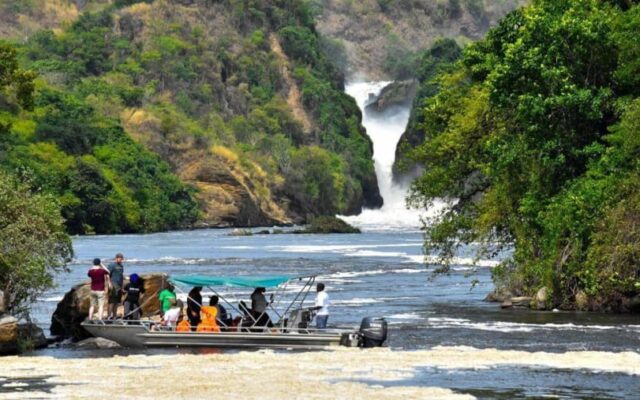
A typical day involves dawn grazing, midday rest in shade or tall riverside grass, afternoon feeding, and drinking at predictable intervals. Boat safaris on the Nile or Kazinga Channel often catch herds active on banks in soft morning light.
Reproduction and Calving
Breeding occurs throughout the year in equatorial Uganda, with birth peaks often tied to rainy-season forage. Gestation lasts seven to eight months. Calves lie concealed in cover for their first weeks while mothers graze nearby — a vulnerable period for leopard and hyena.
Communication
Visual displays — horn angle, head position, body stance — supplement vocal snorts and grunts. Males assess rivals through parallel walking and horn contact; females and calves maintain contact within herds through subtle movement and alarm signals.
Interaction With Other Species
On wetland margins, waterbuck share habitat with hippo, buffalo, Uganda kob, bushbuck, and diverse waterbirds. They are neither as aggressive as buffalo nor as flighty as reedbuck, often allowing vehicles on established tracks to approach reasonably closely if disturbance is minimal.
Behavioural Viewing Ethics
Do not block river crossings, chase fleeing herds, or crowd territorial males during displays. Rangers in Murchison Falls and Queen Elizabeth enforce track rules that protect both animals and waterfront soils.
Seasonal Behaviour Highlights
Dry-season concentrations simplify locating herds but may increase tension at limited water points. Wet-season dispersal offers greener backdrops and calf sightings. Rutting activity can intensify male territorial behaviour — listen for horn clashes on dawn drives. Bachelor males may spar in groups, rehearsing the parallel walks and horn contacts they will use when claiming riverside territories later in life.
Young Animals and Play
Calves and yearlings sometimes engage in short chases and mock sparring within nursery herds — behaviour that builds coordination before predator pressure intensifies. Mothers remain alert during these bouts, positioned between calves and thick cover.
Planning Behaviour-Focused Safaris
Request early starts, ask guides about recent predator activity on river loops, and pair drives with boat trips for bank-level behaviour. See best time to see defassa waterbuck and safari experiences for itinerary ideas.