
Defassa Waterbuck FAQs and Answers — quick answers on identification, defassa vs common waterbuck, biology, Uganda parks, predators, and safari planning. Explore where to see defassa waterbuck, facts, best time to visit, and safari experiences — or request a quote for a tailored savannah itinerary.
- What is the defassa waterbuck?
The defassa waterbuck (Kobus defassa) is a large, water-dependent antelope of the genus Kobus. In Uganda's savannah parks it is the form of waterbuck present west of the Rift — distinguished from the common waterbuck by solid white rump patches rather than a white tail ring.
- How do you tell defassa waterbuck from common waterbuck?
Look at the rump. Defassa waterbuck have broad white patches on either side of the tail base. Common waterbuck have a conspicuous white ring encircling a dark rump. Uganda savannah parks hold defassa; ringed common waterbuck occur mainly east and south of the Rift. See our defassa waterbuck facts page for photos and field marks.
- Is Kobus defassa the same as Kobus ellipsiprymnus defassa?
Taxonomy is debated. Many references treat defassa as the subspecies Kobus ellipsiprymnus defassa within one waterbuck species. Other authorities recognise Kobus defassa as a distinct species because of rump pattern, range separation, and morphology. Uganda field guides and conservation assessments increasingly emphasise the defassa form's separate Near Threatened status.
- Where is the best place to see defassa waterbuck in Uganda?
Murchison Falls National Park Nile sectors and Queen Elizabeth Kazinga Channel margins are among the most reliable. Kidepo Valley Narus Valley and Lake Mburo lake shores also deliver regular sightings. Compare parks on our where to see defassa waterbuck guide.
- What do defassa waterbuck eat?
They are selective grazers, feeding mainly on grasses and herbaceous plants along riverbanks, floodplains, and lake margins. They stay within reach of permanent water. More detail on our defassa waterbuck diet page.
- How big is a defassa waterbuck?
Males stand roughly 120–127 cm at the shoulder and weigh 200–260 kg. Females are smaller, about 119 cm tall and 160–215 kg. Males carry long spiral horns 55–99 cm along the curve; females are usually hornless.
- Why do waterbuck smell greasy?
Waterbuck skin secretes an oily, musky substance when animals are excited — nicknamed the "greasy kob." It may help waterproof the shaggy coat when wading and is thought to make meat less attractive to some predators, though lions and hyena still hunt waterbuck.
- Are defassa waterbuck endangered?
Defassa waterbuck are classified Near Threatened by the IUCN with a decreasing population trend — unlike the Least Concern common waterbuck. Uganda's national parks protect important populations. Read our conservation page for threats and outlook.
- What predators hunt defassa waterbuck?
Lions, leopards, spotted hyena, and Nile crocodiles all pose threats. Waterbuck often flee into water when chased — a behaviour visible on Nile and Kazinga circuits where predators patrol banks.
- When is the best time to see defassa waterbuck?
Sightings are year-round. Dry seasons (June–September and December–February) concentrate herds near water and suit dawn photography. Wet months offer greener scenery and calf sightings. See best time to see defassa waterbuck.
- Can you see defassa waterbuck on a boat safari?
Yes. Nile boat launches in Murchison Falls and Kazinga Channel cruises in Queen Elizabeth pass banks where waterbuck graze — excellent combined with hippo and bird viewing.
- Do defassa waterbuck live in herds?
Yes. Nursery herds of females and young are most common, often 6–30 animals. Young males form bachelor groups; mature bulls hold riverside territories. See behaviour for social detail.
- What habitat do defassa waterbuck prefer?
Riverine savannah, lake margins, swamp edges, and moist grassland within a few kilometres of permanent water. They avoid arid plains far from drainage. Full ecology on our habitat guide.
- How do defassa waterbuck differ from Uganda kob?
Waterbuck are larger, shaggier, and tied to wetland edges with spiral horns on males. Uganda kob are smaller, redder plains antelopes with lyre-shaped horns and spectacular lek breeding on open grasslands like the Kasenyi Plains.
- How long is defassa waterbuck pregnancy?
Gestation lasts roughly seven to eight months, usually producing a single calf. Births often peak in rainy seasons when grass quality supports lactating females.
- Which Uganda safaris include defassa waterbuck viewing?
Any savannah itinerary visiting Murchison Falls, Queen Elizabeth, Kidepo, or Lake Mburo includes waterbuck on river and channel loops. Browse defassa waterbuck safaris and Uganda safari packages.
- Can I combine gorilla trekking with defassa waterbuck safaris?
Absolutely — classic Uganda circuits pair Bwindi gorilla trekking with Queen Elizabeth or Lake Mburo savannah days where defassa waterbuck graze channel and lake margins. Most 7–10 day routes include both ecosystems.
- Are defassa waterbuck good for photography?
Yes. Large size, white rump contrast, spiralling horns, and riverside settings photograph well at dawn and dusk. Bulls often stand alert on open banks before returning to graze.
- What is the scientific name of the defassa waterbuck?
Kobus defassa — also widely cited as Kobus ellipsiprymnus defassa when treated as a subspecies of the waterbuck complex named for the elliptical rump marking of the common form.
- How can tourists help defassa waterbuck conservation?
Book through licensed operators, pay official park fees, follow track rules, include savannah parks in itineraries beyond gorilla forests alone, and avoid illegal wildlife products. Tourism revenue funds rangers protecting the waterfront habitat defassa require.
Safari packages to see Defassa Waterbuck
Bookable itineraries below include parks and activities where you are most likely to encounter Defassa Waterbuck in the wild.
 Best
Seller
Best
Seller
7 Day Uganda Wildlife & Gorilla
You visit
Murchison Falls, Kibale Forest, Queen Elizabeth NP, Bwindi Forest, Entebbe
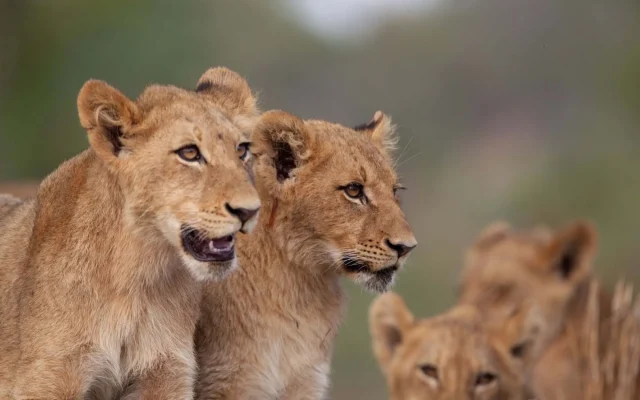
Seven days with gorillas: the wildlife tour above plus Bwindi trekking on Day 6 — the single most booked private itinerary for Uganda Safari Tours guests who want chimps, savannah and gorillas in one…
3 Day Murchison Falls Safari
You visit
Murchison Falls, Entebbe
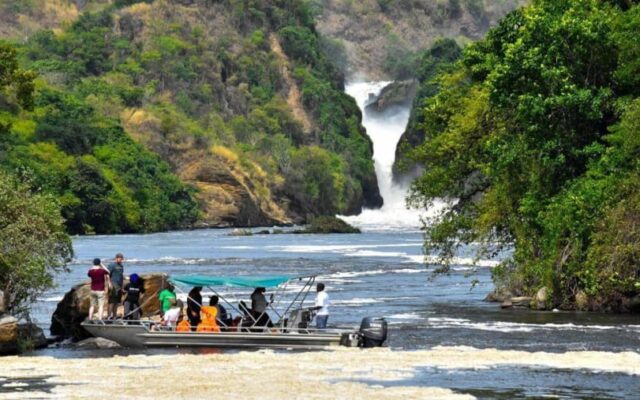
Our classic 3-day Murchison Falls safari follows the park’s most proven circuit: dramatic falls, savannah game drives north of the Nile, and the famous boat trip where the river narrows below the casc…
 Best
Seller
Best
Seller
6 Days Uganda Gorillas, Chimpanzees & Wildlife Safari
You visit
Kibale Forest, Queen Elizabeth NP, Bwindi Forest, Entebbe
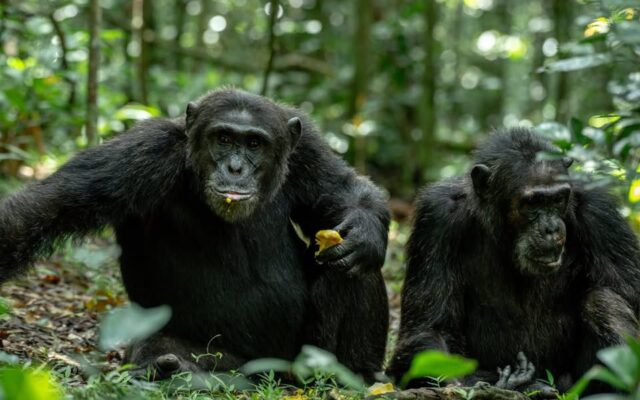
Primates plus plains in six days: Kibale chimps, Queen Elizabeth savannah, Bwindi gorillas and a Lake Mburo finale for zebra — the full Uganda highlight reel without rushing Kidepo or Murchison.
18 Days Uganda Wildlife Safari
You visit
Entebbe (Start, End)
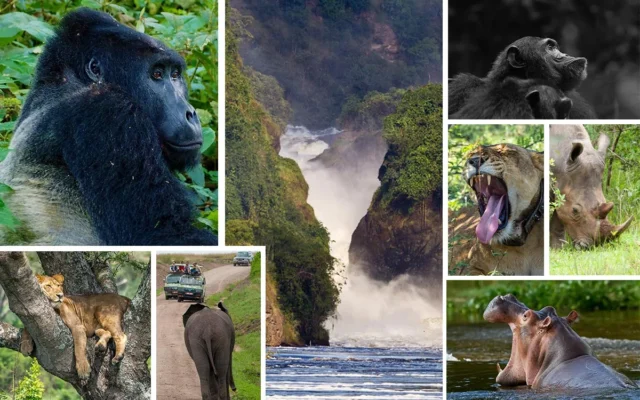
The ultimate 18-day Uganda wildlife safari — every savannah park, both chimp forests, gorillas, and the remote northeast. After Murchison and Kidepo, the route sweeps through Kibale, Queen Elizabeth,…