The Nubian giraffe is one of Africa's most elegant savannah giants and among the most significant conservation priorities on the continent. As the nominate subspecies of the northern giraffe (Giraffa camelopardalis camelopardalis), it carries a Critically Endangered IUCN listing — yet Uganda offers travellers one of the world's best opportunities to encounter it in growing numbers on classic game drives through Murchison Falls National Park and Kidepo Valley National Park.
Unlike forest treks for gorillas or swamp outings for shoebills, Nubian giraffe encounters unfold from a 4x4 on open savannah tracks. Towering above acacia woodland, moving in loose groups across golden plains, and distinguished by pale coat patches with cream-coloured lower legs, these browsers combine biological rarity with outstanding photographic accessibility — especially on dawn drives along Murchison's Buligi circuit.
What Is a Nubian Giraffe?
The Nubian giraffe is the nominate subspecies of the northern giraffe, first described by Carl Linnaeus in 1758. Genetic research by the Giraffe Conservation Foundation (GCF) confirms that populations historically called Rothschild's giraffe — including Uganda's famous white-stockinged herds — belong to the same taxonomic unit. Travellers may still hear both names in the field; scientifically, Uganda's giraffes are Nubian giraffes.
- Kingdom: Animalia
- Phylum: Chordata
- Class: Mammalia
- Order: Artiodactyla
- Family: Giraffidae
- Genus: Giraffa
- Species: Giraffa camelopardalis (northern giraffe)
- Subspecies: Giraffa camelopardalis camelopardalis
Physical Characteristics
Nubian giraffes in Uganda are immediately recognisable on game drives — a skill worth developing before your first northern safari.
Coat Pattern
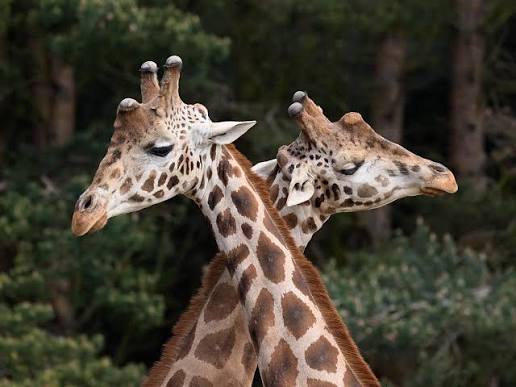
Large, rectangular orange-brown patches sit on a cream or off-white background. The defining field mark of the Rothschild's ecotype — common in Murchison and Kidepo — is the absence of markings below the knees, creating the famous "white stocking" appearance. Patch edges are softer than Masai giraffe markings and less geometric than reticulated giraffe lines.
Height and Build
Adult males may exceed 5.5 metres in height; females are somewhat smaller. Long legs, a towering neck, and an elegant frame make giraffes the tallest land mammals on Earth. Despite the neck's length, giraffes share the same seven cervical vertebrae as all mammals — each enormously elongated.
Tongue and Teeth
A dark, prehensile tongue up to 50 centimetres long strips leaves from thorny acacia branches. Thick saliva and tough mouth tissues protect against thorns that would deter most browsers — an adaptation you can watch at close range on a respectful game drive.
Where Nubian Giraffes Live in Uganda
Only two protected areas in Uganda hold naturally occurring Nubian giraffe populations within the subspecies' historic range.
Murchison Falls National Park
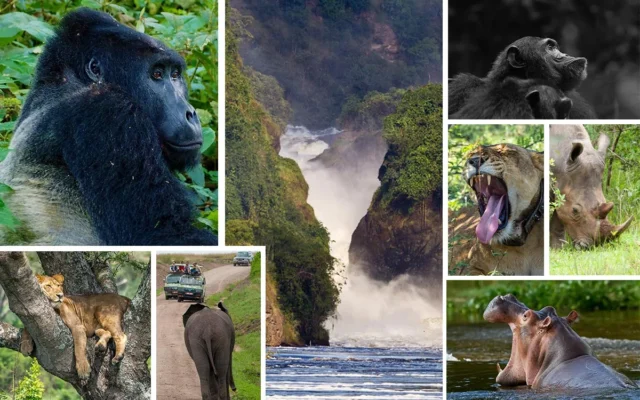
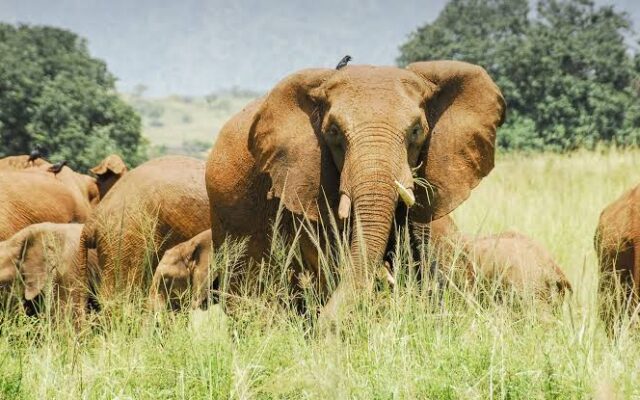
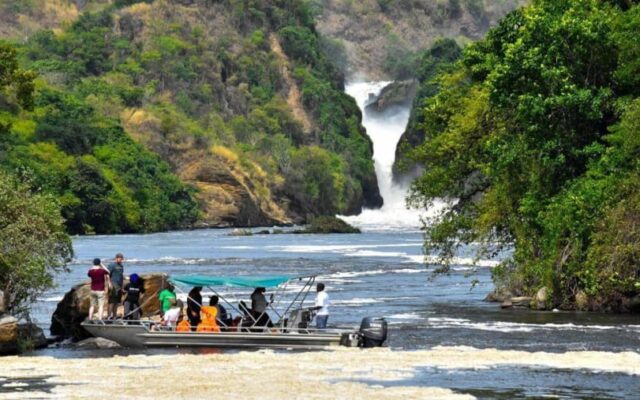
The northern bank of the Victoria Nile supports Uganda's — and one of Africa's — most important Nubian giraffe populations. The Buligi circuit, Delta Point tracks, and riverine escarpment drives offer excellent visibility. Giraffes share the landscape with elephant, buffalo, lion, leopard, Uganda kob, and hartebeest. Conservation translocations have also re-established giraffes south of the Nile and in other protected areas.
Kidepo Valley National Park
Remote, dramatic, and far less visited than Murchison, Kidepo's Narus Valley holds a reinforced population rebuilt through Uganda Wildlife Authority (UWA) and GCF translocations — including 14 giraffes moved from Murchison in 2018. Sightings here feel exclusive: giraffes against kopje-studded plains and vast northeastern skies.
Habitat and Ecosystem Role
Nubian giraffes inhabit open woodland savannah, acacia plains, and riverine corridors where tall browse is available year-round. As selective mega-browsers, they prune tree canopies, disperse seeds through dung, and serve as sentinel species whose height aids predator detection across the savannah. Learn more in our habitat guide.
Social Structure and Behaviour
Giraffes live in flexible fission-fusion groups. Mothers and calves form nursery clusters; adult males may wander alone or engage in necking contests to establish dominance. On game drives, giraffes often tolerate vehicles on established tracks, allowing extended observation when guides approach respectfully. Explore behaviour and diet for deeper ecology.
Conservation Status
Globally, the Nubian giraffe is Critically Endangered, with isolated remnant populations in Ethiopia and South Sudan facing severe decline. Uganda's story is remarkably different: coordinated protection, GCF monitoring since 2013, anti-poaching patrols, and strategic translocations have rebuilt national numbers from fewer than 300 around 2010 to more than 2,400 individuals today. Murchison Falls alone anchors survival in the subspecies' natural range. Read our full conservation guide.
Why Nubian Giraffes Matter
Ecologically, giraffes maintain savannah structure and seed dispersal. Genetically, Uganda's herds represent a distinct northern giraffe lineage that split from other forms hundreds of thousands of years ago. Economically, they anchor photographic tourism in Murchison and Kidepo — supporting ranger salaries, lodge employment, and community revenue. For travellers, witnessing a Critically Endangered subspecies in recovering numbers is both a privilege and a direct contribution to protection.
Best Way to See Nubian Giraffes
Classic morning and afternoon game drives on Murchison's northern bank remain the gold standard. Dawn light on the Buligi circuit, a telephoto lens ready, and a skilled guide who reads giraffe movement patterns deliver encounters that define Uganda's savannah safari. Kidepo suits travellers seeking remoteness and landscape photography with giraffes as a headline species. See where to see Nubian giraffes and best time to visit.
Best Time to Visit
Giraffes are visible year-round, but dry seasons (December–February and June–September) offer shorter grass, animals concentrated near the Nile and Narus River, and optimal photographic light. Wet months bring lush scenery and fewer vehicles — a different but equally rewarding aesthetic.
Safari Experiences
- Murchison Falls Nubian Giraffe & Big Game Safari
- Kidepo Valley Photographic Safari
- Nile Boat Cruise & Giraffe Game Drive
- Uganda Northern Circuit Wildlife Safari
- Fly-in Murchison Falls Safari
Quick Facts
- Nominate subspecies of the northern giraffe — G. c. camelopardalis
- Critically Endangered globally; recovering strongly in Uganda
- Tallest land mammal on Earth
- Identified by pale patches and cream-coloured leg stockings (Rothschild's ecotype)
- Natural range in Uganda: Murchison Falls and Kidepo Valley
- Uganda population estimated at 2,400+ individuals
- Best seen on savannah game drives — no special permits required
- Partnership between UWA and Giraffe Conservation Foundation since 2013