The Uganda kob is more than a handsome antelope on an East African game drive. It is Uganda's national antelope — a species so central to the country's identity that it stands on the national coat of arms beside the grey crowned crane, representing the abundant wildlife Uganda has worked to protect. For safari travellers, kob herds on golden plains are often the first unforgettable sight of the true African bush.
Scientifically known as Kobus kob thomasi, the Uganda kob is a subspecies of the kob antelope adapted to open savannah and seasonally flooded grasslands. Males carry elegant, lyre-shaped horns and a rich reddish-brown coat; females are hornless and slightly smaller but equally graceful. Watch a herd move across the Kasenyi Plains at dawn and the appeal is immediate — fluid, alert, and perfectly at home in landscapes that define classic Uganda safaris.
What Is the Uganda Kob?
The Uganda kob belongs to the family Bovidae and the tribe Reduncini, which includes water-dependent antelopes such as waterbuck and reedbuck. As a subspecies of Kobus kob, it is distinguished from other kob populations by its colouration, range, and behaviour in Uganda's park ecosystems.
- Kingdom: Animalia
- Phylum: Chordata
- Class: Mammalia
- Order: Artiodactyla
- Family: Bovidae
- Genus: Kobus
- Species: Kobus kob
- Subspecies: Kobus kob thomasi
Today the Uganda kob occurs mainly in South Sudan west of the Nile, Uganda, and northeastern Democratic Republic of Congo. It has been lost from former range in southwestern Kenya and northwestern Tanzania, which makes Uganda's protected savannahs especially important for the subspecies.
National Symbol and Cultural Importance
On Uganda's coat of arms, the kob appears on the shield's left side, opposite the crested crane — the national bird. Official symbolism describes the kob as representing abundant wildlife, a phrase that captures both pride and responsibility. The animal appears in government imagery, Uganda Wildlife Authority branding, and countless safari photographs that shape how the world sees Uganda.
For Ugandans and visitors alike, the kob is a living emblem: a reminder that savannah parks are not only tourism assets but national heritage landscapes.
Physical Characteristics
Size and Appearance
Adult males stand roughly 90 to 100 centimetres at the shoulder and weigh around 90 to 100 kilograms. Females are smaller, typically 80 to 90 centimetres tall and 60 to 75 kilograms. The coat is a warm reddish brown, with white markings on the throat, eye rings, and underparts that help distinguish kob from similar antelopes on mixed-species plains.
Horns
Only males grow horns. These curve forward and outward in a distinctive lyre shape, then sweep back — a profile instantly recognisable in field guides and on the coat of arms. Horn size and shape play a role in male dominance on lek territories.
Speed and Agility
Kob are built for open-country escape. They can sprint at speeds approaching 60 kilometres per hour, using powerful hindquarters to evade lions, leopards, and spotted hyena on short-grass plains where cover is scarce.
Lek Mating Displays — A Biological Spectacle
The Uganda kob is world-famous among ecologists for its lek mating system. Rather than defending a territory around a female herd, males cluster on traditional breeding grounds — leks — and defend small circular territories from which they display to visiting females.
On leks, males posture, paw the ground, circle rivals, and clash horns in ritualised combat. Dominant centre males hold the smallest territories but receive the most female visits. Pioneering studies in Uganda's Queen Elizabeth ecosystem (formerly Toro Game Reserve) by researchers including Helmut Buechner helped establish the kob lek as a classic example in behavioural ecology.
For safari visitors lucky enough to visit during the rut, a lek is one of Africa's great wildlife theatre performances — part biology, part national natural heritage.
Savannah Ecology and Ecosystem Role
Uganda kob are selective grazers that prefer short, green grass often found on plains maintained by fire, flooding, and herbivory. Their grazing shapes vegetation structure; their abundance supports predator populations, especially lion. In Queen Elizabeth National Park, the high density of kob on the Kasenyi Plains is a major reason the park is such reliable lion country.
Kob also share savannah space with buffalo, elephant, waterbuck, warthog, and topi, forming the prey base that makes Uganda's savannah circuits feel authentically "East African" in a single game drive.
Where Uganda Kob Live
Uganda kob inhabit open or lightly wooded savannah within reasonable distance of water. They are not deep-forest antelopes; they thrive where visibility is high and grass is fresh — exactly the landscapes game-drive routes are designed to cross.
Queen Elizabeth National Park
The Kasenyi Plains and Ishasha sector support some of the highest kob densities in East Africa. Dawn drives here often yield hundreds of animals in view at once.
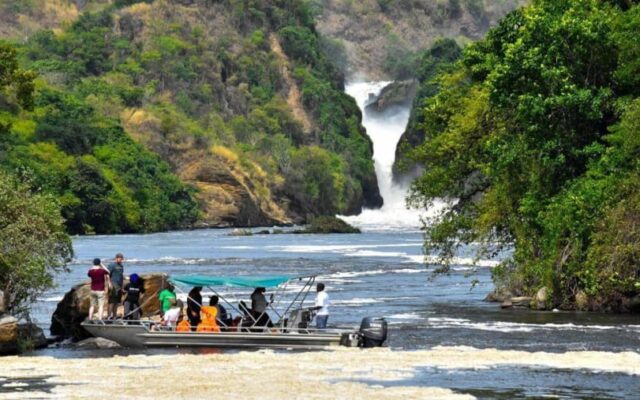
Murchison Falls National Park
North-bank Buligi circuits and Nile valley grasslands hold large herds, frequently photographed with Rothschild's giraffe and buffalo.
Kidepo Valley National Park
Remote Narus Valley grasslands offer spectacular kob viewing in a rugged, uncrowded setting.
Lake Mburo National Park
Compact open plains make kob one of the most accessible species on short savannah add-ons from Kampala or en route to western Uganda.
Social Structure
Females and young males form loose herds whose size shifts with season, grass quality, and predation pressure. Males either remain on leks during breeding periods or move in bachelor groups. Outside the rut, the sexual segregation is less rigid, but the lek system defines kob reproductive life in larger populations.
Diet and Daily Routine
Kob feed morning and late afternoon, resting during midday heat. Their diet is overwhelmingly grass, with some herbs and fresh shoots. Because they favour short grass, they often graze plains that predators scan from a distance — a trade-off between nutrition and risk.
Reproduction
After a gestation of roughly eight to nine months, females typically calve toward the end of the rainy season. A single calf is the norm. Calves lie hidden in grass while mothers graze nearby, a strategy that works best where cover and herd vigilance combine.
Predators and Survival
Lions are the kob's primary predator in Uganda's parks, with leopard and hyena taking calves and weaker adults. The kob's strategy is vigilance, speed, and herd cohesion. Alarm signals — stiff posture, raised tail, snorting — ripple through grazing groups and are often the first clue that a predator is nearby.
Conservation Status
The IUCN lists the kob species as Least Concern, and Uganda kob remain numerous inside national parks. Roughly 98 percent of the population is thought to occur in protected areas, which underlines how vital park funding, ranger patrols, and community tourism benefits are for the subspecies.
Why the Uganda Kob Matters
Ecologically, kob sustain savannah food webs. Economically, they anchor the game-drive experience that complements gorilla trekking and chimpanzee tourism. Culturally, they embody Uganda's commitment to wildlife as national identity — not abstract symbolism, but animals you can still see in wild thousands on a morning drive.
Seeing Uganda Kob on Safari
Kob are among the most reliable antelopes on Uganda savannah itineraries. Pair this overview with our where to see Uganda kob, behaviour, and safari experiences guides to plan park sectors, seasons, and routes.
Quick Facts
| Scientific name | Kobus kob thomasi |
|---|---|
| Best parks | Queen Elizabeth, Murchison, Kidepo, Lake Mburo |
| IUCN | Least Concern (species) |