Where to see olive baboon — expert Uganda safari guide from local planners who know permits, parks, and realistic routing.
Seeing olive baboons in Uganda is rarely difficult — troops line game-drive tracks, forage at lodge perimeters, and patrol forest roads from Murchison Falls to Kibale and Queen Elizabeth. The challenge is watching them safely, respectfully, and with enough time to appreciate social dynamics. This park-by-park guide links to facts, behaviour, best time to visit, and safari experiences.
Why Uganda Is Excellent for Baboon Viewing
Uganda combines savannah parks, forest reserves, and primate trekking destinations on compact western circuits. Olive baboons occur in nearly all of them — no separate permit, no dedicated trek, no lottery. For travellers building gorilla and chimpanzee itineraries, baboons fill travel days with close-range primate observation that costs nothing beyond standard park entry.
Reliability varies by park, not by luck. Murchison and Queen Elizabeth deliver troops on main roads within minutes of starting a drive. Kibale offers forest-edge troops before chimp walks. Kidepo and Lake Mburo add savannah variants in remoter or compact settings. Planning which parks to prioritise depends on your broader itinerary more than baboon-specific needs.
Murchison Falls National Park
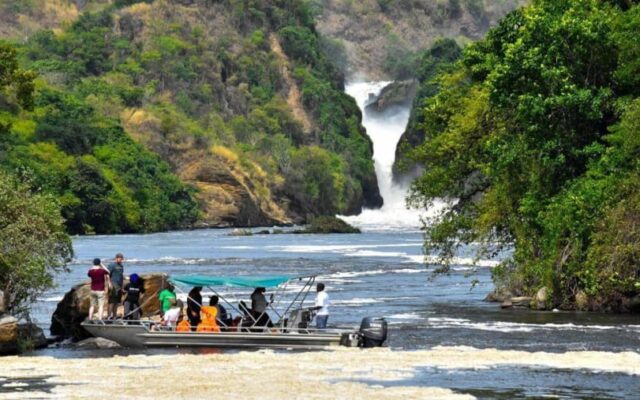
Murchison is Uganda's largest park and among the best for olive baboon viewing. Troops patrol the Victoria Nile corridor, Paraa lodge environs, and northern bank game tracks through Borassus grassland. Dawn drives from Paraa frequently intercept troops descending escarpment sleeping cliffs — spectacular columns of fifty or more individuals crossing the road in disciplined sequence.
Best Sectors
- Paraa and southern bank approaches: Lodge-edge troops habituated to vehicles but still wild
- Northern bank game tracks: Larger troops on grassland–woodland mosaic
- Albert Nile delta boat approach: River-margin foraging at waterholes
- Budongo forest edge (Kaniyo Pabidi): Transition troops between savannah and forest
Combine baboon stops with Nile boat cruises, Rothschild's giraffe drives, and lion tracking on classic three-day Murchison itineraries.
Queen Elizabeth National Park
Queen Elizabeth supports baboons across Kasenyi plains, Mweya peninsula, Kyambura approaches, and the Ishasha sector. Ishasha's southern fig grasslands — famous for tree-climbing lions — also hold reliable troops that forage beside Uganda kob and buffalo. Crater lake roads offer afternoon shade troops worth pausing for.
Best Sectors
- Ishasha sector: Southern woodland savannah; combine with lion drives
- Kasenyi plains: Open-country grazing troops at dawn
- Mweya and Kazinga approaches: Lodge and boat-launch baboon activity
- Kyambura Gorge road: Forest-edge troops near chimp gorge
Kibale National Park and Kibale Corridor
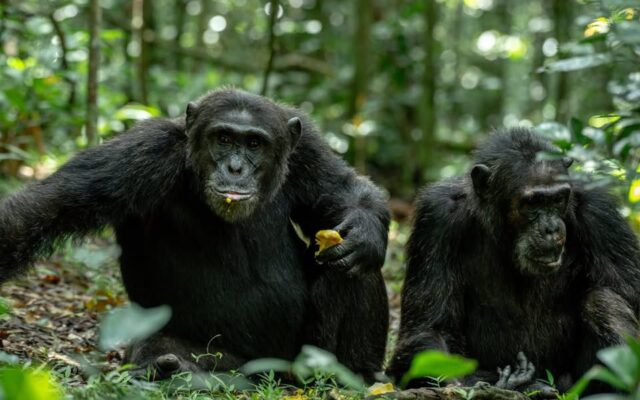
Kibale is Uganda's primate capital — thirteen species including chimpanzees — and olive baboons are among the most visible. Troops line the main forest road to chimp trek briefing points, forage near Bigodi Wetland Sanctuary approaches, and raid crop margins at the park boundary. Many chimp trekking days begin with baboon encounters before visitors enter the forest.
Pair Kibale baboon viewing with chimpanzee trekking and Bigodi boardwalk walks for a full primate day. See Budongo Forest for similar forest-edge troops on Murchison extension routes.
Budongo Forest Reserve
Budongo's Kaniyo Pabidi and Busingiro sectors hold troops at the savannah–forest ecotone. Chimpanzee tracking mornings often include baboon sightings on approach roads. The escarpment edge above the Albertine Rift offers cliff sleeping sites visible from certain viewpoints — ask guides about dawn positioning.
Lake Mburo National Park
Uganda's compact acacia savannah park supports smaller but reliable baboon troops alongside zebra, impala, and eland. Game drives on Kazuma and Rwonyo tracks, plus lodge perimeters, deliver sightings within hours of leaving Kampala. Ideal for short safaris or en-route stops between Kampala and Bwindi.
Kidepo Valley National Park
Remote Kidepo in northeastern Uganda holds baboons in Narus Valley and along semi-arid grassland margins. Troops are less habituated to heavy traffic than Murchison's — behaviour feels wilder, viewing distances slightly greater. Combine with cheetah, oribi, and Jackson's hartebeest on Uganda's most exclusive savannah circuit.
Bwindi and Western Forest Margins
Bwindi Impenetrable National Park is gorilla country, but olive baboons forage along approach roads and at forest margins — common sights before or after gorilla trekking days. Ruhija and Buhoma sector roads regularly host troops. Do not confuse baboons with the rarer L'Hoest's monkey deeper in forest interior.
Lodge-Edge and Roadside Viewing
Many Uganda lodges sit within baboon range. Paraa Safari Lodge, Mweya lodges, and Kibale forest camps see daily troop visits. Secure food, close balcony doors, and never feed animals. Lodge-edge viewing offers excellent photography when troops forage naturally rather than beg — early morning before kitchen waste appears is often best.
Viewing Ethics and Safety
- Observe from vehicles on main roads; ask rangers before approaching on foot
- Keep windows closed when troops surround vehicles
- Never feed baboons — habituation leads to aggression and lethal control
- Maintain respectful distance on forest walks
- Photograph without flash at close range
Building a Baboon-Rich Itinerary
Most travellers encounter baboons automatically on standard routes. Maximise quality by scheduling dawn game drives in Murchison and Queen Elizabeth, arriving early at Kibale chimp briefing points, and pausing when guides identify grooming peaks rather than driving through troops. Link parks via our olive baboon safaris page and Uganda safari packages.
Planning Your Visit
Baboons reward patience at every park listed above. Combine seasonal timing with multi-park circuits — Murchison north, Queen Elizabeth Ishasha, Kibale chimps — for Uganda's fullest primate and savannah experience alongside reliable Papio anubis viewing.