
Olive baboon behaviour is built around large, multi-male troops, fierce female loyalty, and a dominance hierarchy that can shift violently within minutes. Understanding how Papio anubis organises social life transforms roadside sightings in Murchison Falls, Queen Elizabeth, and Kibale from background noise into one of the richest primate-watching experiences on a Uganda safari. Link this guide to facts, diet, and habitat.
Troop Structure and Daily Rhythm
Olive baboons live in stable troops typically numbering 15 to 150 individuals, though sub-groups forage separately during daylight hours before reuniting at sleeping sites. A troop is not a random aggregation but a structured society with female matrilines, immigrant males, juveniles, and infants occupying distinct social roles.
Daylight activity follows a predictable arc. Troops descend from sleeping cliffs or trees at dawn, spread across feeding grounds through morning, rest and groom during midday heat, resume foraging in afternoon, and return to sleeping sites at dusk. Guides who pause at a troop during the grooming peak — often late morning or early afternoon in shade — witness the social glue that holds alliances together.
Female Hierarchy and Matrilines
Females remain in their natal troop for life, inheriting rank roughly from their mothers. High-ranking females enjoy preferential access to food, grooming partners, and support during disputes. Their daughters inherit elevated status; low-ranking lineages remain subordinate across generations unless coalitions shift the balance.
Female alliances matter enormously. Grooming exchanges cement bonds — a currency more valuable than simple dominance in many situations. A female who grooms a higher-ranking ally gains protection for her infants and priority at fruit patches. Watching grooming networks from a vehicle reveals who holds real power in any troop.
Male Dispersal and Competition
Males leave their birth troop at sexual maturity and immigrate into new groups — a pattern that prevents inbreeding and fuels constant competition. Immigrant males fight established residents for access to oestrous females. Rank among males can change overnight after a serious fight; tenure at the top is often measured in months rather than years.
Male–female friendships also occur. Some males groom and escort females without immediate mating reward, building relationships that pay off when those females support them during male–male conflicts. This political complexity rivals chimpanzee social strategising — visible without a forest trek permit.
Reproduction and Infant Care
Female olive baboons give birth after roughly six months of gestation, typically to a single infant. Mothers carry newborns on the belly, then transition to jockey-style riding on the back as infants gain strength. Other females — especially relatives — may inspect, groom, or briefly handle infants, though mothers remain primary caregivers.
Infant mortality is significant, especially from leopard predation and male infanticide when new immigrant males take over. High-ranking mothers with strong alliances lose fewer infants — a direct link between social politics and reproductive success that field observers can sometimes infer from troop behaviour.
Vocalisations and Communication
Baboon vocal repertoires are extensive. Sharp alarm barks signal leopard or lion presence. Threat grunts accompany dominance displays. Screams mark submission or attack. Rhythmic lip-smacking invites grooming. Each call carries social context — the same bark may mean different things depending on caller rank and troop activity.
Body language complements sound. Yawns exposing canines threaten rivals. Raised eyebrows invite grooming. Presenting hindquarters signals receptivity. Stiff-legged walking with tail erect communicates confidence. Experienced guides at Queen Elizabeth and Murchison often identify tension before visitors see the cause — a useful cue to keep windows closed and cameras ready.
Predator Awareness and Sentinel Behaviour
Leopard are the primary baboon predator in Uganda's forest and woodland parks. Lion and spotted hyena threaten troops in open savannah. Baboons respond with sentinel posting — individuals on elevated perches scanning while others feed. Alarm calls trigger rapid troop cohesion: infants are grabbed, juveniles sprint to adults, and males move toward the threat display.
Chase sequences — leopard stalking, baboons mobbing — are among the most dramatic wildlife moments in Kibale and Murchison, though never guaranteed. Dawn and dusk carry highest risk when predators hunt actively and baboons transition between sleeping and feeding sites.
Aggression and Conflict
Baboon aggression is frequent but structured. Slaps, bites, and chases establish rank without always causing serious injury. Fights between males over females can wound severely. Tourists must never intervene or approach fighting troops — vehicles provide adequate refuge when windows remain closed and food is secured.
Human habituation increases aggression. Troops that learn to beg at lodge kitchens or raid picnic baskets direct threats at people carrying food. Responsible parks management and visitor discipline keep natural foraging behaviour intact and reduce dangerous encounters.
Play and Learning
Juvenile baboons play-fight, chase, and wrestle for hours — practice for adult dominance and predator escape. Play peaks in wet seasons when food is abundant and energy is available. Photographers targeting playful juveniles find excellent subjects at Murchison river roads and Kibale forest approaches where troops tolerate vehicle distance.
Interaction with Other Primates
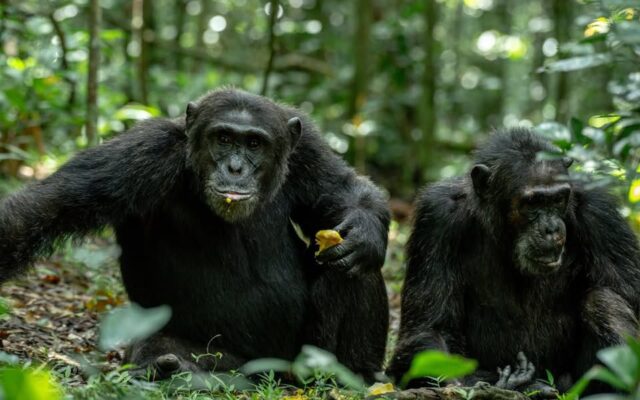
At forest edges, olive baboons interact with red-tailed monkeys, vervets, and chimpanzees — sometimes competing for fruit, sometimes ignoring one another. Chimpanzees occasionally hunt baboons in some African sites; direct predation in Uganda is rare but interspecies tension at fruit trees is common. Vervets are smaller and usually yield feeding position to baboons rather than fight.
Behaviour and Tourism
Baboon behaviour rewards patience. A five-minute stop beats a drive-by snapshot. Watch for grooming chains, sentinel rotation, infant riding positions, and male approach sequences toward females. Combine behavioural observation with where to see olive baboons and best time planning for dawn descent and afternoon shade sessions.
Safety Guidelines for Visitors
- Keep vehicle windows closed when troops are adjacent
- Never feed baboons or leave food visible
- Do not exit vehicles near large troops unless rangers approve
- Secure lodge balconies and food storage
- Follow ranger guidance on forest walks near habituated troops
Planning Your Visit
Behaviour peaks at troop reunion dawn and pre-sleep dusk. Integrate baboon stops into olive baboon safaris and chimpanzee trekking or gorilla trekking circuits where forest and savannah parks combine on one Uganda safari itinerary.