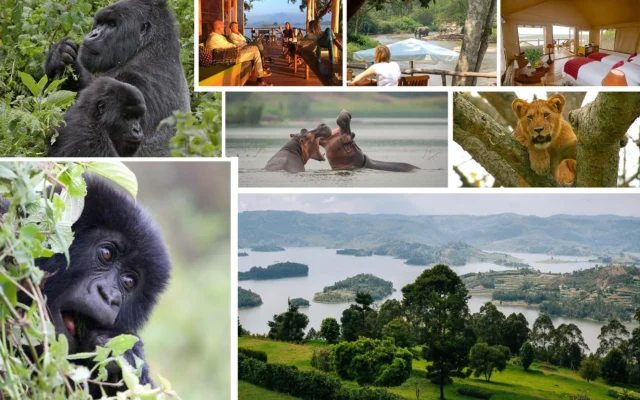
Olive baboon habitat spans an unusually wide ecological range — from open acacia savannah and Borassus grassland to riverine forest, rocky kopjes, swamp margins, and rainforest edges. This flexibility explains why Papio anubis is Uganda's most widespread baboon and why troops appear on almost every classic safari circuit. Understanding where baboons live connects directly to olive baboon facts, behaviour, and where to see olive baboons in Murchison Falls, Queen Elizabeth, and Kibale.
Habitat Generalists of Sub-Saharan Africa
Among African primates, olive baboons rank among the most ecologically versatile. They inhabit semi-desert margins in the Sahel, montane grassland in Ethiopia, moist forest galleries in Uganda, and agricultural landscapes throughout the Rift Valley. The common requirement is not a single vegetation type but a combination of diverse food sources, daily water access, and secure sleeping sites — cliffs, tall trees, or buildings at the forest–farm interface.
Uganda's national park network mirrors this versatility. Savannah parks deliver grassland and acacia woodland. Forest parks deliver fruiting trees and insect-rich understorey. Transitional zones — Budongo escarpment, Kibale's forest edge, Ishasha's fig-dotted plains — hold some of the largest and boldest troops because food from multiple habitats is available within a single day's foraging radius.
Savannah and Woodland Habitats
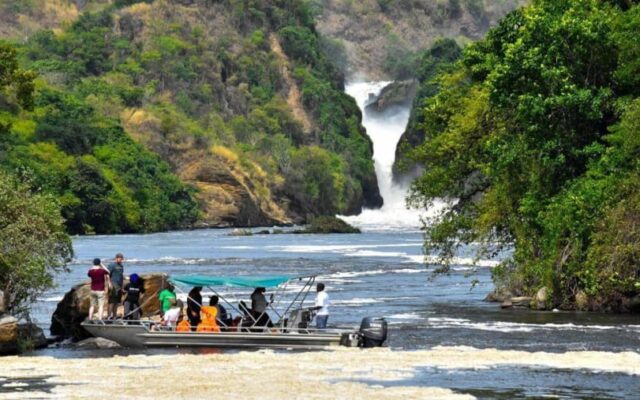
In Murchison Falls National Park, olive baboons exploit Borassus palm grassland, acacia woodland, and riverine corridors along the Victoria Nile. Troops follow predictable daily routes between sleeping cliffs on the escarpment and feeding grounds on the valley floor. Game-drive tracks through Paraa and the northern bank often intersect these routes at dawn — one reason baboon sightings are among the most reliable primate encounters in Uganda's largest park.
Queen Elizabeth National Park offers similar savannah–woodland mosaic. The Ishasha sector's southern fig grasslands and the Kasenyi plains' acacia margins support troops that forage beside Uganda kob and buffalo. Lake Mburo and Kidepo Valley add acacia hills and semi-arid grassland variants where baboons share habitat with zebra, eland, and oribi.
Forest and Forest-Edge Habitats
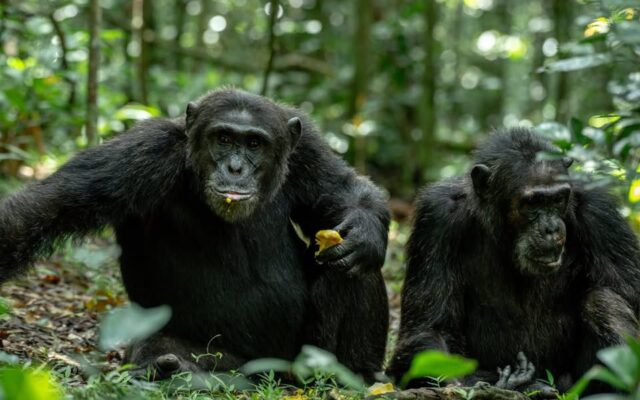
Olive baboons are not deep-forest specialists like red-tailed monkeys or chimpanzees, but they penetrate forest edges and gallery corridors extensively. Kibale National Park — famous for chimpanzee trekking — supports large baboon troops along forest roads and near Bigodi Wetland approaches. Budongo Forest Reserve holds troops at the savannah–forest ecotone where chimpanzees and baboons compete for fruiting trees.
Forest-edge habitat is also where human–wildlife conflict intensifies. Cleared land for maize and banana gardens beside Kibale and Budongo offers high-calorie crops that baboons learn to raid — a pattern that shapes both conservation policy and troop movement at park boundaries.
Water and Sleeping Sites
Baboons drink daily when surface water is available and can survive on moisture-rich foods during wet seasons. River corridors in Murchison, the Kazinga Channel margins in Queen Elizabeth, and swamp edges near Kibale anchor troop distribution during dry months.
Sleeping sites are equally critical. Troops ascend cliffs, tall trees, or buildings at dusk to avoid nocturnal predators — primarily leopard. In Murchison, escarpment cliffs above the Nile serve as communal sleeping refuges. In Queen Elizabeth, large figs and rocky outcrops fulfil the same role. Guides who know sleeping-site locations can sometimes position vehicles for dawn descent — one of the most dramatic baboon spectacles on a Uganda safari.
Altitude and Climate
Uganda's parks span roughly 600 metres at Murchison's Albert Nile delta to over 1,500 metres at Kibale's rim. Olive baboons tolerate this range without difficulty. Rainfall is bimodal across most of the country — peaks around March to May and September to November — which drives seasonal fruit abundance and grass quality. Troops expand foraging radius in lean months and concentrate near reliable food patches when rains fail.
Human-Dominated Margins
Outside protected areas, olive baboons increasingly occupy agricultural margins, village edges, and highway verges. Troops that learn to exploit rubbish pits, maize fields, and tourist lodges represent both an ecological success story and a conservation challenge. In Uganda, community programmes around Kibale and Budongo aim to reduce crop raiding through trench barriers, guard teams, and revenue-sharing that gives neighbours incentive to tolerate park-edge wildlife.
Predator–Habitat Overlap
Baboon habitat choice balances food access against predation risk. Open savannah offers grass and visibility but exposes troops to lion and hyena. Woodland edges offer fruit and cover but conceal leopard. Sentinel behaviour — individuals posted on termite mounds, road banks, and tree crowns — reflects constant risk assessment across these habitats. Dawn and dusk transitions, when leopard hunt most actively, produce the sharpest alarm calls and fastest troop cohesion.
Habitat Threats
Conversion of savannah and forest margin to farmland reduces connectivity between protected areas. Road traffic kills baboons on highways linking Kampala to western parks. Retaliatory killing after crop raids pressures troops outside reserves. Inside parks, habitat remains largely intact — which is why tourism that funds Uganda Wildlife Authority protection directly supports the landscapes baboons depend on.
Safari Viewing and Habitat Ethics
Stay on designated tracks, never feed baboons, and secure food at lodges. Off-track driving damages grassland and forest-edge vegetation that troops forage. Feeding habituates baboons to aggression toward humans — a welfare and safety issue that undermines decades of natural foraging behaviour. Responsible viewing from vehicles preserves both habitat and the authentic troop dynamics visitors travel to witness.
Planning Your Visit
For habitat-focused baboon viewing, prioritise dawn drives in Murchison and Queen Elizabeth during dry seasons, forest-road approaches at Kibale before chimp treks, and escarpment viewpoints where sleeping cliffs are visible. Combine with our best time to see olive baboons guide and Uganda safari packages that link savannah and primate parks on one circuit.