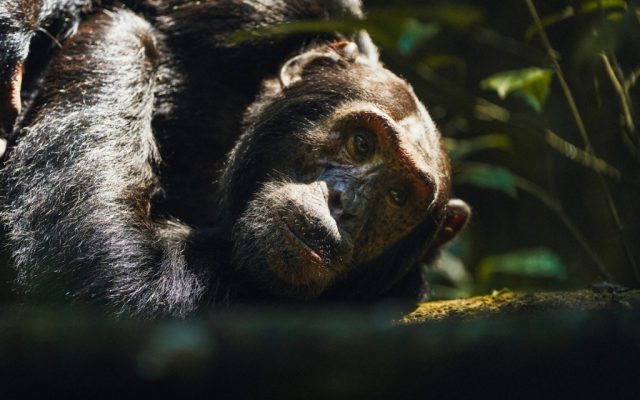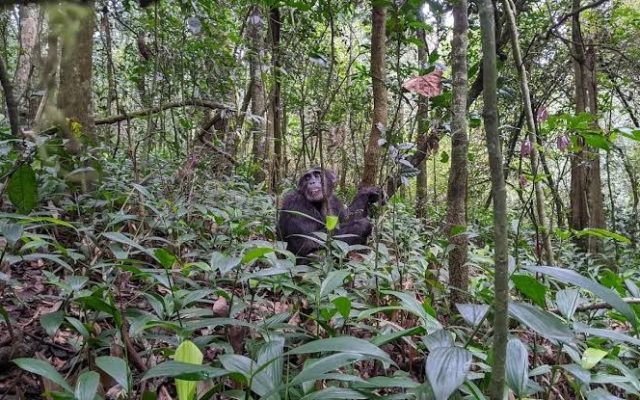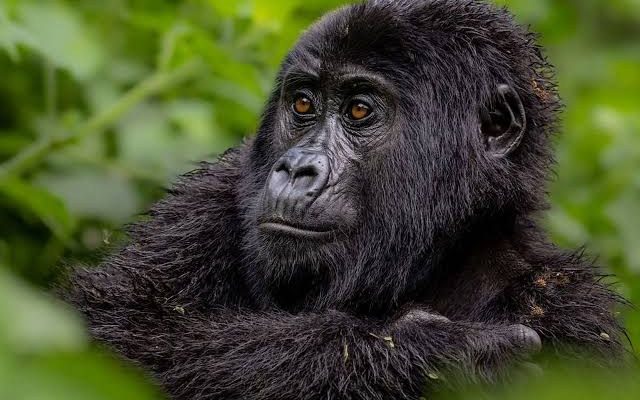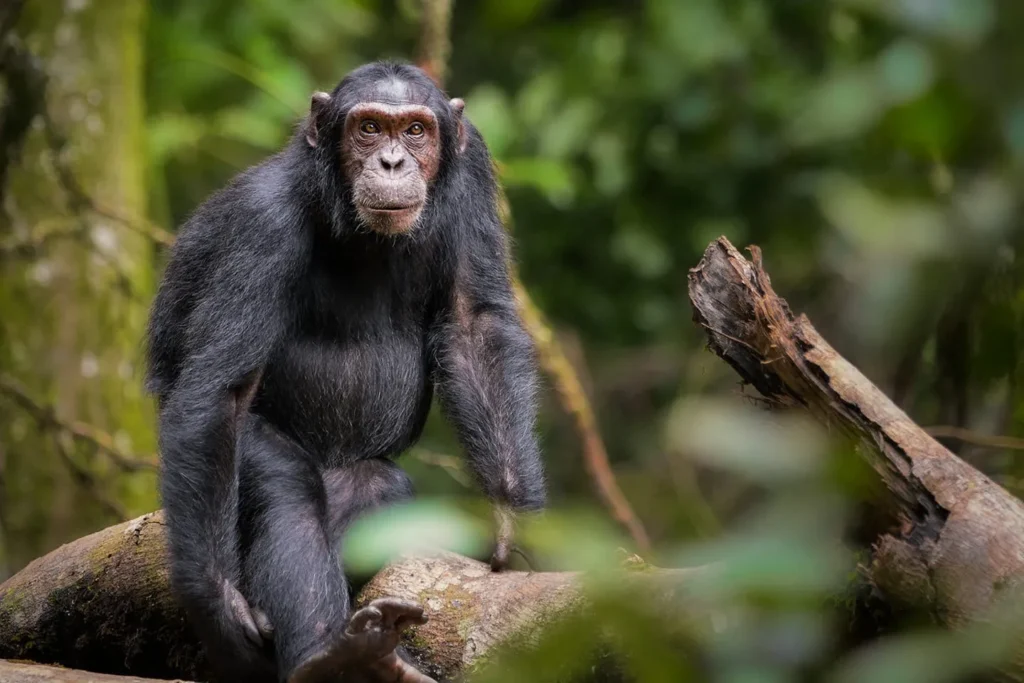
Chimpanzee Trekking in Uganda — Before you stand beneath a fig tree watching chimpanzees tear fruit from the branches, you will hear them. Pant-hoots roll through the canopy. Branches crash. Somewhere ahead, a guide signals — the group is close. In Kibale Forest National Park, that moment arrives on most morning treks, which is why Uganda’s primate capital draws naturalists, photographers, and first-time safari travellers in equal numbers.
This guide covers practical planning for Chimpanzee Trekking in Uganda, with tips you can use when comparing options.
Chimpanzee trekking is the park’s headline act, but Kibale is richer than a single species. Thirteen primate species live in this 795-square-kilometre forest — red colobus, L’Hoest’s monkey, grey-cheeked mangabey, and olive baboons among them. For visitors building a gorilla and primate safari, Kibale is the obvious chimpanzee stop between savannah parks and the southwestern gorilla forests. This guide covers permits, daily logistics, what to expect on the trail, and how Kibale compares to Uganda’s other chimp destinations.
Why Kibale Is Uganda’s Premier Chimp Trekking Destination
Kibale holds an estimated 1,500 chimpanzees, the largest population in Uganda and one of the densest in East Africa. Several communities are fully habituated for tourism, centred on the Kanyanchu area south of Fort Portal. Success rates for standard treks routinely exceed 90% — trackers know the ranges, morning departures are structured, and the forest, while hilly, is generally less punishing than a Bwindi gorilla climb.
The park sits at roughly 1,100–1,600 metres elevation in western Uganda, a five- to six-hour drive from Kampala or a short hop by domestic flight to Kasese followed by a road transfer. It combines easily with Queen Elizabeth National Park (two hours to the Kazinga Channel), Semuliki, and the gorilla parks beyond Kabale. Most classic Uganda itineraries slot in two nights at Kibale: one for trekking, one for recovery or a wetland walk at nearby Bigodi.
How Chimpanzee Trekking Works at Kanyanchu
Treks depart from Kanyanchu Visitor Centre, about 36 kilometres south of Fort Portal. Two sessions run daily: morning briefing around 8:00 a.m. and afternoon around 2:00 p.m. After registration and a safety talk, you follow Uganda Wildlife Authority rangers and armed escorts into the forest until trackers locate a habituated community.
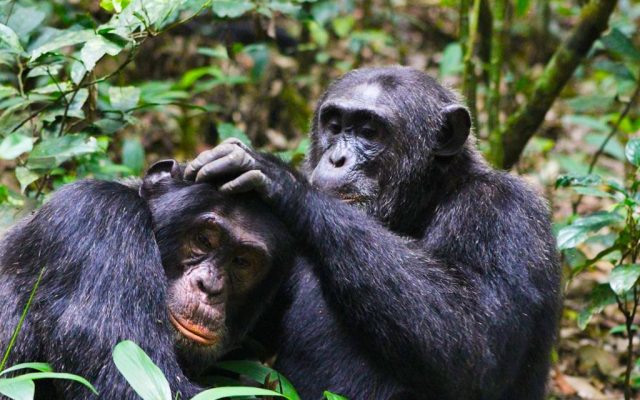
Walking time before contact varies from under an hour to three or four hours, depending on where the chimps nested the night before and how fast they are moving to feed. The hike is moderate — muddy after rain, rooty in places, but without the vertical extremes of Nkuringo gorilla trails. When the group is found, you have one hour to observe. Chimps are vocal, mobile, and often indifferent to visitors in ways gorillas are not. They may feed overhead, groom in a clearing, or sprint past at disconcerting speed. Keep distance, no flash, no eating near the animals.
Group size is capped at six to eight visitors per community per session, keeping encounters manageable. Minimum age is 12 years under UWA rules, though operators sometimes cite 15 for habituation experiences — confirm at booking if travelling with teenagers.
Permits, Prices, and Booking
A standard Kibale chimpanzee trekking permit costs USD 250 for foreign non-residents under the July 2024–June 2026 conservation tariff. Foreign residents pay USD 200; East African citizens UGX 180,000. The fee includes ranger guidance and park entry for the trekking day. Book through UWA or a licensed operator; permits are dated and non-transferable.
Demand peaks in June–September and December–February, overlapping with gorilla season. Reserve three to six months ahead for those windows; shoulder months are more forgiving. Morning slots fill first — book early if you want the cooler, more reliable session. Afternoon treks suit travellers arriving from Queen Elizabeth the same day, but sightings can be slightly less predictable if chimps are already resting.
For a deeper, full-day encounter, Kibale also offers the Chimpanzee Habituation Experience (CHEX) at USD 300, limited to four visitors per day. That is a different product — longer time, semi-habituated community, dawn start — covered in our dedicated CHEX guide.
Best Time to Trek Chimpanzees in Kibale
Dry seasons — June to September and December to February — offer firmer trails, easier photography light, and the widest lodge availability. They also mean higher prices and tighter permits.
Wet seasons — March to May and October to November — bring lush forest, fewer tourists, and sometimes excellent viewing because fruit is abundant and chimps range less widely. Trails are muddier; pack gaiters and a dry bag for your camera. Birders often prefer the green months for canopy activity.
Kibale is a rainforest. Rain can fall in any month, usually as afternoon bursts that rarely cancel treks. Morning starts are almost always dry enough to enter the forest.
What to Pack and Practical Tips
Wear long trousers and long sleeves in muted colours. Waterproof hiking boots with grip matter more than fashion. Bring insect repellent, at least one litre of water, and light rain gear. A walking stick helps on descents. Porters are less formal than at Bwindi but can be arranged at the visitor centre if you want a hand with gear.
Face masks may be required to reduce disease transmission between humans and apes — follow ranger instructions. Do not trek if you are ill; chimpanzees are susceptible to human respiratory viruses.
After your trek, the Bigodi Wetland Sanctuary community walk (around USD 15) is worth an afternoon: sitatunga, hornbills, and village crafts without another permit lottery. Night forest walks with UWA guides offer galago and potto sightings for a different pace.
Kibale vs Other Chimp Sites in Uganda
Kyambura Gorge in Queen Elizabeth is cheaper (around USD 100) and dramatic — a steep gorge trek — but groups are smaller, sightings less guaranteed, and the setting is narrower than Kibale’s cathedral forest. Budongo Forest near Murchison Falls (roughly USD 130) suits travellers already in the north. Kalinzu and Toro-Semliki offer lower-cost options with variable success.
For most visitors, Kibale is worth the premium: higher success, richer primate diversity, and better infrastructure. Our comparison post Kibale vs Budongo vs Kyambura breaks down the trade-offs. See also best places for chimpanzee trekking in Uganda for a national overview.
Sample Itineraries and Where to Stay
A minimal Kibale add-on: two nights near the park, morning chimp trek on day two, transfer to Queen Elizabeth or Bwindi on day three. Lodging ranges from budget forest camps to Primate Lodge Kibale, Kyaninga Lodge on a crater lake, and Ndali Lodge for upscale stays. Book lodging close to Kanyanchu if your trek is early — Fort Portal town is 30–45 minutes away.
On a seven-day primate circuit: Murchison or Queen Elizabeth, then Kibale chimps, then gorillas in Bwindi — the route our gorilla and chimpanzee safari guide describes in full.
Booking Your Kibale Chimp Trek
Confirm permit session (morning or afternoon), minimum age for your group, and whether park entry is bundled in the operator quote. Ask about reschedule policy if you fall ill — UWA rules are strict, and insurance helps.
Lion on the Rocks Safaris books Kibale permits alongside gorilla sectors and savannah nights so your dates line up. Request a quote or contact us with your travel month and we will recommend morning or afternoon trekking, CHEX if you want a full day, and the lodge that fits your budget after the forest.
 Read