Related seasonal guides
- Best Time to Visit Uganda
- When to Visit Uganda for Safari: Best Time for Wildlife, Gorilla Trekking, and Birdwatching
- Uganda Weather for Safari: Best Climate Conditions for Wildlife and Gorilla Trekking
- Uganda Safari By Month: Best Time to Visit Uganda for Wildlife, Gorilla Trekking, and Birding
- Uganda Dry Season Safaris: Best Time for Wildlife, Gorilla Trekking & Cultural Tours
- All seasonal guides →
Introduction: Complete Guide to the Best Time for Wildlife and Gorilla Trekking
Uganda Safari Seasons play a crucial role in determining the best time to visit the country for wildlife viewing, gorilla trekking, birdwatching, and photography safaris. Uganda experiences a tropical climate with two main dry seasons and two rainy seasons, each offering unique safari advantages.
From the iconic Shoebill Stork in Mabamba Swamp to mountain gorillas in Bwindi Impenetrable National Park and savannah wildlife in Queen Elizabeth National Park, Uganda offers year-round safari opportunities depending on traveler preferences.
This guide explains Uganda’s safari seasons in detail, helping travelers choose the best time for their safari experience.
Overview of Uganda Safari Seasons
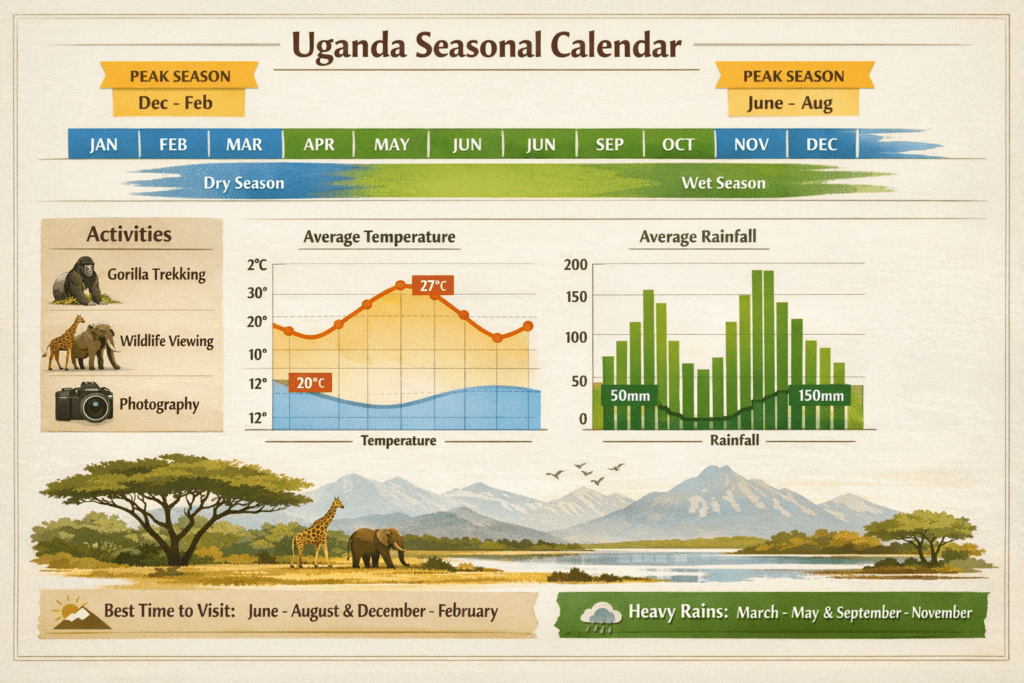
Uganda has four main seasonal periods:
- Long Dry Season: June to August
- Short Dry Season: December to February
- Long Rainy Season: March to May
- Short Rainy Season: October to November
Each season offers different safari advantages and travel conditions.
Long Dry Season (June to August)
The long dry season is considered the best time for Uganda safaris.
Advantages:
- Excellent wildlife visibility
- Dry and accessible roads
- Ideal gorilla trekking conditions
- High success rate for game drives
Best Activities:
- Gorilla trekking in Bwindi
- Game drives in Queen Elizabeth and Murchison Falls
- Boat safaris on Kazinga Channel and Nile River
Short Dry Season (December to February)
This is another peak safari season in Uganda.
Advantages:
- Stable weather conditions
- High wildlife concentration near water sources
- Excellent photography conditions
Best Activities:
- Wildlife safaris
- Gorilla trekking
- Birdwatching tours
Long Rainy Season (March to May)
This is the wettest period in Uganda but offers unique safari experiences.
Advantages:
- Lush green landscapes
- Fewer tourists in parks
- Lower safari costs
- Excellent birding season
Challenges:
- Muddy roads in remote areas
- Occasional travel delays
Short Rainy Season (October to November)
This green season is less intense than the long rains.
Advantages:
- Fewer crowds
- Good birdwatching opportunities
- Lower accommodation rates
Challenges:
- Intermittent rainfall
- Slippery trekking conditions
Best Time for Gorilla Trekking
Gorilla trekking is possible year-round, but the best seasons are:
- June to August (dry season)
- December to February (dry season)
Dry conditions make forest trails easier to navigate.
Best Time for Wildlife Viewing
Wildlife safaris are best during dry seasons when animals gather around water sources:
- June to August
- December to February
Best Time for Birdwatching
Uganda is a year-round birding destination, but peak birding occurs during rainy seasons:
- March to May
- October to November
These periods attract migratory species and increase bird activity.
Safari Cost Differences by Season
- Peak season: Higher prices (June–August, Dec–Feb)
- Low season: Discounted prices (March–May, Oct–Nov)
Budget travelers often prefer green seasons for affordability.
Choosing the Best Safari Season
The best season depends on travel priorities:
- Wildlife viewing: Dry seasons
- Birding: Rainy seasons
- Budget travel: Low seasons
- Photography: Green seasons
Conclusion: Understanding Uganda Safari Seasons
Uganda Safari Seasons offer year-round travel opportunities, each with unique advantages. Whether visiting during dry or rainy seasons, Uganda delivers exceptional wildlife experiences throughout the year.
From gorilla trekking in Bwindi to wildlife safaris in Queen Elizabeth National Park and birding in Mabamba Swamp, Uganda remains a top African safari destination in every season.
Regional Season Variation
National rainfall maps smooth real variation: southwestern forests (Bwindi, Mgahinga, Kibale) receive more annual rain than Kidepo semi-arid north. A “dry” month in Kampala may still drizzle on Buhoma ridgelines—pack rain gear year-round for primate parks.
Lake Victoria moderates Entebbe humidity; Rwenzori treks need alpine layers independent of savannah forecasts. Use this seasonal hub then drill into monthly pages when dates firm.
Choosing Your Season
Prioritise dry months for first-time visitors balancing gorillas and Queen Elizabeth. Return travelers and birders often prefer green season value. Budget and crowd tolerance matter as much as wildlife statistics—see when to visit and weather for safari.
Climate Change Notes
Rainy seasons start earlier or later in some years—farmers and lodge managers notice before guidebooks update. Build one flexible day per week on multi-park trips so storms do not cascade into missed gorilla slots. Insurance covering permit rescheduling adds peace of mind in transitional months.
Flexible Date Strategy
If permits or lodges are sold out on your first-choice week, shift three to seven days within the same month before abandoning the season entirely. Shoulder weeks often deliver ninety percent of peak-season wildlife with lower prices and quieter trails. Operators monitoring live UWA availability can advise micro-shifts invisible to travelers searching only fixed Saturday arrivals in August.
Insurance and Weather Delays
Equatorial rain can close rural bridges or delay domestic flights even in “dry” months—build one buffer day on multi-park loops. Travel insurance covering permit rescheduling and missed connections adds value in March–May and October–November more than in mid-July, yet surprises happen year-round. Lodge late-check-in policies vary; inform properties when storms delay road transfers from Entebbe.
Seasonal Planning Resources
Use this page alongside safari seasons, weather for safari, and best time to visit Uganda when converting climate patterns into bookable dates. Monthly guides under safari by month add permit-pressure detail once your travel quarter is set.
 Read
Read