

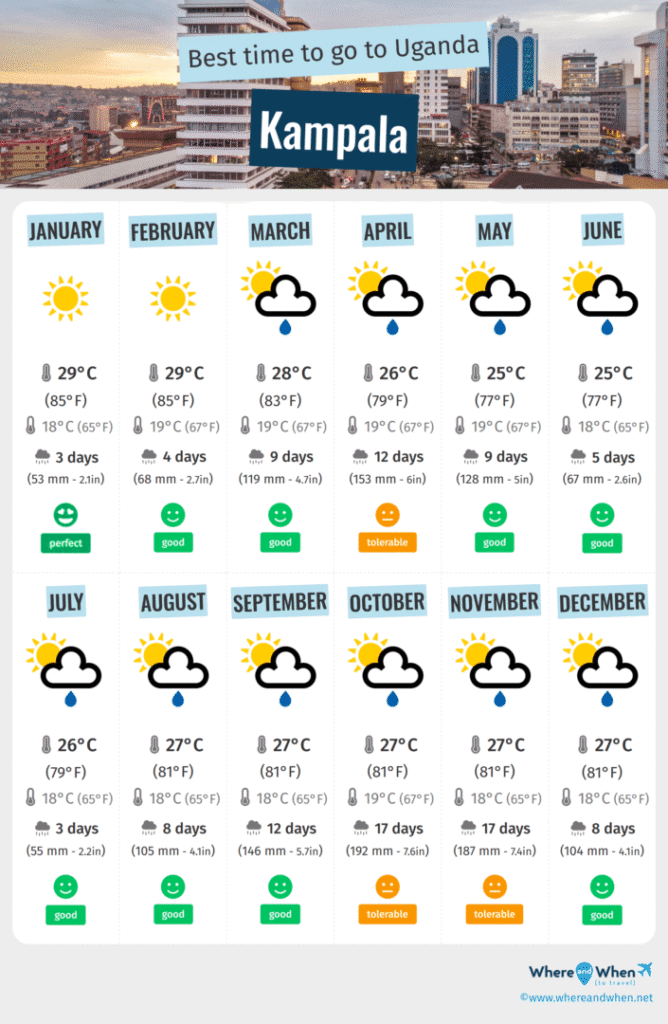
Uganda Climate plays a major role in shaping travel experiences across the country. Located on the equator, Uganda enjoys a tropical climate that is generally warm throughout the year, with regional variations influenced by altitude, vegetation, and proximity to large water bodies such as Lake Victoria, Lake Albert, and Lake Kyoga.
Unlike many countries with extreme seasonal changes, Uganda’s climate remains relatively stable, making it a year-round safari destination. Travelers can visit national parks such as Bwindi Impenetrable National Park, Queen Elizabeth National Park, Murchison Falls National Park, and Kidepo Valley National Park at any time of the year.
This guide provides a complete breakdown of Uganda’s climate, including rainfall patterns, temperature ranges, regional differences, seasonal variations, and how weather affects safari planning and wildlife viewing.
Overview of Uganda’s Climate
Uganda experiences a tropical climate characterized by:
- Warm temperatures year-round.
- Two rainy seasons in most regions.
- Two dry seasons.
- High humidity in some areas.
- Cooler temperatures at higher elevations.
Because Uganda lies on the equator, there are no extreme winters or summers. Instead, rainfall patterns define seasonal changes.
Temperature in Uganda
Temperatures in Uganda remain fairly consistent throughout the year.
| Region | Average Temperature Range |
|---|---|
| Kampala & Central Uganda | 22°C – 30°C |
| Western Uganda (Bwindi, Queen Elizabeth) | 18°C – 28°C |
| Northern Uganda (Murchison Falls, Gulu) | 24°C – 34°C |
| Highlands (Kabale, Kisoro) | 10°C – 25°C |
Higher altitude areas such as Bwindi and Kabale are significantly cooler, especially at night and early morning.
Rainfall Patterns in Uganda
Uganda experiences two main rainy seasons in most regions:
Long Rainy Season
- March to May
- Heavier rainfall
- Lush green landscapes
- Fewer tourists
Short Rainy Season
- September to November
- Moderate rainfall
- Good birding conditions
- Lower safari prices
Even during rainy seasons, rain often falls in short bursts rather than continuous downpours.
Dry Seasons in Uganda
Uganda has two main dry seasons:
December to February
- Warm and sunny conditions
- Excellent wildlife viewing
- Peak tourist season
- Ideal for gorilla trekking
June to August
- Cooler temperatures
- Clear skies
- Best overall safari conditions
- High demand for lodges
These are the most popular months for safaris and gorilla trekking.
Regional Climate Differences in Uganda
Central Uganda Climate
Includes Kampala, Entebbe, and surrounding areas.
- Warm and humid climate.
- Frequent light rain showers.
- Moderate temperatures year-round.
Western Uganda Climate
Home to gorilla trekking destinations.
- Cool and misty in highlands.
- Frequent rainfall in forest zones.
- Ideal for primate habitats.
Northern Uganda Climate
Includes Murchison Falls and Kidepo Valley.
- Hotter and drier climate.
- Longer dry seasons.
- Best for game drives.
Eastern Uganda Climate
Includes Jinja and Mount Elgon region.
- Moderate rainfall.
- Cool mountain climate in highlands.
- River-based adventure conditions.
Climate and Wildlife Viewing
Uganda’s climate directly influences wildlife behavior and safari experiences.
Dry Season Wildlife Viewing
- Animals gather around water sources.
- Shorter grass improves visibility.
- Easier tracking of predators.
- Best time for game drives.
Wet Season Wildlife Viewing
- Lush green landscapes.
- Newborn animals.
- Excellent bird activity.
- Fewer tourists in parks.
Climate and Gorilla Trekking
Gorilla trekking is possible year-round, but climate affects trail conditions.
Dry Season (Best Conditions)
- Easier hiking trails.
- Less slippery terrain.
- Better photography conditions.
Wet Season
- Muddy and challenging trails.
- Lush forest scenery.
- Fewer tourists.
- Lower lodge rates.
Bwindi’s rainforest climate ensures occasional rain even in dry seasons.
Monthly Climate Overview
| Month | Climate Conditions |
|---|---|
| January | Dry, warm, excellent for safaris |
| February | Hot and dry, peak wildlife viewing |
| March | Rain begins, green landscapes |
| April | Wettest month, lush scenery |
| May | Continued rains, fewer tourists |
| June | Dry season starts, ideal safaris |
| July | Peak safari season |
| August | Dry and cool, excellent trekking |
| September | Light rains begin |
| October | Rainy season, birding peak |
| November | Short rains, lush landscapes |
| December | Dry season begins, festive travel |
Best Time to Visit Uganda Based on Climate
Best Overall Safari Season
- June to August
- December to February
Best Birdwatching Season
- March to May
- September to November
Best Gorilla Trekking Season
- June to September
- December to February
Uganda remains a year-round destination due to its stable tropical climate.
Climate and Packing Guide
Visitors should prepare for varying conditions.
- Light clothing for daytime.
- Warm jacket for mornings and evenings.
- Rain jacket for forest and wet seasons.
- Hiking boots for gorilla trekking.
- Sun protection (hat, sunscreen).
Impact of Climate on Travel Costs
Uganda’s climate influences tourism pricing.
High Season (Dry Months)
- Higher lodge prices.
- Increased safari demand.
- Early booking required.
Low Season (Rainy Months)
- Discounted accommodation.
- Fewer tourists.
- Better availability.
Climate Change and Uganda’s Environment
Uganda is experiencing gradual climate variations affecting rainfall patterns and ecosystems.
Conservation efforts focus on:
- Protecting forest ecosystems.
- Sustaining wildlife habitats.
- Managing wetland systems.
- Promoting eco-tourism.
Frequently Asked Questions About Uganda Climate
Is Uganda hot or cold?
Uganda is generally warm, with cooler temperatures in highland regions.
Does Uganda have winter?
No. Uganda has a tropical climate with no winter season.
What is the hottest month in Uganda?
January and February are typically the hottest months.
Does it rain every day in Uganda?
No. Rain usually occurs in short bursts, not continuous daily rainfall.
What is the best month to visit Uganda?
June to August and December to February are considered the best months for travel.
Conclusion
Uganda Climate is one of the key reasons the country is a year-round safari destination. With its stable tropical temperatures, predictable rainy and dry seasons, and diverse regional weather patterns, Uganda offers excellent conditions for wildlife viewing, gorilla trekking, birdwatching, cultural tourism, and adventure travel throughout the year.
Understanding Uganda’s climate helps travelers plan better itineraries, choose the right activities, and maximize their safari experience in the Pearl of Africa.
 Read
Read