Honey badger habitat is defined by versatility rather than specialization. Mellivora capensis thrives wherever prey can be dug from the ground, dens can be excavated or commandeered, and cover exists for daytime rest — a combination found across much of Uganda's northern and western savannah network. Understanding this ecological breadth explains why ratels persist in Murchison Falls, Queen Elizabeth, and Kidepo Valley even when tourists rarely see them. Explore where to see honey badgers and behaviour for field viewing context.
Global Habitat Range
Across Africa and parts of Asia, honey badgers occupy an extraordinary variety of landscapes — open savannah, thornveld, acacia woodland, montane grassland, rocky hills, riverine forest margins, and semi-desert scrub. They occur from sea level to elevations above 2,500 metres in some mountain regions. This generalist pattern contrasts sharply with habitat specialists like river otters or sand cats, and it underpins the species' Least Concern conservation status despite local persecution.
In East Africa, ratels are associated with dry-country bush, combretum-acacia savannah, and the ecotones where grassland meets thicker woodland. They avoid dense closed-canopy rainforest but readily use forest edges, gallery strips along rivers, and abandoned cultivation where rodent populations rebound.
Soil, Digging, and Prey Access
Substrate matters. Honey badgers require diggable soils — sandy loams, termite-rich earth, and softened ground after rains — to access fossorial rodents, larvae, and invertebrates that form dietary staples. Lateritic hardpan and pure bedrock limit foraging efficiency, which partly explains why ratels concentrate in savannah mosaics with varied soil textures rather than on open lava plains or flooded grasslands.
Fresh excavation sign — conical soil heaps, widened aardvark holes, and torn-open termite mounds — is often the best daylight evidence of honey badger activity. Guides who recognise this sign can sometimes predict nocturnal movement corridors along river banks and woodland margins.
Den Sites and Resting Cover
By day, honey badgers rest in self-dug burrows, modified aardvark tunnels, rock crevices, hollow logs, and raised termite mounds. Den fidelity is low; animals may use a different shelter every few days, reducing parasite loads and predator ambush risk. In Kidepo Valley, kopje clusters and dry watercourse banks provide ideal denning terrain. In Murchison Falls, riverine thickets and erosion gullies on the northern bank offer similar refuge.
Females with cubs select deeper, more concealed burrows and may aggressively defend den entrances against jackals, pythons, and other intruders.
Water and Seasonal Movement
Honey badgers drink regularly where surface water exists but tolerate arid conditions better than many savannah mammals. In semi-arid Kidepo, they remain active through dry months by exploiting moisture in prey and concentrating activity near residual pools. During rains, expanded rodent breeding and insect emergence allow wider ranging and less predictable movement — which can make dry-season night drives more productive for visitors seeking predictable carnivore circuits.
Vegetation Structure
Acacia–Combretum Savannah
The classic Uganda savannah mosaic — scattered acacias, combretum thickets, and open grass — supports high rodent diversity and abundant termites. Queen Elizabeth's Kasenyi Plains margins and Ishasha woodland fringes exemplify this structure. Honey badgers patrol these edges where cover and open foraging overlap.
Riverine Thickets
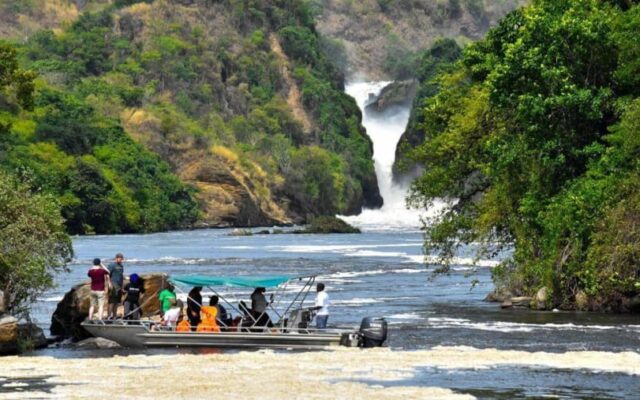
Gallery forest strips along the Nile in Murchison and the Kazinga channel approaches in Queen Elizabeth add fruit, honey sources, and denning banks. Ratels use riverine zones as movement corridors between drier upland territories.
Rocky Kopjes and Hills
Kidepo's Morungole foothills and scattered granite kopjes provide den sites and vantage points. Honey badgers are competent climbers when motivated — scaling low branches and rock piles to reach honey or escape floodwater.
Climate and Altitude in Uganda
Uganda's honey badger habitats span hot semi-arid bush in Kidepo (annual rainfall often below 800 millimetres) to moderately moist savannah around Murchison and Queen Elizabeth (roughly 900–1,200 millimetres). Altitude ranges from about 650 metres in northern Murchison to over 1,000 metres on Queen Elizabeth's explosion craters. Mellivora capensis adapts across this gradient without obvious subspecies separation in field identification.
Ecological Interactions
Honey badgers share habitat with competitors and predators — jackals, servals, caracals, leopards, spotted hyenas, and lions. Niche partitioning reduces direct conflict: ratels focus on subterranean prey and nocturnal scavenging opportunities that diurnal predators exploit less intensively. Nevertheless, encounters with leopard and spotted hyena occur, usually ending in standoffs rather than prolonged chases.
Human-Modified Landscapes
Outside parks, honey badgers enter farmland and apiaries, drawing persecution from beekeepers and poultry owners. This edge conflict is a primary conservation concern globally. Inside Uganda's protected areas, tourism and ranger patrols reduce deliberate killing, though snaring for bushmeat remains an indiscriminate threat.
Park-by-Park Habitat Summary
- Murchison Falls: Northern bank savannah, riverine forest, erosion gullies — strong digging substrates
- Queen Elizabeth: Kasenyi Plains margins, Mweya peninsula thickets, Ishasha woodland — night-drive habitat
- Kidepo Valley: Semi-arid acacia bush, kopjes, dry watercourses — remote ratel stronghold
Why Habitat Protection Matters
Because honey badgers range widely and den opportunistically, maintaining connected savannah landscapes is more important than protecting single micro-sites. Corridor loss between parks and ranchlands increases persecution encounters and vehicle strikes. Uganda Wildlife Authority's park management — fire regimes, anti-poaching, and controlled tourism — indirectly safeguards the digging ecosystems ratels depend on. Read our conservation page for threat detail.
Planning Your Visit Around Habitat
Target woodland–grassland ecotones on dawn drives, book authorised night safaris where permitted, and ask guides to scan for fresh digging sign during daylight hours. The animal may be hidden, but its habitat signatures are visible to trained eyes. Pair habitat understanding with our best time to see guide for seasonal strategy.