
Honey Badger FAQs and Answers — quick reference on Mellivora capensis biology, fearless reputation, Uganda park records, night-drive strategy, diet, venom resistance, and safari planning. Explore where to see honey badgers, behaviour, best time to visit, and safari experiences for full guides.
Honey badger faqs — expert Uganda safari guide from local planners who know permits, parks, and realistic routing.
The honey badger — ratel in Afrikaans — is among Africa's most discussed carnivores despite being rarely seen. Internet videos of ratels fighting lions have created global fame that outpaces field encounter rates. In Uganda, Mellivora capensis occurs in Murchison Falls, Queen Elizabeth, and Kidepo Valley, but tourists who expect daily sightings will be disappointed. This FAQ page frames realistic expectations and points to detailed section guides for habitat, diet, conservation, and routed Uganda safari packages.
Understanding the Species
Honey badgers belong to Mustelidae — the weasel family — not to true badgers. They are solitary, nocturnal omnivores with loose thick skin, powerful claws, and partial resistance to snake venom. Adults weigh roughly 9 to 16 kilograms yet behave like animals three times their size when threatened. Scientifically the species is secure (IUCN Least Concern); experientially it remains one of Uganda's most elusive savannah mammals.
Viewing Strategy in Uganda
Queen Elizabeth night game drives are the top tactic. Murchison dawn patrols and multi-night Kidepo stays are strong alternatives. Midday game drives are poor choices. Dry seasons — June through September and December through February — improve spotlight viewing and road access. Allow at least two nights in a target park with one scheduled night activity.
Safety and Ethics
Do not approach honey badgers on foot. They are not tourist-friendly when cornered. Secure camp food and rubbish. Use red-filter spotlights on night drives. Maintain distance from vehicles. Report snares or poison to Uganda Wildlife Authority rangers. Tourism that respects nocturnal carnivores supports the same patrols that protect leopard and spotted hyena populations.
Accordion FAQs Below
Detailed question-and-answer pairs — covering identification, diet, fearless behaviour, park records, and conservation — appear in the accordion below this introduction. Each answer links to relevant section guides for deeper reading. If you are building a predator-focused itinerary, start with safari experiences and confirm night-drive availability when booking lodges in Queen Elizabeth.
Quick Topic Index
- Identification: White dorsal stripe, silver crown, black underparts
- Uganda parks: Murchison Falls, Queen Elizabeth, Kidepo Valley
- Best tactic: Night game drives (Queen Elizabeth)
- Best season: Dry months with firm tracks and short grass
- Diet: Rodents, honey, snakes, carrion, fruit
- Fame: World's most fearless mammal — credible deterrent behaviour
- Conservation: Least Concern globally; persecution outside parks
Planning Your Honey Badger Safari
Most travellers encounter honey badgers as part of broader savannah programmes rather than dedicated ratel tours. The planning sequence is straightforward: choose a park with night-drive access (Queen Elizabeth first), travel in dry season, book at least two nights, confirm night-drive supplements at reservation time, and brief your guide that nocturnal carnivores are a priority. Murchison suits travellers already committed to Nile cruises and northern Big Five loops. Kidepo suits wilderness purists with time for repeated dawn departures.
Combined itineraries are popular. A western circuit might run Entebbe → Bwindi gorilla trekking → Queen Elizabeth with night drive → Lake Mburo zebra and antelope → Entebbe. A northern circuit might run Ziwa rhino tracking → Murchison Falls dawn drives → optional Queen Elizabeth night extension. Honey badgers do not appear on every night drive — treat sightings as celebration, not contract.
Comparison with Similar Carnivores
Travellers sometimes confuse honey badgers with small carnivores seen on night drives. Side-striped jackals are taller, leggier, and lack the bold dorsal stripe pattern. Genets are more arboreal, with spotted coats and ringed tails. Spotted hyenas are far larger and social — clan animals rather than solitary ratels. Correct identification depends on the white cape, low-slung build, and rolling trot. Guides on Queen Elizabeth night circuits identify these species routinely.
Photography and Observation Tips
Night photography of honey badgers demands high ISO, wide aperture, and acceptance of motion blur when animals cross tracks. Red-filter spotlights reduce disturbance but shift colour balance toward monochrome. Many experienced guests prefer short video clips to stills. Daytime photography is possible only on exceptional dawn encounters — carry a ready camera on early Murchison departures but do not expect results. Behaviour notes and field sketches sometimes outlast blurry images as safari memories.
Conservation Questions Travellers Ask
Guests often wonder whether honey badgers need urgent conservation funding. Globally the answer is no — the species is Least Concern with wide distribution. Locally in Uganda, persecution on apiaries and indiscriminate snaring matter more than park-internal threats. Tourism revenue that funds Uganda Wildlife Authority patrols indirectly protects ratels alongside lions and elephants. Choosing licensed operators, paying official fees, and avoiding bushmeat markets align traveller behaviour with carnivore protection. Read the full conservation guide for threat detail and community apiary solutions.
Children, Accessibility, and Night Drives
Night game drives may carry minimum age rules set by lodges or operators — check when travelling with children. Open vehicles, spotlights, and late bedtimes suit teenagers more than toddlers. Accessibility for mobility-impaired guests varies by lodge vehicle design; confirm with properties before booking. Day drives remain accessible alternatives even though ratel odds are lower.
After Your Safari: Reporting Sightings
If you photograph or clearly observe a honey badger, consider sharing date, park sector, and approximate time with your guide or lodge conservation desk. Incidental records help build Uganda's sparse distribution data. iNaturalist and similar platforms accept nocturnal carnivore submissions when images permit identification. Citizen science complements professional monitoring without replacing ranger expertise.
Further Reading on This Site
- Honey badger facts — taxonomy, skin armour, venom resistance
- Habitat guide — savannah ecology and den sites
- Diet page — digging, honey, snakes, scavenging
- Behaviour guide — fearlessness and nocturnal ranging
- Where to see — park rankings and itinerary themes
- Best time — dry season and night-drive timing
- Safari experiences — luxury to budget routed programmes
The accordion below contains detailed answers to individual questions — identification, diet, safety, park records, and booking strategy. Use this page as orientation; drill into section guides for depth; confirm night-drive logistics when you reserve Uganda safari packages that include Queen Elizabeth or Murchison savannah nights.
- What is a honey badger?
The honey badger (Mellivora capensis) is a stocky, solitary mustelid — the only species in its genus — famous for extraordinary fearlessness, loose thick skin, and powerful digging claws. Also called the ratel, it occurs across Uganda's savannah parks including Murchison Falls, Queen Elizabeth, and Kidepo Valley.
- Where can I see honey badgers in Uganda?
Honey badgers are recorded in Murchison Falls National Park, Queen Elizabeth National Park, and Kidepo Valley National Park. Sightings are uncommon and usually nocturnal — night game drives and dawn patrols offer the best chance. See our where to see honey badgers guide.
- Why is the honey badger called the most fearless animal?
Honey badgers routinely stand their ground against lions, leopards, and hyenas, and will attack predators that threaten them. Their loose, thick skin allows them to twist and bite back when grabbed. The Guinness World Records lists Mellivora capensis as the world's most fearless mammal — behaviour well documented across Africa including Uganda.
- Are honey badgers dangerous to humans?
Honey badgers are not aggressive toward humans unless cornered or provoked. They are wild carnivores with strong jaws and sharp claws, so maintain distance on game drives. In camps, secure food and rubbish — like other nocturnal mammals, they may investigate unsecured supplies at night.
- What do honey badgers eat?
Honey badgers are opportunistic omnivores — they dig out rodents and insects, raid beehives for honey and larvae, kill snakes (including venomous species), scavenge carrion, and eat fruit. Full detail on our honey badger diet page.
- Do honey badgers really eat honey?
Yes — bee larvae and honey are important seasonal foods. Honey badgers tear open hives with their claws and tolerate stings thanks to thick skin. In some regions they follow honeyguide birds to hives, though this behaviour is less documented in Uganda than in East African woodland further south.
- Are honey badgers immune to snake venom?
Honey badgers show partial resistance to certain snake venoms, particularly cobra neurotoxins — not complete immunity. They can survive bites that would kill similarly sized mammals and will actively hunt venomous snakes. This contributes to their fierce reputation across Murchison and Kidepo bush country.
- How big is a honey badger?
Adults measure roughly 55–77 cm in body length with a 12–30 cm tail, standing about 23–28 cm at the shoulder. Weight ranges from 9 to 16 kg — similar to a medium dog but far more powerfully built, with massive forelimbs adapted for digging.
- What does a honey badger look like?
A honey badger has a distinctive silver-grey crown and dorsal cape separated from black underparts by a bold white or pale stripe running from head to tail. The body is low-slung and barrel-shaped, with small eyes and ears, short sturdy legs, and long front claws. The tail is bushy and coarse-haired.
- Are honey badgers nocturnal?
Mostly nocturnal and crepuscular — active after dusk and before dawn. This explains why standard midday game drives rarely produce sightings. Night drives in Queen Elizabeth and dawn starts in Murchison dramatically improve odds. See best time to see honey badgers.
- Do honey badgers live in groups?
No — honey badgers are solitary except during brief mating periods or when a female raises a single cub. Adults maintain large overlapping or exclusive home ranges marked with scent from anal gland secretions and urine.
- What is the scientific name of the honey badger?
Mellivora capensis — the only species in the genus Mellivora, family Mustelidae (weasels, otters, and badgers). The name means "honey bearer of the Cape," reflecting early descriptions from southern Africa; the species range extends across most of sub-Saharan Africa and into parts of Asia.
- Are honey badgers endangered?
Globally, honey badgers are classified Least Concern by the IUCN with a wide distribution. Locally they face persecution, poisoning, and habitat loss outside protected areas. Uganda's savannah parks provide important refuge. More on our conservation page.
- What habitat do honey badgers prefer?
Versatile habitat generalists — savannah, acacia woodland, rocky hills, riverine bush, and semi-arid plains. They need diggable soil for prey and suitable den sites. All three major Uganda savannah parks offer suitable terrain. Full ecology on our habitat guide.
- Can honey badgers spray like skunks?
Yes — honey badgers can eject a foul-smelling secretion from anal glands when threatened, similar to skunks. This defence supplements their physical toughness and deters many predators without a fight.
- When is the best time to see honey badgers in Uganda?
Dry seasons (June–September and December–February) combined with night game drives or pre-dawn patrols offer the best odds. Queen Elizabeth's authorised night drives are especially productive for nocturnal carnivores alongside spotted hyena.
- Which Uganda safaris might include honey badger sightings?
Any Murchison Falls, Queen Elizabeth, or Kidepo Valley itinerary with night drives or extended dawn activity. Browse honey badger safaris and Uganda safari packages for routed predator-focused circuits.
- How do honey badgers defend themselves against lions?
When attacked, a honey badger tucks its head, presents thick loose skin, and twists to bite the attacker's face or limbs. The combination of tough skin, sharp teeth, and sheer aggression often persuades even lions to abandon the effort — encounters filmed in Botswana and South Africa have made the species an internet legend.
- Do honey badgers dig their own burrows?
They dig extensively — both to hunt burrowing prey and to create or modify resting dens. They also occupy abandoned aardvark holes, termite mounds, and rock crevices. Fresh digging sign is often the best daylight clue to honey badger presence on a game drive.
- How can tourists help honey badger conservation?
Visit Uganda's parks on licensed safaris, support operators who respect wildlife, and avoid products that encourage poisoning or persecution of carnivores. Tourism revenue funds rangers who protect habitat in Murchison, Queen Elizabeth, and Kidepo. See our conservation page.
Safari packages to see Honey Badger
Bookable itineraries below include parks and activities where you are most likely to encounter Honey Badger in the wild.
 Best
Seller
Best
Seller
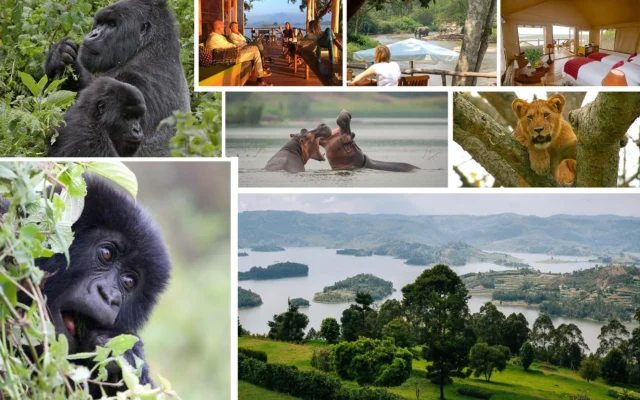
7 Day Uganda Wildlife & Gorilla
You visit
Murchison Falls, Kibale Forest, Queen Elizabeth NP, Bwindi Forest, Entebbe
Seven days with gorillas: the wildlife tour above plus Bwindi trekking on Day 6 — the single most booked private itinerary for Uganda Safari Tours guests who want chimps, savannah and gorillas in one…
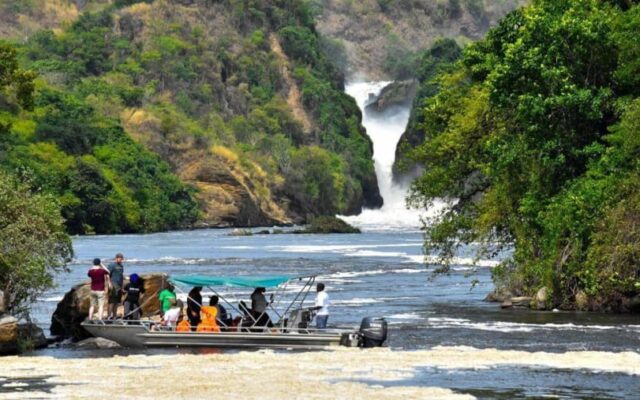
3 Day Murchison Falls Safari
You visit
Murchison Falls, Entebbe
Our classic 3-day Murchison Falls safari follows the park’s most proven circuit: dramatic falls, savannah game drives north of the Nile, and the famous boat trip where the river narrows below the casc…
 Best
Seller
Best
Seller
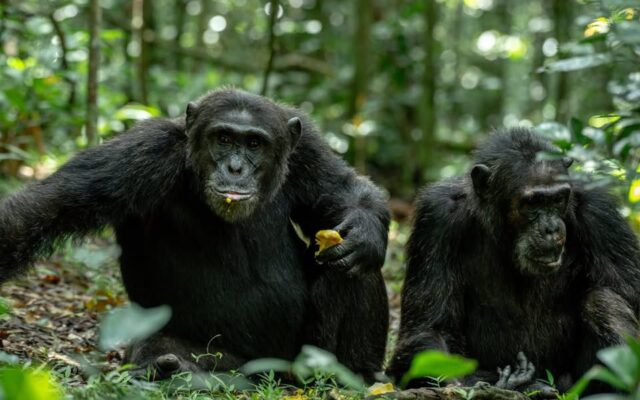
6 Days Uganda Gorillas, Chimpanzees & Wildlife Safari
You visit
Kibale Forest, Queen Elizabeth NP, Bwindi Forest, Entebbe
Primates plus plains in six days: Kibale chimps, Queen Elizabeth savannah, Bwindi gorillas and a Lake Mburo finale for zebra — the full Uganda highlight reel without rushing Kidepo or Murchison.
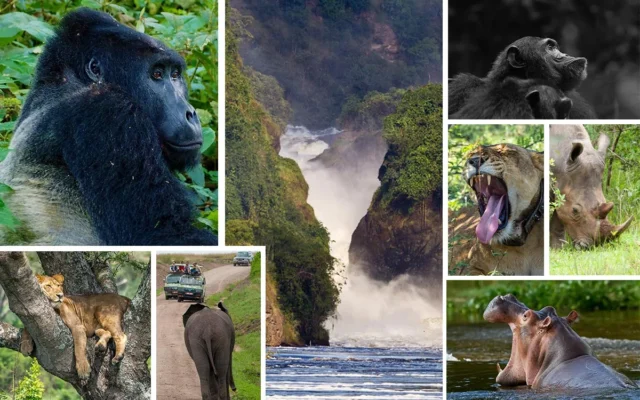
18 Days Uganda Wildlife Safari
You visit
Entebbe (Start, End)
The ultimate 18-day Uganda wildlife safari — every savannah park, both chimp forests, gorillas, and the remote northeast. After Murchison and Kidepo, the route sweeps through Kibale, Queen Elizabeth,…