African fish eagle habitat — expert Uganda safari guide from local planners who know permits, parks, and realistic routing.
African fish eagles are creatures of water. They require healthy freshwater ecosystems — rivers, lakes, reservoirs, swamps, and floodplains where fish are abundant and tall trees or dead snags provide commanding perches. Uganda's Great Rift lakes, the Victoria Nile, and countless smaller wetlands create ideal habitat across much of the country. Pair this guide with where to see fish eagles, behaviour, and boat-safari experiences when planning a Uganda safari.
Core Habitat Requirements
Three elements define fish eagle habitat: open or semi-open water with accessible fish, shoreline or emergent vegetation that concentrates prey, and elevated perches for hunting, roosting, and nesting. Remove any one element and pairs struggle to hold territory.
Unlike forest eagles that hunt in canopy shade, fish eagles need clear sightlines to the water surface. That is why dead trees standing in the river — so common on the Victoria Nile — are disproportionately valuable.
Freshwater Ecosystem Types
Rivers and Channels
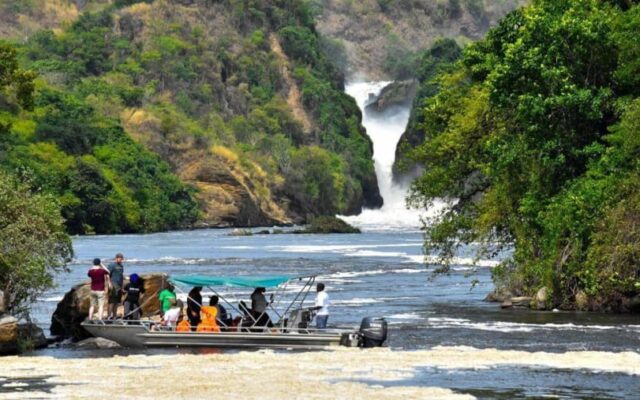
Large rivers like the Victoria Nile through Murchison Falls National Park support high fish eagle densities. Narrow channels such as the Kazinga link between Lake George and Lake Edward in Queen Elizabeth National Park concentrate fish and perches, making eagles especially visible from tourist boats.
Lakes and Reservoirs
Lake Victoria, Lake Mburo, Lake Bunyonyi, and Albertine Rift lakes all hold breeding pairs. Reservoirs and farm dams across Uganda extend habitat into agricultural landscapes, though protected park shorelines remain the most reliable safari venues.
Swamps and Wetlands
Papyrus swamps at Mabamba Bay, the Nile delta, and Queen Elizabeth wetland fringes provide lungfish, catfish, and waterbird prey. Fish eagles hunt along open channels within the swamp rather than deep inside dense papyrus.
Perch Ecology
African fish eagles spend much of the day on prominent perches — dead euphorbias, acacias, figs, or bare snags leaning over water. A good perch offers:
- Unobstructed view of the fishing zone
- Launch space for a shallow swoop
- Safe landing with prey
- Visibility to potential intruders
Boat safari guides learn individual trees where pairs hunt daily. Returning visitors often find the same birds on the same branches years later.
Territorial Pairs
Fish eagles defend lake or river stretches as breeding territories. Territory size varies with food density — rich Nile sections may support pairs on relatively short river frontage, while poorer lakes require wider ranges. Boundary disputes involve calling duels and aerial chases, occasionally spectacular from a launch cruise.
Nesting Habitat
Nests are built in tall sturdy trees near water — often more than 10 metres above ground. Typical nest trees include acacias, mahogany, and large figs on riverbanks. Pairs maintain one to three nest sites within a territory, alternating between them across seasons. Nests grow enormous over years of reuse, sometimes exceeding two metres in diameter.
Disturbance during breeding — from tree felling, heavy boat traffic too close to nests, or wetland drainage — is a primary local threat. Responsible operators keep respectful distance during the chick-rearing months.
Altitude and Climate
In Uganda fish eagles occur from lowland Nile plains near 600 metres to higher Rift lakes above 1,000 metres. They tolerate a wide temperature range provided water does not freeze — irrelevant in Uganda — and fish remain accessible. Seasonal rainfall changes water level and fish distribution but rarely displaces resident pairs.
Relationship with Other Species
Fish eagle habitat overlaps with hippos, crocodiles, pelicans, storks, kingfishers, and otters. These neighbours are competitors, prey, or kleptoparasitism targets. A healthy fish eagle territory usually signals a functioning aquatic food web — see diet ecology for interactions.
Habitat Threats in Uganda
Despite Least Concern global status, local habitat loss matters:
- Wetland drainage for agriculture
- Pollution and siltation reducing fish stocks
- Removal of dead trees considered "untidy" on lodge shorelines
- Disturbance at nest sites
- Overfishing in unprotected community waters
Protected areas such as Murchison, Queen Elizabeth, and Lake Mburo safeguard the combination of fish, perches, and nesting trees that sustain visible populations. Read conservation for park-level protection detail.
Why Uganda Excels for Fish Eagle Habitat
Uganda combines the White Nile, Albertine Rift lakes, Lake Victoria's vast shoreline, and a network of national parks where boating is a core activity. Few countries offer this density of fish-rich, perch-rich, boat-accessible eagle habitat. That is why fish eagles feature so prominently in trip reports — not because they are rare, but because Uganda's best safaris happen on their doorsteps.
Safari Habitat Tips
For the richest habitat immersion, schedule at least one extended boat outing: the Nile launch toward Murchison Falls, a Kazinga Channel cruise, or a Lake Mburo morning on the water. Calm conditions and low sun improve both hunting observation and the classic call at dawn. Our best time to see guide aligns seasonal planning with habitat productivity.