African fish eagle conservation — expert Uganda safari guide from local planners who know permits, parks, and realistic routing.
The African fish eagle is classified as Least Concern by the IUCN, reflecting its broad sub-Saharan range and adaptability. Yet local populations depend entirely on clean water, healthy fish stocks, and undisturbed nesting trees. In Uganda, protected national parks and community wetland stewardship help ensure fish eagles remain a reliable highlight of Nile cruises and lake outings. This page examines status, threats, and how responsible tourism supports the species — alongside habitat and where to see guides for park-level context.
Global Conservation Status
The IUCN Red List categorises Haliaeetus vocifer as Least Concern. Population trend is considered stable across most of the range. The species occurs in more than 40 sub-Saharan countries and colonises new reservoirs where fish and perches exist.
Least Concern does not mean invulnerable. Local extirpations have occurred where wetlands were drained or poisoned. Uganda's visible abundance today reflects decades of protected-area investment — not an excuse for complacency.
Why Fish Eagles Matter Ecologically
As apex avian predators and scavengers, fish eagles:
- Indicate healthy fish populations and water quality
- Remove sick, injured, and dead fish from ecosystems
- Regulate waterbird colonies through occasional predation
- Anchor food-web stability in freshwater environments
A silent riverbank where fish eagles once called is often an early warning of ecological stress — overfishing, pollution, or perch-tree loss.
Threats to Fish Eagles in Uganda
Wetland Degradation
Drainage of papyrus swamps for agriculture removes breeding and hunting habitat. Community wetlands outside parks face the greatest pressure; Ramsar sites such as Mabamba Bay demonstrate the alternative — conservation with tourism revenue.
Water Pollution
Industrial runoff, agricultural chemicals, and siltation reduce fish stocks. Eagles may persist while prey declines, but breeding success drops when parents cannot provision chicks.
Overfishing
Unregulated gill-netting in community waters depletes prey. Inside national parks fishing restrictions help maintain the fish biomass that supports eagle territories on the Nile and Kazinga Channel.
Nest Tree Loss
Removal of dead trees for firewood, lodge landscaping, or perceived safety concerns eliminates perches and nest sites. A standing dead snag is worth more to fish eagles than to firewood collectors — education and alternative fuel programmes matter.
Disturbance at Nest Sites
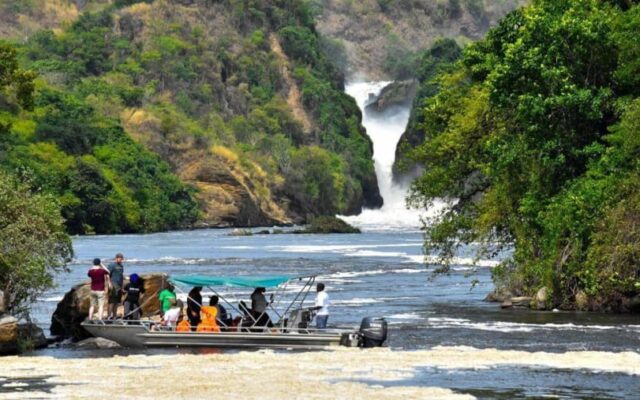
Close approach by boats, drones, or tree climbers during incubation causes nest abandonment. Operators in Murchison and Queen Elizabeth increasingly train skippers on nest buffers during breeding months.
Poisoning and Persecution
Poisoned bait set for predators or fish thieves can kill eagles scavenging carcasses. Direct persecution is rare but reported near fish farms. Such incidents are illegal and devastating to local pairs.
Protected Areas as Strongholds
Uganda's national park network safeguards core fish eagle habitat:
- Murchison Falls National Park — Victoria Nile fish stocks and riverside nest trees
- Queen Elizabeth National Park — Kazinga Channel density among East Africa's highest
- Lake Mburo National Park — lake shoreline pairs on boat routes
- Wetland Ramsar sites — Mabamba and others on Lake Victoria
Park entry fees and boat-launch revenue fund rangers who deter illegal fishing and habitat destruction — a direct link between safari tourism and raptor conservation.
Community Conservation
Community wetland associations around Lake Victoria and the Nile delta increasingly recognise birding tourism value. Guiding fees for canoe trips to see shoebills and fish eagles give economic reason to keep papyrus intact. When communities earn from live eagles, poisoned fish and drained swamps become less attractive.
Role of Responsible Tourism
Travellers contribute to conservation by:
- Choosing licensed park boat operators
- Keeping distance from nest trees during breeding season
- Avoiding drone flights near raptors
- Not encouraging skippers to chase hunting birds
- Booking itineraries that fund park fees and community guides
Photography demand can pressure wildlife when pursued carelessly — ethical guides pause at respectful range and let behaviour unfold naturally. See behaviour for nest etiquette detail.
Monitoring and Research
Long-term monitoring in East Africa tracks nest occupancy, chick production, and contaminant loads in eggs. Uganda Wildlife Authority and partner NGOs conduct waterbird and raptor surveys that include fish eagles. Citizen science from birding tour records supplements formal data.
Climate Considerations
Changing rainfall patterns alter lake levels and fish distribution. Fish eagles are adaptable if prey remains, but extreme drought can force territory abandonment. Wetland protection that buffers hydrological extremes benefits eagles alongside hippos, shoebills, and human communities downstream.
Conservation Outlook in Uganda
With continued park protection, sustainable fishing regulation, and community tourism benefits, Uganda's fish eagles should remain a dependable safari highlight. The species does not require expensive reintroduction programmes — it requires intact water, fish, and trees. That makes every Nile launch cruise and Kazinga outing a small act of conservation support.
Plan a trip that prioritises water-based parks on our safari experiences page and align timing with best viewing months for breeding and hunting displays.