The African fish eagle is one of the most recognisable raptors on the continent — a white-headed hunter of rivers and lakes whose ringing call has become the soundtrack of the African wild. Perched on dead trees above the Victoria Nile, sweeping low over Lake Victoria, or duetting with its mate along the Kazinga Channel, this iconic eagle delivers some of Uganda's most memorable boat-safari moments.
For safari travellers, the fish eagle is both a celebrated bird and a defining sensory experience. The sight of a strike — talons breaking the surface, wings beating spray — and the sound of that far-carrying yelp at dawn are as deeply African as lion roars or hippo grunts. Uganda's Great Rift lakes and the White Nile place this raptor at the heart of classic itineraries.
What Is an African Fish Eagle?
The African fish eagle (Haliaeetus vocifer) is a large fish-eating raptor of the sea-eagle family. The name vocifer captures its legendary call. Adults wear a striking uniform: white head and breast, chestnut belly, black wings, and short white tail. With a wingspan up to 2.4 metres, it dominates riverside perches from Murchison to Lake Mburo.
It is the national bird of Zambia and Zimbabwe and a cultural symbol across southern Africa. In Uganda it needs no flag to prove its importance — every Nile launch cruise confirms it.
Scientific Classification
- Kingdom: Animalia
- Phylum: Chordata
- Class: Aves
- Order: Accipitriformes
- Family: Accipitridae
- Genus: Haliaeetus
- Species: Haliaeetus vocifer
Physical Characteristics
Size and Sexual Dimorphism
Body length ranges from 63 to 75 centimetres. Females are larger — up to 3.6 kilograms — while males average 2.0 to 2.5 kilograms. The yellow hook-tipped bill, bare yellow legs, and brown eyes complete a portrait every safari guide learns to identify in seconds.
Juvenile Plumage
Young birds wear mottled brown for three to four years before acquiring adult colours. Juveniles beg loudly from perches long after fledging while learning to hunt.
The Iconic Call
The ringing weee-ah, hyo-hyo-hyo carries across still water at dawn — the call documentary makers reach for when Africa appears on screen. Pairs duet to defend territory and reinforce lifelong bonds. Hearing it from a Nile launch before the engine starts is a Uganda safari rite of passage. Explore vocal and hunting detail on our behaviour guide.
Hunting Behaviour
Fish eagles hunt from perches, launching in a shallow swoop to snatch fish from just below the surface. Talons bear spiricules — spiny grips for slippery prey. Only about one in seven strikes succeeds; persistence and drama make boat viewing compelling. They also steal prey from herons and storks, take carrion, and occasionally catch waterbirds. Full feeding ecology lives on our diet page.
Breeding and Family Life
Pairs are monogamous and territorial. Large stick nests crown riverside trees; clutches of one to three eggs hatch after roughly six weeks. Both parents feed chicks; fledglings remain dependent for weeks while practising strikes. Dry-season breeding at many Ugandan sites aligns with concentrated fish — see best time to see for seasonal nuance.
Where African Fish Eagles Live
Sub-Saharan Africa wherever substantial freshwater exists. Uganda offers exceptional habitat: the Victoria Nile through Murchison Falls National Park, the Kazinga Channel in Queen Elizabeth National Park, Lake Mburo, Lake Victoria wetlands including Mabamba Bay, and countless smaller lakes nationwide. Our habitat guide explains perch and nest requirements.
Boat Safari Viewing — The Uganda Advantage
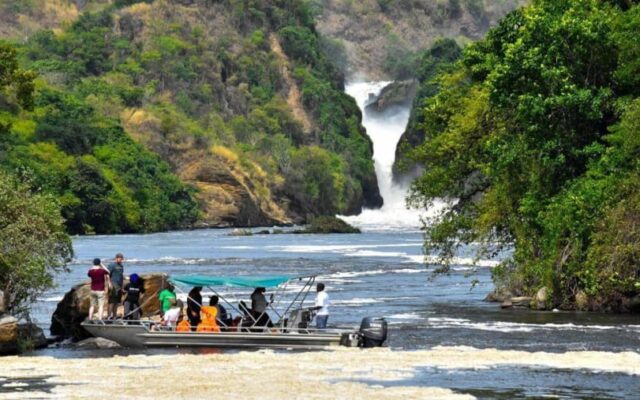
The finest encounters happen from the water. Nile launch cruises, Kazinga channel boats, Lake Mburo lake outings, and Victoria wetland canoes place you at perch height for strikes, calls, and photography. Hippos, crocodiles, elephants, and waterbirds share the scene — making fish eagle boat safaris among Uganda's highest-value half-day activities. Plan routes on where to see and safari experiences.
Conservation Status
The IUCN lists the species as Least Concern globally, but local populations depend on clean water, fish stocks, and nesting trees. Uganda's national parks protect the waterways where eagles thrive. Responsible boat etiquette near nests supports breeding success — detail on our conservation page.
Best Time to See Fish Eagles in Uganda
Year-round residents reward travellers who book dawn or late-afternoon boats. Dry seasons (June–September and December–February) concentrate fish and ease logistics; wet months bring lush scenery and quieter channels. Morning hunting action is the constant that matters most.
Safari Experiences
- Victoria Nile launch cruise — Murchison Falls
- Kazinga Channel boat safari — Queen Elizabeth
- Lake Mburo boat cruise
- Mabamba Bay wetland canoe — Lake Victoria
- Classic Uganda safari packages
Quick Facts
| Scientific name | Haliaeetus vocifer |
|---|---|
| Wingspan | up to 2.4 metres |
| Primary diet | fish |
| Best Uganda viewing | boat safaris on Nile and Rift lakes |
| IUCN status | Least Concern |