Related birding guides
- Birding in Uganda: Complete Guide to Africa’s Premier Birdwatching Destination
- Uganda vs Kenya Birding Safaris: Which Destination is Best for Birdwatching in East Africa?
- Uganda vs Rwanda Birding Tours: Complete Comparison of Birdwatching Safaris in East Africa
- Uganda vs Tanzania Birding Safaris: Complete East Africa Birdwatching Comparison Guide
- Uganda Birding vs Wildlife Safari: Understanding the Difference and Choosing the Best Experience
- All Uganda birding guides →
Introduction: Uganda Gorilla Birding Safaris
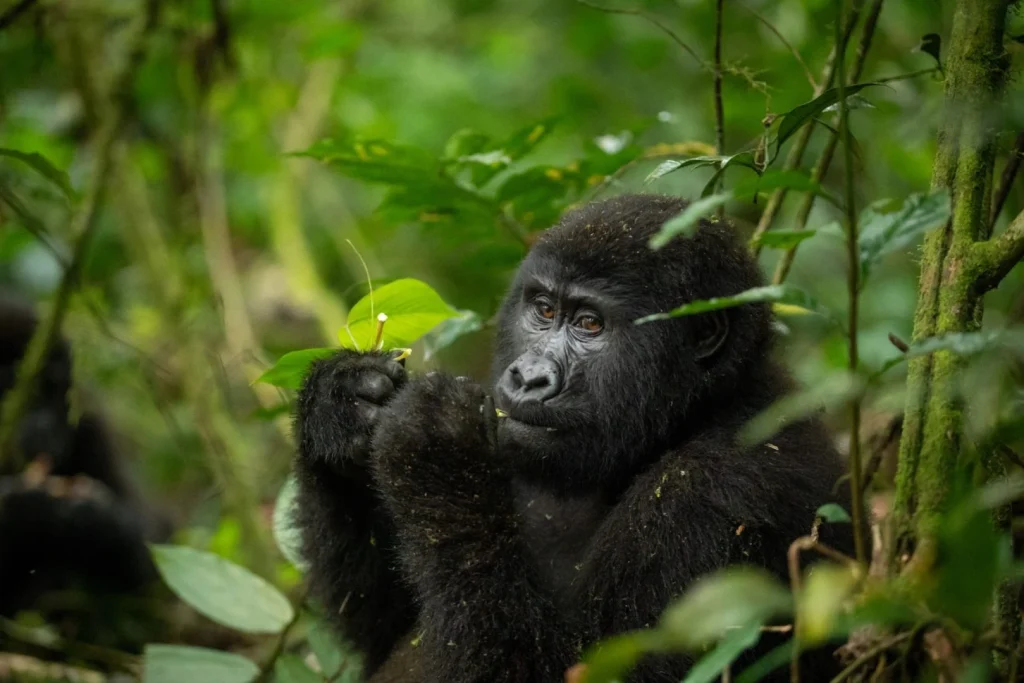
Uganda gorilla birding safaris unite mountain gorilla trekking in Bwindi Impenetrable National Park or Mgahinga Gorilla National Park with world-class avifauna—including 23 Albertine Rift endemics in Bwindi alone. Few destinations let you observe Gorilla beringei beringei by morning and search for African Green Broadbill or Rwenzori Turaco by afternoon in the same forest massif.
Why Combine Gorillas and Birding?
- Single southwestern circuit covers primates and Albertine endemics
- Gorilla permit justifies expensive forest access—maximize park days
- Non-birding partners gorilla trek while birders walk adjacent trails (where rules allow)
- Lodge grounds host turacos, sunbirds, and robins between treks
Gorilla logistics: gorilla trekking. Birding overview: birding tours.
Where Gorilla Birding Happens
Bwindi Impenetrable National Park
Four sectors—Buhoma, Ruhija, Rushaga, Nkuringo. Permit sector must match lodge. Ruhija tops bird lists (broadbill, Grauer’s Warbler); Rushaga/Nkuringo suit Kigali arrivals.
Mgahinga Gorilla National Park
Smaller permit pool; volcano scenery; bamboo zone Albertine specials alongside one habituated gorilla group.
Key Birds on Gorilla Circuits
- African Green Broadbill — Ruhija
- Rwenzori Turaco — Ruhija, Mgahinga
- Shelley’s Crimsonwing — rare bamboo understory
- Grauer’s Rush Warbler — swamp trails
- Handsome Spurfowl — forest floor
- Great Blue Turaco — forest edge lodges
Permits and Costs
Gorilla permit approximately USD 800 foreign non-resident (verify UWA tariff). Birding park entry separate. Budget 3–4 Bwindi nights minimum for gorilla day plus two birding days. Total trip modeling: tour cost, gorilla trekking cost.
Pacing and Fitness
Gorilla treks exhaust legs—schedule lighter lodge birding or savannah transfer day after trek. Do not stack gorilla day back-to-back with Ruhija broadbill pre-dawn without rest. Safari planner should buffer steep trails.
Routing Options
- Entebbe loop — Mabamba shoebill → Queen → Bwindi gorilla + birds → fly out
- Kigali entry — southern Bwindi/Mgahinga; shorter transfer; border formalities apply
- Fly-in — Kihihi/Kisoro airstrips save road days — fly-in safaris
Best Seasons
Gorillas trek year-round. Dry months (January, June–August) ease muddy slopes. Book permits 6–12 months ahead peak season.
Sample 10-Day Gorilla Birding Safari
Days 1–2 Entebbe/Mabamba + Murchison delta; Days 3–4 Kibale/Bigodi; Day 5 Queen Kazinga; Days 6–9 Bwindi (gorilla trek + Ruhija birding); Day 10 fly Entebbe.
Field Notes and Further Resources
Successful Uganda birding depends on habitat variety within one itinerary—balance papyrus dawn at Mabamba or the Nile Delta with Kazinga Channel afternoons and Bwindi Ruhija mornings for Albertine Rift targets like African Green Broadbill and Rwenzori Turaco. Specialist guides accelerate identification of greenbuls, cisticolas, and immature raptors that consume hours for self-guided travelers.
Use birding safari FAQ for last-minute questions, travel guide for visas and health, and monthly hubs from January through December when refining dates. Compare neighboring destinations via Kenya, Rwanda, and Tanzania guides if your list still has East African gaps.
Record sightings responsibly on eBird—generalize locations for Shoebill, nesting raptors, and Green-breasted Pitta stakeouts. Community wetlands at Mabamba, Bigodi, and Makanaga depend on fair boat fees and respectful distances; your tourism spend directly funds papyrus stewardship and local guide livelihoods across the Pearl of Africa.
Habitat Deep Dive: Maximizing Species Per Day
Uganda’s birding productivity comes from stacking complementary habitats rather than repeating identical forest walks. Alternate papyrus dawn at Mabamba or the Nile Delta (Shoebill, Papyrus Gonolek, Malachite Kingfisher) with savannah mid-morning in Queen Elizabeth or Murchison (Martial Eagle, Abyssinian Ground Hornbill, Red-throated Bee-eater) and montane listening in Bwindi Ruhija for Rwenzori Turaco and African Green Broadbill. Kazinga Channel boat cruises routinely add dozens of water-associated species in a single afternoon when guides know skimmer sandbars and hippo pod edges where kingfishers hunt.
Budongo Forest Royal Mile adds Guinea–Congo canopy birds without Bwindi’s steepest mud. Lake Mburo suits Red-faced Barbet and African Finfoot on lighter walking days. Semuliki holds Congo Basin specials; Kidepo rewards raptor listers who reach the northeast. Specialist themes—turacos, sunbirds, raptors, waterbirds—map directly onto this habitat mosaic.
Planning Resources and Responsible Birding
Confirm dedicated bird guides, roof-hatch vehicles, and itemized park or boat fees via safari planner, permit guide, and tour cost tools. Pack binoculars and rain gear per packing list; review FAQ and travel guide before flying. Generalize eBird locations for Shoebill, nesting raptors, and pitta stakeouts. Community fees at Mabamba and Bigodi fund wetland stewardship—core to sustainable tourism Uganda.
Conclusion: Primates and Albertine Jewels
Uganda gorilla birding safaris deliver Earth’s largest primate beside Earth’s rarest forest birds—plan sector-matched lodges, book permits early, and recover between treks. Bwindi is not only gorilla country; it is Albertine Rift birding headquarters worth every muddy boot.
Quick Reference: Parks and Species
Mabamba Bay — Shoebill, Papyrus Gonolek. Murchison Falls — Nile Delta shoebill, Martial Eagle, Abyssinian Ground Hornbill. Queen Elizabeth — Kazinga Channel skimmers and pelicans. Kibale — Green-breasted Pitta, Great Blue Turaco. Bwindi Ruhija — African Green Broadbill, Rwenzori Turaco. Ziwa — shoebill stopover en route north. Book via birding tours with specialist guides for highest success on Albertine Rift and papyrus targets across the Pearl of Africa.
Seasonal planning across January, June, and November helps match migrants, dry trails, and breeding vocalizations to your targets. Combine wetland mornings with savannah afternoons and forest walks for balanced daily lists exceeding what single-habitat marathons deliver.
 Read
Read