Wildlife in Nyungwe National Park
Nyungwe National Park wildlife is defined by montane rainforest density, not savannah visibility. Covering roughly 1,019 square kilometres along Rwanda's southwestern border, the park protects one of Africa's largest remaining tracts of Albertine Rift forest — habitat that persisted through the last Ice Age and still holds exceptional primate and bird richness. Travelers come for chimpanzee trekking; they often leave remembering colobus troops hundreds strong, owl-faced monkeys in bamboo, and the layered silence of moss-draped ridges utterly unlike Akagera National Park open plains.
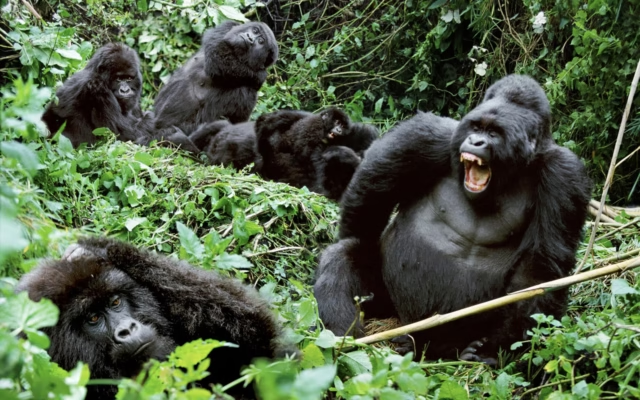
Unlike Volcanoes National Park, where mountain gorillas dominate a narrower altitude band on volcanic slopes, Nyungwe spreads across vast watershed forest feeding both Congo and Nile drainage systems. Wildlife viewing is guided, permit-based, and trail-intensive — the honest framing before booking.
Chimpanzees: flagship forest primates
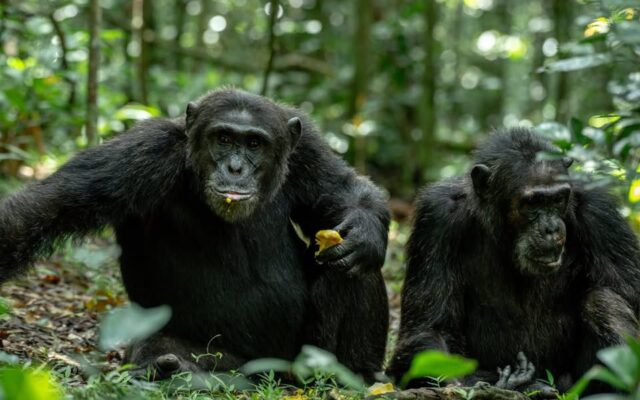
Approximately 500 chimpanzees inhabit Nyungwe, with habituated communities tracked from briefing points including Cyamudongo — a smaller annex forest block often favoured for sightings — and main-forest sectors near Uwinka and Gisakura. Rwanda Development Board rangers radio-track communities through steep, rooty terrain; treks may last from under an hour to several hours before regulated viewing.
Chimp encounters differ sharply from gorilla etiquette at Volcanoes: chimps vocalize, travel fast through canopy, and shift position constantly. Pant-hoots carry across valleys; fruiting seasons concentrate movement. Standard treks allow a defined observation window; fitness and waterproof footwear matter year-round because montane trails stay muddy even in drier calendar months.
Thirteen primate species
Beyond chimps, Nyungwe records thirteen primate species — among the highest counts in any single African forest park. Highlights include:
- Rwenzori colobus — spectacular black, white, and russet troops; habituated groups support dedicated colobus monkey trekking.
- Owl-faced monkey (Hamlyn's monkey) — elusive Albertine Rift specialist often associated with bamboo zones.
- L'Hoest's monkey — shy forest-edge species requiring guide skill and quiet approach.
- Grey-cheeked mangabey — vocal canopy forager frequently encountered on general walks.
- Red-tailed monkey, blue monkey, Dent's mona monkey, vervet, and olive baboon on forest margins.
Colobus trekking delivers among the park's most reliable close primate photography — troops sometimes exceed three hundred individuals, a staggering aggregation against green canopy. Mangabey and L'Hoest's sightings reward as bonuses on birding or hiking trails when guides know fruiting fig locations.
Forest mammals beyond primates
Nyungwe is not a Big Five destination. Forest elephants historically ranged the block; visitor signs are rare today. Giant forest hogs, various duikers, servals, golden cats, and smaller carnivores occur but require luck, dawn activity, and expert interpretation. Giant forest hogs sometimes appear on trail camera projects and occasional guided walks — never assume savannah-style predictability.
Reptiles, amphibians, butterflies, and orchids add depth for naturalists willing to move slowly. The canopy walkway at Uwinka reveals epiphyte layers invisible from the forest floor — part of the wildlife story even without mammal targets.
Cyamudongo versus main forest
Understanding Nyungwe's geography clarifies wildlife logistics. Cyamudongo — a detached forest fragment south of the main block — holds dense chimp habitat and shorter drive times from Gisakura lodge clusters. Main-forest sectors around Uwinka support canopy walks, colobus routes, and ridge hiking. Your lodge location and permit allocation determine morning drives; booking both sectors on one night's stay is unrealistic.
Ecological context: Albertine Rift refuge
Nyungwe sits on the Albertine Rift escarpment — a biodiversity hotspot shared with Gishwati-Mukura National Park, Bwindi, and Virunga forests across borders. Species isolation on rift slopes produced endemics visible to birders and primate specialists but subtle to casual walkers. Conservation programmes link anti-poaching, research stations, and community tourism on tea-estate fringes where forest meets agriculture.
Combining Nyungwe with Lake Kivu recovery days and Kigali logistics creates balanced Rwanda circuits — forest exertion, lakeside rest, capital services. Gorilla extensions at Volcanoes pair naturally when permits and drives are sequenced through western routing rather than repeated Kigali backtracking.
Responsible primate tourism
Chimp and colobus viewing rules mirror gorilla protocols at distance: no feeding, no flash photography, follow ranger instructions on approach time and group size. Sick visitors should not trek — primates share human pathogens. Stay on marked paths except where guides direct otherwise; off-trail shortcuts damage fragile understorey on steep slopes.
Tourism revenue should reach trackers and buffer communities transparently — ask operators how permit fees flow before booking. Nyungwe's long-term value depends on forest standing against agricultural pressure on ridges above Lake Kivu.
Photography and fieldcraft
Low light under canopy demands high ISO tolerance and fast lenses. Rain protection for bodies and binoculars is essential — afternoon showers occur in all seasons. Colobus and mangabey photography often beats chimp work for static portraits; chimps reward video and behavioural sequences when light allows.
For birding detail see Nyungwe bird watching. Trekking seasons: best time to visit Nyungwe. Access from Kigali and Lake Kivu: getting to Nyungwe.