Bird watching in Nyungwe National Park
With more than 322 recorded bird species including 29 Albertine Rift endemics, Nyungwe National Park anchors Rwanda forest birding alongside Volcanoes National Park buffer forest and Gishwati-Mukura National Park. The park mixes closed-canopy montane forest, bamboo zones, swamp margins, and tea-estate edges — habitat layers producing hornbills, barbets, sunbirds, raptors on ridge thermals, and sought-after ground birds when guides know stakeouts and calls.
Birding here differs sharply from Akagera National Park wetland and savannah routes: light is lower, targets hide in foliage, and misty mornings reward patience on steep trails near Uwinka and Gisakura visitor centres.
Albertine Rift endemics and headline species
Serious listers chase Albertine Rift specialists rarely seen on standard East Africa circuits:
- Red-collared mountain babbler — flagship Nyungwe target; local guides know territory along forest trails.
- Rwenzori turaco — stunning endemic turaco of rift forests.
- Handsome francolin — forest-floor francolin requiring early starts and guide stakeouts.
- Yellow-eyed black flycatcher, Grauer's warbler, Neumann's warbler — skulking understorey species for ear-birders.
- Regal sunbird, purple-breasted sunbird — nectar specialists in flowering zones.
Broader forest families include bar-tailed trogon, white-headed wood-hoopoe, numerous greenbuls, white-bellied robin-chat, and raptors such as mountain buzzard soaring along ridges. Exact day lists depend on month, elevation walked, and whether birding follows chimp trekking or uses dedicated dawn sessions.
Where to bird in Nyungwe
Uwinka Visitor Centre trails — including routes toward the canopy walkway — offer accessible forest-edge birding with infrastructure for half-day sessions. Ridge viewpoints produce raptor and turaco opportunities when weather clears.
Gisakura sector approaches suit birders staying near Cyamudongo chimp access — forest patches and estate margins hold different species mixes than high Uwinka ridges.
Bamboo zones — often associated with owl-faced monkey habitat — carry specialist species distinct from lowland sections of the main forest block. Guides adjust routes by season and recent sightings logged by ranger networks.
Tea plantations surrounding the park create edge habitat for open-country species and raptors hunting forest margins — worthwhile dawn stops before entering permit-controlled forest.
Canopy walkway and bird perspective
The Nyungwe canopy walk offers unusual eye-level views of canopy species — sunbirds, orchid-associated insects, and occasional turaco flight across valleys. It complements ground forest walks rather than replacing dedicated stakeout time for skulkers like babblers and francolins.
Vertigo-sensitive birders can still achieve strong lists on ground trails; the bridge is optional enrichment, not a birding requirement.
When and how to bird Nyungwe
Early morning forest walks maximise calling periods and francolin activity. Wet months (roughly March–May and October–November) boost lush scenery and some vocal activity but muddy trails complicate stakeout patience; drier windows (June–September, December–February) simplify footing — see best time to visit Nyungwe for month detail.
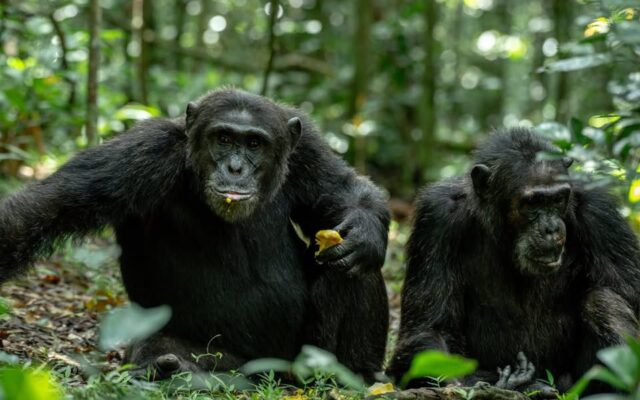
Chimpanzee trekking produces incidental birding but permit timing and group pace rarely suit long lists. Birders should add dedicated mornings beyond chimp slots — ideally before transfer days to Lake Kivu or drives toward Kigali.
Guides, gear, and listing strategy
Local birding guides transform Nyungwe from frustrating foliage scanning to productive sessions — they know red-collared mountain babbler territories, francolin dawn routes, and call-back ethics that avoid stressing breeding birds. Book specialist birding guides through licensed operators rather than assuming general rangers cover all stakeouts.
Binoculars (8×42 minimum), rain covers, waterproof field books, and voice-recording apps for call comparison help in low light. Photography demands fast lenses and ISO tolerance; many forest birds stay partially obscured — record shots and behavioural notes often beat portrait expectations.
Rwanda birding circuit context
Extended Rwanda birding safaris chain Nyungwe with Volcanoes for different altitude bands, Gishwati-Mukura for quieter forest patches, and Akagera for savannah and wetland contrast. Kigali serves logistics and urban species on arrival days.
Cross-border Albertine Rift itineraries may continue into Uganda's Bwindi or Kibale — Nyungwe holds species overlap but also distinct stakeouts worth dedicated nights.
Responsible forest birding
Playback use should stay minimal and guide-led — overcalling stresses territory holders, especially for rare babblers and francolins. Stay on trails; forest understorey on steep slopes recovers slowly from shortcuts. Support community guides and lodges that employ local birders rather than one-day pass-through transfers.
Wildlife and primate context: Nyungwe wildlife. Access routing: getting to Nyungwe. Main hub: Nyungwe National Park guide.