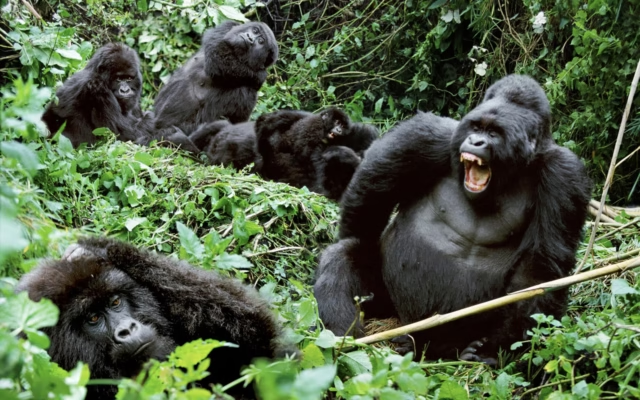
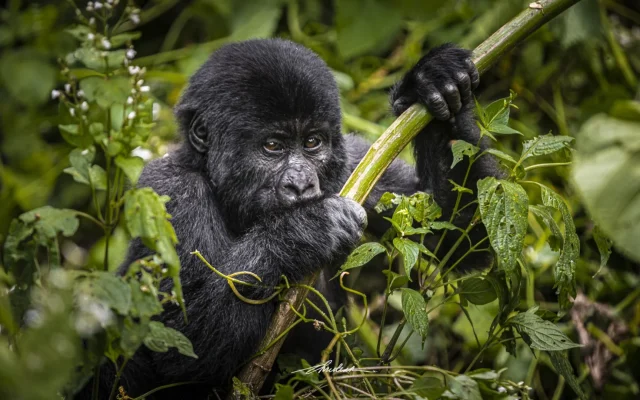
Gishwati-Mukura National Park is Rwanda’s compact western forest reserve — a conservation comeback story linking two remnant Albertine Rift forest blocks between the Virunga volcanoes and the vast rainforest of Nyungwe. Famous for quiet primate walks, golden monkey and chimpanzee tracking, community-based tourism, and forest birding without Nyungwe-scale crowds, this park rewards travelers who want authentic montane forest time on western Rwanda transfer routes.
Created as a national park in 2015, Gishwati-Mukura National Park protects roughly 34 square kilometres split across the Gishwati and Mukura forest sectors in Rubavu and Ngororero districts. Where {{LINK:nyungwe-national-park:Nyungwe National Park}} is ancient rainforest at scale, Gishwati-Mukura is intimate forest — regenerating slopes, community guides, and ranger-led trails where chimpanzees, golden monkeys, L’Hoest’s monkeys, and Albertine Rift birds define the experience rather than savannah megafauna or canopy infrastructure.
For many visitors, Gishwati-Mukura works as a half-day or one-night western forest add-on between gorilla trekking at {{LINK:volcanoes-national-park:Volcanoes National Park}} and chimpanzee trekking at Nyungwe — or as a deliberate quiet alternative when permit pressure and lodge demand peak at larger parks. Others come specifically for the restoration narrative: forests that lost most of their cover through decades of settlement pressure now recovering under Rwanda Development Board management and community revenue-sharing.
This destination combines naturally with Nyungwe National Park, Volcanoes National Park, Lake Kivu, Kigali, and Musanze on western Rwanda primate circuits.
Whether you are building a gorilla-and-forest itinerary, a birding route through Albertine Rift habitat, or a complete Rwanda safari with lakeside recovery days, Gishwati-Mukura National Park safaris deliver forest immersion that feels personal, community-connected, and strategically placed on the map.
Quick Facts About Gishwati-Mukura National Park
| Feature | Details |
|---|---|
| Location | Western Rwanda · Rubavu & Ngororero districts · Albertine Rift |
| Established | 2015 (national park; forest protection and restoration from 2007 onward) |
| Size | Approximately 34 square kilometres (Gishwati + Mukura sectors) |
| Main Attractions | Guided forest walks, chimpanzee tracking, golden monkey tracking, birding, community tourism |
| Ecosystem | Regenerating montane forest, bamboo patches, stream valleys, tea-estate margins |
| Primate Highlights | Chimpanzees, golden monkeys, L’Hoest’s monkeys, blue monkeys |
| Bird Species | 130+ recorded · Albertine Rift specialists |
| Best Time to Visit | June to September & December to February (drier forest trails) |
| Management | Rwanda Development Board (RDB) |
| Typical Stay | Half-day to one night (add-on between Volcanoes and Nyungwe) |
Overview of Gishwati-Mukura National Park
Gishwati-Mukura National Park occupies a corridor position on Rwanda’s western tourism map — geographically between the Virunga highlands and Nyungwe’s southwestern rainforest block. The park is not one continuous forest; it comprises two separate reserves united under single national-park status to protect remaining Albertine Rift habitat and channel tourism benefits to surrounding communities.
The Gishwati sector, northwest of the main western highway toward Lake Kivu, is the more visited block — closer to gorilla-country routing and Rubavu (Gisenyi) lakeside bases. The Mukura sector lies further south in hill country toward Ngororero — quieter, less developed for tourism, but ecologically significant as a forest fragment in a heavily cultivated landscape. Understanding which sector your itinerary targets matters because briefing points, drive times, and activity menus differ.

What distinguishes Gishwati-Mukura safaris is scale and story. This is among Africa’s smallest national parks by area — you will not spend a week here as you might in Serengeti or even Nyungwe. Instead, the park offers concentrated forest time: ranger-led walks on regenerating trails, primate encounters in habitat recovering from near-total clearance, and community tourism programmes where village cooperatives share permit revenue. Rwanda positions the park as proof that even heavily degraded forest can rebound when protection, policing, and local livelihoods align.
Wildlife viewing is guided and on foot — there are no game drives, no boat safaris, no canopy walkway. Chimpanzee numbers are modest compared with Nyungwe’s five hundred individuals; golden monkeys occur in bamboo and forest edge; L’Hoest’s and blue monkeys reward patient walkers. Birders target Albertine Rift endemics and forest specialists in a setting where lists grow through ear-birding and stakeout knowledge rather than vehicle scanning.
Travelers often slot Gishwati-Mukura on transfers: Volcanoes → Lake Kivu → Gishwati morning walk → continue toward Nyungwe; or Kigali → western highlands → forest afternoon before Karongi lakeside nights. The honest framing: one forest morning or a single overnight delivers the essence; duplicating Nyungwe’s full chimp-and-canopy programme here is unnecessary unless you specifically want quieter trails.
Why Visit Gishwati-Mukura National Park?
Gishwati-Mukura National Park answers a specific Rwanda itinerary question: how do you add forest depth without another multi-night commitment at a flagship park?
Quiet Western Forest Alternative
When Nyungwe permits, lodges, and drive times feel heavy for a tight schedule, Gishwati-Mukura offers regulated primate forest on the corridor between gorilla country and Nyungwe — often as a half-day stop that breaks a long transfer day meaningfully.
Conservation Restoration Story
Gishwati forest shrank from thousands of square kilometres historically to a tiny remnant before legal protection and replanting programmes began in the 2000s. Visiting supports visible regeneration — young secondary forest, returning primates, and community guardianship — a narrative distinct from ancient intact Nyungwe.
Chimpanzee & Golden Monkey Tracking
RDB-permitted tracking targets habituated or semi-habituated chimpanzees in Gishwati and golden monkeys in bamboo zones. Encounters are less guaranteed than at larger parks but deeply rewarding when guides connect — especially for travelers who have already trekked gorillas and want another primate perspective.
Community-Based Tourism
Local cooperatives participate in guiding, cultural performances, handicraft sales, and forest patrol support. Revenue-sharing links village livelihoods to park success — part of why Rwanda emphasizes Gishwati-Mukura in sustainable tourism messaging.
Albertine Rift Birding
With 130+ recorded species including regional endemics, the park punches above its size for birders building western Rwanda routes that already include Volcanoes buffer forest and Nyungwe specialists.
Strategic Circuit Position
Western routing through Gishwati reduces empty transfer kilometres between Volcanoes, Lake Kivu, and Nyungwe — smart logistics as much as wildlife motivation.
Top Things to Do in Gishwati-Mukura National Park
Gishwati-Mukura National Park activities centre on guided forest experiences and community encounters. Permits and ranger escorts apply to primate tracking; general nature walks use park-approved guides.
Guided Forest Nature Walks
Interpreted trails through regenerating montane forest — ideal introduction when chimp permits are unavailable or fitness limits longer treks.
Chimpanzee Tracking
Early-morning ranger-led treks in the Gishwati sector targeting habituated chimpanzee communities — duration and difficulty vary with forest conditions.
Golden Monkey Tracking
Bamboo-zone tracking for golden monkeys — a lighter, colourful primate experience complementary to gorilla and chimp treks.
Bird Watching
Forest-edge and interior walks with birding guides; dawn starts maximise Albertine Rift activity.
Community Cultural Visits
Village cooperatives offer dance, craft, farm visits, and conservation storytelling on park margins.
Tea Estate & Viewpoint Stops
Surrounding tea plantations frame panoramic views toward Lake Kivu and forested ridges — common on transfer days.
See all things to do in Gishwati-Mukura National Park
Chimpanzee Tracking in Gishwati-Mukura National Park
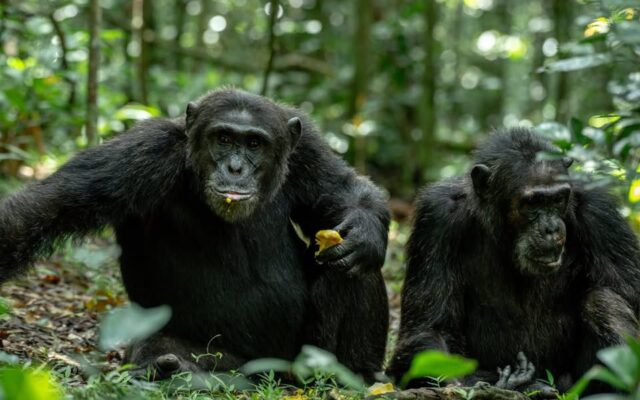
Chimpanzee tracking in Gishwati operates under Rwanda Development Board regulations similar to other primate parks — briefing, small groups, ranger radio-tracking, and defined observation etiquette once chimps are located. The Gishwati chimpanzee population is small — estimates in recent years have centred on roughly twenty individuals in the habituated community — which makes encounters precious rather than industrial.
Treks begin early morning when chimps are still in night nests or moving slowly through fruiting trees. Terrain is steep regenerating forest with muddy trails after rain — waterproof boots and gaiters recommended year-round. Unlike gorilla viewing’s typically calm hour, chimps may travel quickly; expect vocalization, branch shaking, and occasional frustrating gaps before rewarding observation.
Permits should be booked through licensed operators alongside wider Rwanda routing. Confirm current fees and availability when building itineraries — Gishwati chimp capacity is limited and the park is not a default substitute when Nyungwe permits sell out, though operators sometimes offer it as a western alternative. Photography challenges mirror Nyungwe: low light under canopy, no flash, maintain ranger-directed distance.
Pair chimp tracking with afternoon community visits or a shorter golden monkey trek on separate days rather than stacking strenuous primate activities same-day after Volcanoes gorilla exertion.
Golden Monkey Tracking & Primate Diversity
Golden monkey tracking in Gishwati-Mukura targets bamboo-associated troops related to the Virunga populations at Volcanoes National Park — bright pelage, active feeding behaviour, and generally shorter treks than chimp or gorilla hikes. For travelers who enjoyed golden monkeys near Kinigi, Gishwati offers a western-forest context without returning north.
Beyond flagship species, the park holds L’Hoest’s monkeys, blue monkeys, red-tailed monkeys, and vervet monkeys on forest margins. Owl-faced monkey and other Albertine specialists occur with guide skill and luck. No savannah megafauna — this is foot-based primate forest, not {{LINK:akagera-national-park:Akagera}} game drives.
Explore wildlife and primates in Gishwati-Mukura National Park
Wildlife & Primates in Gishwati-Mukura National Park
Gishwati-Mukura National Park wildlife is primate-first in regenerating montane forest. Chimpanzees and golden monkeys headline permitted activities; other primates appear on general walks. Large mammals are absent from the visitor experience — duikers, small carnivores, and forest rodents occur but require luck and interpretive guiding rather than predictable sightings.
The ecological story is recovery: cattle grazing, settlement, and illegal clearance reduced Gishwati to a fraction of its historical extent before boundary demarcation, patrol intensification, and replanting began. Primates returned as canopy closed; birds followed. Walking here means observing secondary and maturing forest — different aesthetics from Nyungwe’s cathedral-scale ancient trees, but equally important for conservation education.
Bird Watching in Gishwati-Mukura National Park
Bird watching in Gishwati-Mukura targets Albertine Rift forest species in a compact block — useful for listers chaining western Rwanda habitats from Volcanoes montane forest through Gishwati regenerating slopes to Nyungwe’s larger endemic community.
Recorded species exceed 130, including regional endemics and forest specialists: turacos, barbets, sunbirds, flycatchers, and raptors along ridge thermals. Tea-estate edges and stream margins add edge-habitat species landlocked forest cannot supply. Local birding guides who know calls transform short walks into productive mornings.
Read our Gishwati-Mukura bird watching guide
Best Time to Visit Gishwati-Mukura National Park
The best time to visit Gishwati-Mukura aligns with western Rwanda forest trekking generally — drier trails and clearer transfer roads, though the park operates year-round for guided walks and primate activities.
Dry Season Windows
- June to September — most comfortable forest footing; peak international travel across Rwanda.
- December to February — second dry peak; good for western corridor routing between gorillas and Nyungwe.
Wet Season Considerations
March to May and October to November bring heavier rain, lusher regeneration scenery, and strong bird activity — trails stay muddy; pack rain gear and allow flexible same-day scheduling when downpours delay briefings.
Month-by-month Gishwati-Mukura planning guide
How to Get to Gishwati-Mukura National Park
Access depends on which sector you visit. Most tourism concentrates on the Gishwati sector northwest of the Kigali–Rubavu–Karongi highway corridor; Mukura requires separate routing south toward Ngororero.
From Kigali
Roughly three to four hours by road to Gishwati briefing areas depending on traffic leaving the capital and whether you approach via Musanze western loops or direct southern highways. Organized safaris coordinate permits and sector gates; self-drivers should confirm GPS coordinates with operators — forest access roads are narrower than main highways.
From Volcanoes National Park & Musanze
Gishwati lies one to two hours west/southwest of gorilla-country bases — practical as a forest morning after Kinigi treks when routing toward Lake Kivu or Nyungwe rather than backtracking through Kigali.
From Lake Kivu
Rubavu (Gisenyi) and Karongi (Kibuye) towns offer natural bases within one to two hours of Gishwati sector trailheads — ideal for breaking Kivu–Nyungwe transfers with a guided forest walk.
From Nyungwe National Park
Nyungwe–Gishwati transfers run three to five hours depending on route and sector — many travelers visit Gishwati northbound toward Volcanoes rather than southbound from Nyungwe, but both directions work with realistic pacing.
Detailed how to get to Gishwati-Mukura guide
Where to Stay Near Gishwati-Mukura National Park
Accommodation near Gishwati-Mukura National Park is limited inside park boundaries — most visitors stay at Lake Kivu lakeside lodges in Rubavu or Karongi, Musanze gorilla-base hotels, or Nyungwe-edge properties when combining both forest parks. Community guesthouses and eco-lodges near Gishwati sector entrance roads serve budget-conscious travelers on western circuits.
One night near the forest is sufficient for most itineraries; two nights only when combining chimp, golden monkey, and birding days without long transfers. Confirm drive time from lodge to briefing point when booking dawn treks.
Where to stay in Gishwati-Mukura
Gishwati-Mukura Safari Tours & Sample Itineraries
Gishwati-Mukura safari tours integrate as western-corridor add-ons rather than standalone week-long destinations.
Volcanoes + Gishwati + Lake Kivu (5–6 days)
Kigali → gorilla trek → Gishwati forest walk or chimp track → Rubavu lakeside recovery → return or continue south.
Western Primate Loop (8–10 days)
Kigali → Volcanoes → Gishwati → Lake Kivu → Nyungwe chimps and canopy → Kigali — forest, lake, and primate depth without {{LINK:akagera-national-park:Akagera}} savannah.
Complete Rwanda (10–12 days)
Add Akagera Big Five and extra Kigali cultural time around the western primate core.
Licensed operators sequence permits across Volcanoes, Gishwati, and Nyungwe — critical when gorilla and chimp dates must align on fixed international flights.
Gishwati-Mukura National Park FAQs
- Is Gishwati-Mukura National Park worth visiting?
-
Yes for travelers building western Rwanda primate circuits who want quieter forest time, community tourism, and chimp or golden monkey tracking between Volcanoes National Park and Nyungwe National Park. It is not a substitute for a first-time Nyungwe visit but an excellent corridor add-on.
- How many days do I need for Gishwati-Mukura?
-
Most itineraries allocate a half-day to one night — one forest walk or primate trek plus optional community visit. Two nights suit dedicated birders or travelers combining chimp and golden monkey activities without rushing transfers.
- Can I see chimpanzees in Gishwati-Mukura?
-
Yes. RDB-permitted chimpanzee tracking operates in the Gishwati sector. Populations are small compared with Nyungwe — book permits early and treat encounters as rewarding but not guaranteed on every trek.
- How does Gishwati-Mukura compare to Nyungwe?
-
Nyungwe is vastly larger with chimps, canopy walkway, and thirteen primate species at scale. Gishwati-Mukura is compact, quieter, and community-focused — better as a western transfer stop than a duplicate multi-night rainforest stay.
- Where is Gishwati-Mukura National Park located?
-
Western Rwanda between the Virunga volcanoes and Nyungwe — two forest sectors (Gishwati near Rubavu and Mukura in Ngororero district) totalling roughly 34 km².
- When is the best time to visit Gishwati-Mukura?
-
Drier months — roughly June to September and December to February — offer easier forest trails. Activities run year-round; wet seasons bring mud but lush scenery and strong bird activity.
- Can I combine Gishwati-Mukura with gorilla trekking?
-
Yes — the park sits on natural routing between Volcanoes National Park and Lake Kivu. Many travelers add a Gishwati forest morning after gorilla treks while heading west toward Nyungwe or lakeside recovery.
Nearby Destinations to Combine with Gishwati-Mukura National Park
Gishwati-Mukura’s western corridor position makes it a natural link between Virunga gorilla highlands, Lake Kivu relaxation, and Nyungwe’s vast rainforest — plus Kigali gateway logistics on longer national circuits.
Nyungwe National Park
Rwanda's vast montane rainforest — chimpanzee trekking, canopy walkway, and Albertine Rift birding south of Gishwati-Mukura on western circuits.
Volcanoes National Park
Mountain gorilla trekking in the Virunga Mountains — the northern primate anchor paired with Gishwati forest on western Rwanda routes.
Lake Kivu
Lakeside relaxation between forest treks — Rubavu and Karongi bases within easy reach of Gishwati sector trailheads.
Musanze
Gorilla-trekking base town north of Gishwati — practical overnight hub before western forest transfers toward Lake Kivu.
Kigali
International gateway and cultural capital — start or end Rwanda itineraries before the western forest drive.
Nearby destinations to combine
Plan Your Gishwati-Mukura Safari
Gishwati-Mukura National Park will not replace Nyungwe or Volcanoes on a first Rwanda visit — nor should it try. It completes the western story: quieter forest, community tourism, chimp and golden monkey encounters, and Albertine Rift birding on the transfer map between Rwanda’s headline primate parks.
Whether you want a half-day forest stop between lakeside nights, a dedicated chimp tracking morning, or a birding detour on a comprehensive Rwanda circuit, Gishwati-Mukura safaris reward travelers who value restoration narratives and uncrowded trails.
Our Rwanda safari specialists coordinate permits, lodges, transfers, and activity sequencing so your western forest days feel intentional — not squeezed between exhausting drives.