Wildlife in Gishwati-Mukura National Park
Gishwati-Mukura National Park wildlife is defined by compact montane forest and recovery ecology — not savannah visibility at Akagera National Park or ancient rainforest scale at Nyungwe National Park. Covering roughly 34 square kilometres in two separate western Rwanda sectors, the park protects remnant Albertine Rift habitat where chimpanzees, golden monkeys, and several forest monkey species persist in forest that was nearly lost to clearance and grazing before legal protection intensified from 2007 and national-park status arrived in 2015.
All meaningful wildlife viewing is on foot with rangers. There are no game drives, no boat safaris, no megafauna herds. The honest framing helps itinerary design: Gishwati-Mukura rewards primate specialists, birders, and travelers who value restoration narrative — not checklist Big Five photography.
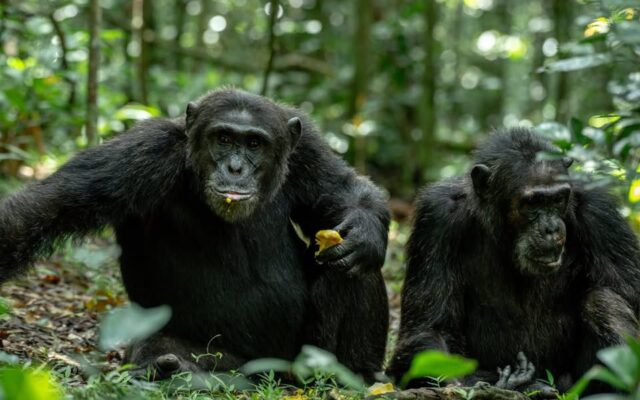
Chimpanzees in the Gishwati sector
The Gishwati sector holds a small habituated chimpanzee community — population estimates in recent years have centred on roughly twenty individuals, far smaller than Nyungwe's five hundred. Rwanda Development Board rangers radio-track or follow sign through regenerating slopes; treks may be steep, muddy, and shorter in distance than Nyungwe's Cyamudongo routes but equally demanding on footing.
Chimp encounters mirror East African forest norms: vocal pant-hoots, fast canopy movement, fruiting-tree concentrations. Permits are required; booking through licensed operators alongside Volcanoes or Nyungwe permits prevents date conflicts. Treat sightings as precious — limited group sizes and small populations mean capacity is never Nyungwe-scale.
Golden monkeys
Golden monkey tracking targets bamboo-zone troops related to Virunga populations at Volcanoes National Park. Bright orange-gold pelage, active feeding on bamboo shoots, and generally shorter treks than chimp or gorilla hikes make golden monkeys a strong secondary primate for travelers who already trekked gorillas and want lighter western-forest activity.
Other primates
Beyond flagship species, the park records L'Hoest's monkeys, blue monkeys, red-tailed monkeys, and vervet monkeys on forest margins and regenerating canopy. Owl-faced monkey and other Albertine specialists occur with guide skill and quiet approach — bonuses on general nature walks rather than dedicated permit products.
Forest mammals beyond primates
Duikers, giant forest hogs, servals, and smaller carnivores inhabit the forest but remain elusive on standard tourist trails. Forest elephants do not feature in the visitor experience. The ecological headline is primate and bird recovery in maturing secondary forest — young trees closing canopy, streams re-establishing riparian corridors, and community patrols reducing illegal activity.
Gishwati versus Mukura sectors
Understanding geography clarifies wildlife logistics. Gishwati, northwest toward Rubavu and the main western highway corridor, concentrates tourism infrastructure, chimp tracking, golden monkey routes, and community programmes. Mukura, south in Ngororero hill country, is quieter with less developed visitor access — ecologically important as a forest fragment but rarely the first sector international itineraries target. Confirm which block your permits and lodge transfers reference before travel day.
Conservation context
Gishwati historically covered a vast forest block; by the early 2000s only a tiny remnant remained. Boundary demarcation, anti-poaching, replanting, and community revenue-sharing under Rwanda Development Board management reversed trajectory — primates returned as habitat matured. Tourism fees fund patrols and local cooperatives. Walking here educates as much as it entertains: visible secondary growth, tea-estate edges, and ridge views toward Lake Kivu place forest recovery in lived landscape context.
How Gishwati-Mukura fits Rwanda circuits
Combine with Volcanoes gorillas, Nyungwe chimps and canopy walks, and Lake Kivu recovery nights on western routing via Kigali. One forest morning or single overnight captures the essence — duplicating Nyungwe's full primate programme here is unnecessary unless you specifically want quieter trails.
Seasons: best time to visit Gishwati-Mukura. Birding: bird watching. Access: getting to Gishwati-Mukura. Main hub: Gishwati-Mukura National Park guide.
Photography and trail etiquette
Low canopy light challenges cameras — no flash near primates, maintain ranger-directed distance, and expect movement blur on chimp treks. Walking sticks help on muddy descents; gaiters reduce leech annoyance in wet months.
Children and fitness
General nature walks suit wider fitness ranges than chimp tracking. Minimum age rules for primate treks follow RDB policy — confirm current limits when traveling with teenagers.