Food in Uganda is an important part of the country’s culture, identity, and daily life. While many visitors initially travel to Uganda for Mountain Gorilla Trekking, Wildlife Safaris, Chimpanzee Tracking, Birding Tours, and cultural experiences, they soon discover that Ugandan cuisine is one of the hidden highlights of visiting the Pearl of Africa. Rich in flavor, freshness, diversity, and tradition, Ugandan food reflects the country’s fertile soils, favorable climate, and vibrant cultural heritage.
Uganda is often described as one of Africa’s food baskets because of its ability to grow a wide variety of crops throughout the year. Fresh fruits, vegetables, grains, legumes, fish, dairy products, and livestock are abundant across the country. As a result, many traditional dishes are prepared using locally sourced ingredients, often harvested just hours before they reach the table.
The country’s culinary traditions have been shaped by indigenous cultures as well as influences from Arab traders, Indian communities, British colonial history, and neighboring East African countries. Today, Uganda offers everything from traditional village meals and local restaurants to international cuisine and fine dining experiences in major cities and safari lodges.
This comprehensive guide explores the fascinating world of Food in Uganda, including traditional dishes, regional specialties, street food, beverages, dining customs, safari cuisine, and what visitors can expect during their travels.
Why Ugandan Food Is Unique
Ugandan cuisine stands out because of its emphasis on fresh ingredients and natural flavors.
Key characteristics include:
- Fresh farm-to-table ingredients
- Seasonal produce
- Diverse regional influences
- Generous portions
- Nutritious meals
- Minimal food processing
The result is wholesome and satisfying cuisine enjoyed by locals and visitors alike.
The Importance of Agriculture in Ugandan Cuisine
Uganda’s fertile soils and favorable climate support year-round agricultural production.
Major food crops include:
- Bananas
- Maize
- Cassava
- Sweet potatoes
- Beans
- Rice
- Groundnuts
- Millet
- Sorghum
This agricultural abundance forms the foundation of traditional Ugandan meals.
Matooke: Uganda’s National Dish
Matooke is widely regarded as Uganda’s most iconic food.
Made from green cooking bananas, matooke is peeled, steamed, and mashed into a soft, nutritious dish.
It is commonly served with:
- Beef stew
- Chicken
- Groundnut sauce
- Beans
- Vegetable sauces
Matooke is particularly popular in central and western Uganda.
For many visitors, trying matooke is an essential cultural experience.
Rolex: Uganda’s Most Famous Street Food
One of Uganda’s most beloved foods is the famous Rolex.
The name comes from “rolled eggs.”
A Rolex typically consists of:
- Fresh chapati
- Egg omelet
- Tomatoes
- Onions
- Optional vegetables
The omelet is rolled inside the chapati, creating a convenient and delicious street food snack.
Rolex is popular throughout the country and is enjoyed by people of all ages.
Posho
Posho is another staple food found across Uganda.
Made from maize flour and water, it has a firm texture similar to polenta.
Posho is commonly served with:
- Beans
- Beef stew
- Fish
- Vegetables
It is affordable, filling, and widely consumed.
Groundnut Sauce
Groundnut sauce is a popular accompaniment to many meals.
Prepared from peanuts, it creates a rich and flavorful sauce often served with:
- Matooke
- Rice
- Sweet potatoes
- Cassava
Groundnut sauce is an important component of many traditional Ugandan dishes.
Sweet Potatoes and Cassava
Sweet potatoes and cassava are common staples throughout Uganda.
They may be:
- Boiled
- Steamed
- Roasted
- Mashed
These crops are highly nutritious and form an important part of local diets.
Rice Dishes
Rice has become increasingly popular across Uganda.
It is commonly served with:
- Chicken stew
- Beef stew
- Fish dishes
- Beans
- Vegetables
Rice is widely available in homes, restaurants, and safari lodges.
Ugandan Fish Dishes
Uganda’s lakes and rivers provide abundant freshwater fish.
Popular species include:
- Nile Perch
- Tilapia
- Catfish
Fish is commonly:
- Grilled
- Fried
- Stewed
- Roasted
Lake Victoria is particularly famous for its fish cuisine.
Meat Dishes in Uganda
Meat plays an important role in many traditional meals.
Popular options include:
- Beef
- Goat
- Chicken
- Pork
- Lamb
Meat is often prepared in rich stews accompanied by local staples.
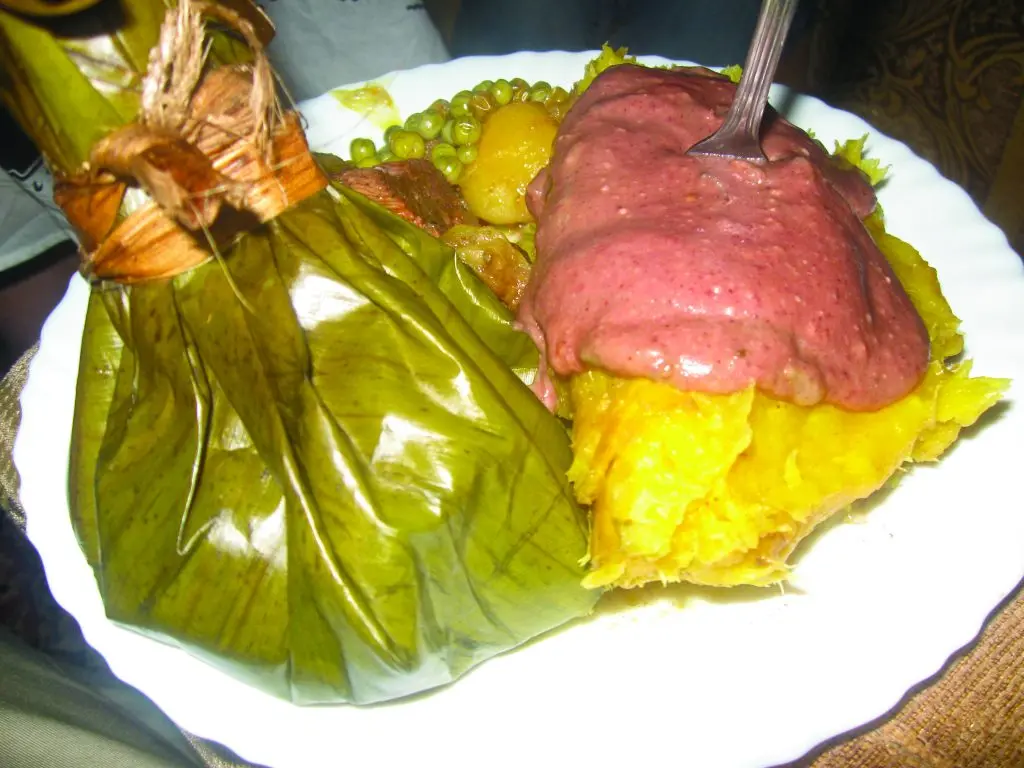
Luwombo
Luwombo is one of Uganda’s most celebrated traditional dishes.
Originally associated with the Buganda Kingdom, it is prepared by steaming meat, chicken, fish, or groundnuts inside banana leaves.
This cooking method creates rich flavors and tender textures.
Luwombo is frequently served during special occasions and cultural events.
Muchomo: Ugandan Barbecue
Muchomo refers to grilled meat prepared over charcoal.
Popular options include:
- Goat muchomo
- Beef muchomo
- Chicken muchomo
Muchomo is widely available in restaurants and roadside establishments.
Traditional Breakfast Foods
Breakfast in Uganda often includes:
- Tea
- Coffee
- Chapati
- Mandazi
- Eggs
- Bread
Hotels and safari lodges frequently provide both local and international breakfast options.
Fresh Fruits of Uganda
Uganda is blessed with abundant tropical fruits.
Popular varieties include:
- Mangoes
- Pineapples
- Passion fruits
- Papayas
- Bananas
- Watermelons
- Jackfruit
- Avocados
Many visitors are impressed by the freshness and quality of Ugandan fruit.
Vegetarian and Vegan Food in Uganda
Uganda is surprisingly accommodating for vegetarian travelers.
Common vegetarian foods include:
- Beans
- Groundnut sauce
- Vegetables
- Sweet potatoes
- Cassava
- Rice
- Matooke
Many safari lodges can also accommodate vegan dietary requirements with advance notice.
Street Food Culture
Street food is an important part of everyday life.
Popular snacks include:
- Rolex
- Roasted maize
- Mandazi
- Samosas
- Grilled meat
- Chapati
Street food provides an affordable way to experience local flavors.
Ugandan Coffee
Uganda is one of Africa’s leading coffee producers.
The country grows:
- Arabica coffee
- Robusta coffee
Coffee tours are increasingly popular among visitors interested in agricultural tourism.
Fresh Ugandan coffee is served in many hotels and safari lodges.
Tea Production in Uganda
Tea is another important agricultural product.
Visitors traveling through western Uganda often pass extensive tea plantations.
Ugandan tea is widely consumed locally and exported internationally.
Traditional Beverages
Traditional drinks may include:
- Millet-based beverages
- Fresh fruit juices
- Local herbal drinks
Some cultural tours include demonstrations of traditional beverage preparation.
Food at Safari Lodges
Safari lodges generally offer a mix of:
- International cuisine
- Local dishes
- Vegetarian options
- Special dietary menus
Many lodges showcase Ugandan ingredients while maintaining international standards.
Regional Food Differences
Different regions of Uganda have unique culinary traditions.
Examples include:
- Matooke in western and central Uganda
- Millet-based dishes in the north
- Fish dishes near major lakes
- Pastoral cuisine in Karamoja and Ankole
Regional diversity adds richness to Uganda’s food culture.
Food Safety for Visitors
Most hotels, lodges, and reputable restaurants maintain good food safety standards.
Visitors should:
- Drink safe water
- Choose reputable establishments
- Practice normal travel precautions
Most travelers experience no significant food-related issues.
Culinary Tourism in Uganda
Food tourism is becoming increasingly popular.
Experiences may include:
- Cooking classes
- Coffee tours
- Market visits
- Farm tours
- Traditional dining experiences
These activities provide deeper insights into Ugandan culture.
Why Visitors Love Ugandan Food
Many travelers appreciate Ugandan cuisine because it is:
- Fresh
- Flavorful
- Nutritious
- Authentic
- Affordable
The emphasis on local ingredients creates a genuine culinary experience.
Final Thoughts on Food in Uganda
Food in Uganda reflects the country’s agricultural abundance, cultural diversity, and traditions of hospitality. From iconic dishes such as matooke, Rolex, and luwombo to fresh tropical fruits, grilled fish, groundnut sauces, and exceptional coffee, Uganda offers a rich culinary experience that complements its world-famous wildlife and cultural attractions.
Whether enjoying a traditional meal in a rural village, sampling street food in Kampala, dining at a luxury safari lodge, or participating in a cooking experience during a cultural tour, visitors will discover that Ugandan cuisine is an important and rewarding part of exploring the Pearl of Africa. For many travelers, the flavors of Uganda become some of their most memorable travel experiences.

 Read
Read