Understanding Money in Uganda is an important part of planning a successful trip to the Pearl of Africa. Whether you are visiting for a Gorilla Trekking Safari, wildlife adventure, birding tour, cultural experience, business trip, or family holiday, knowing how money works in Uganda will help you travel confidently and avoid unnecessary complications.
Uganda has a modern banking system, widespread mobile money services, growing card payment acceptance, and a well-established foreign exchange network. However, cash remains an important part of daily transactions, especially outside major cities and tourist centers. Travelers who understand local currency practices, exchange rates, payment options, and banking services will find it much easier to manage expenses during their stay.
This comprehensive guide covers everything visitors need to know about money in Uganda, including the local currency, exchange rates, cash usage, credit cards, ATMs, tipping customs, mobile money, and practical financial advice for safari travelers.
What Is the Currency of Uganda?
The official currency of Uganda is the Ugandan Shilling (UGX).
The currency is issued and regulated by the Bank of Uganda, the country’s central bank.
Ugandan Shillings are commonly abbreviated as:
- UGX
- USh
- Shs
Prices throughout the country are usually displayed in Ugandan Shillings, although tourism services such as safari packages, gorilla permits, hotels, and domestic flights are often quoted in US Dollars.
The Ugandan Shilling is the primary currency used for everyday transactions including meals, transportation, shopping, local markets, and entrance fees not specifically designated in foreign currencies.
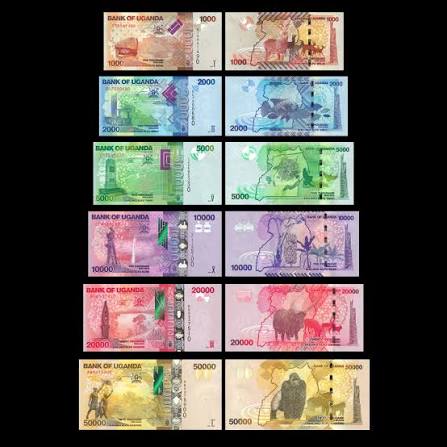
Ugandan Currency Denominations
Uganda uses both banknotes and coins.
Banknotes
Commonly used banknotes include:
- 1,000 UGX
- 2,000 UGX
- 5,000 UGX
- 10,000 UGX
- 20,000 UGX
- 50,000 UGX
The 50,000 UGX note is the highest denomination and is widely used for larger cash transactions.
Coins
Coins are available in smaller denominations, although they are less commonly used by visitors:
- 50 UGX
- 100 UGX
- 200 UGX
- 500 UGX
- 1,000 UGX
Most tourists will primarily encounter banknotes during their travels.
Can You Use US Dollars in Uganda?
Yes, US Dollars are widely accepted within Uganda’s tourism industry.
Many tourism-related services are priced in US Dollars, including:
- Gorilla Trekking Permits
- Chimpanzee Tracking Permits
- Safari packages
- National park activities
- Domestic flights
- Luxury lodges
- Tour operator services
However, outside the tourism sector, local businesses generally prefer Ugandan Shillings.
Restaurants, shops, fuel stations, taxis, local markets, and community projects often require payment in local currency.
Visitors should therefore carry a combination of Ugandan Shillings and US Dollars when traveling throughout the country.
Requirements for US Dollar Notes
Travelers bringing US Dollars should pay close attention to note condition and issue dates.
Most banks, exchange bureaus, and tourism businesses prefer:
- Notes issued in 2009 or later.
- Clean, undamaged bills.
- Untorn notes.
- No excessive writing or markings.
Older notes may be refused or exchanged at less favorable rates.
To avoid difficulties, travelers should bring recently issued US Dollar bills in good condition.
Currency Exchange in Uganda
Exchanging money is generally straightforward in Uganda.
Visitors can exchange foreign currency at:
- Licensed forex bureaus.
- Banks.
- Major hotels.
- Entebbe International Airport.
Forex bureaus usually offer the most competitive exchange rates.
Major foreign currencies commonly exchanged include:
- US Dollars.
- Euros.
- British Pounds.
- Canadian Dollars.
- Australian Dollars.
Travelers are advised to avoid exchanging money with unofficial street vendors.
Where Can You Exchange Money?
Entebbe International Airport
Currency exchange services are available at Uganda’s main international airport.
Although convenient, airport exchange rates may not always be the most favorable.
Kampala
The capital city offers numerous licensed forex bureaus and banks with competitive rates.
Many travelers exchange larger amounts after arriving in Kampala.
Major Tourist Towns
Exchange services are available in:
- Entebbe.
- Jinja.
- Mbarara.
- Kabale.
- Fort Portal.
- Gulu.
However, exchange options become more limited in remote safari areas.
Using ATMs in Uganda
ATMs are widely available in major towns and cities throughout Uganda.
Most ATMs accept:
- Visa.
- Mastercard.
- Cirrus.
- Maestro.
Popular banks with ATM networks include:
- Stanbic Bank.
- Centenary Bank.
- DFCU Bank.
- Absa Bank.
- Equity Bank.
- Standard Chartered Bank.
ATMs generally dispense Ugandan Shillings rather than foreign currency.
Travelers should notify their banks before traveling to Uganda to prevent international transaction blocks.
Credit Cards and Debit Cards in Uganda
Card acceptance continues to improve across Uganda, particularly within the tourism industry.
Many establishments accept:
- Visa.
- Mastercard.
Common places where cards are accepted include:
- Hotels.
- Safari lodges.
- Restaurants.
- Airlines.
- Shopping centers.
- Major supermarkets.
However, visitors should remember that:
- Some businesses charge card processing fees.
- Internet outages occasionally affect transactions.
- Remote locations may not accept cards.
Carrying backup cash is always recommended.
Mobile Money in Uganda
Uganda is one of Africa’s leading mobile money markets.
Mobile money platforms allow users to:
- Send money.
- Receive money.
- Pay bills.
- Make purchases.
- Transfer funds.
Major providers include:
- MTN Mobile Money.
- Airtel Money.
While mobile money is primarily used by residents, long-term visitors sometimes utilize these services after obtaining local SIM cards.
How Much Cash Should Tourists Carry?
The amount of cash required depends on travel style and itinerary.
Travelers on all-inclusive safari packages often need relatively little spending money because most major expenses are prepaid.
However, visitors should budget for:
- Tips.
- Souvenirs.
- Drinks.
- Personal purchases.
- Optional activities.
Many safari travelers carry between USD 300 and USD 1,000 in spending money depending on trip duration and shopping plans.
Tipping in Uganda
Tipping is appreciated but generally not mandatory.
Common tipping guidelines include:
- Safari Guide: USD 10–30 per day.
- Gorilla Trekking Porter: USD 15–20.
- Hotel Staff: USD 1–5.
- Restaurant Service: 5–10% if not already included.
Many visitors prefer carrying small denomination US Dollar notes specifically for tipping purposes.
Money on Safari
Visitors traveling on safari should plan ahead because access to banking facilities becomes limited in remote areas.
National parks such as:
- Bwindi Impenetrable National Park
- Kidepo Valley National Park
- Murchison Falls National Park
- Queen Elizabeth National Park
may have few or no ATM facilities nearby.
Travelers should withdraw sufficient cash before entering remote safari regions.
Common Costs for Travelers in Uganda
Examples of everyday travel expenses include:
- Bottled Water: UGX 1,000–3,000.
- Local Meal: UGX 10,000–30,000.
- Restaurant Meal: UGX 20,000–80,000.
- Taxi Ride: Variable by distance.
- Souvenirs: Highly variable.
Tourism services such as safaris, permits, and accommodations are often quoted separately in US Dollars.
Safety Tips for Handling Money in Uganda
Uganda is generally a safe destination for travelers, but basic precautions are advisable.
- Avoid carrying large amounts of cash.
- Use hotel safes when available.
- Separate cash into multiple locations.
- Use licensed exchange bureaus.
- Monitor card transactions carefully.
- Keep emergency funds available.
Following these simple practices helps minimize financial risks during travel.
Should You Bring Cash or Cards?
The best approach is to carry both.
Most experienced travelers bring:
- A primary credit card.
- A backup card.
- US Dollars.
- Local Ugandan Shillings.
This combination provides flexibility and ensures access to funds under different circumstances.
Money Tips for Gorilla Trekking Visitors
Travelers participating in Gorilla Trekking Safaris should remember that:
- Porter fees are paid separately.
- Tips are usually given in cash.
- Souvenir purchases often require cash.
- Remote areas may not accept cards.
Having adequate local currency and small denomination US Dollar notes is highly recommended.
Plan Your Uganda Safari with Adventure in the Wild Safaris
At Adventure in the Wild Safaris, we help travelers prepare for every aspect of their Uganda adventure, including practical travel information such as currency, budgeting, payments, and safari planning.
Whether you are booking a gorilla trekking safari, wildlife tour, birding expedition, cultural journey, or luxury holiday, our experienced team can provide personalized advice to ensure a smooth and enjoyable experience.
Understanding money in Uganda allows travelers to focus on what matters most—exploring the country’s incredible wildlife, landscapes, cultures, and unforgettable safari experiences.

 Read
Read