Waterbuck habitat is defined by proximity to water. These large antelopes inhabit riverbanks, lakeshores, floodplain margins, and valley grasslands where permanent moisture supports both drinking and escape routes from predators. Understanding that relationship explains why waterbuck are so visible on Uganda boat safaris — and why they rarely appear far from the Nile, Kazinga Channel, or Lake Mburo. Explore waterbuck facts, behaviour, and best places to see waterbuck in Uganda.
Riverside and Lakeshore Specialists
Unlike Uganda kob, which thrive on open short-grass plains sometimes kilometres from major rivers, waterbuck remain sedentary along drainage lines. Research across East Africa consistently shows home ranges centred on water — with daily movements radiating outward to graze but returning to drink and rest near shorelines.
In equatorial Uganda, where rainfall is relatively evenly distributed, waterbuck still concentrate on major systems because those corridors offer the best coarse-grass forage, shade, and aquatic refuge.
Vegetation Types
Typical waterbuck habitat includes:
- Riverine grassland and acacia–grass mosaics
- Floodplain edges with seasonal inundation
- Lakeshore meadows and wetland margins
- Valley bottoms with permanent springs
- Light woodland within one to two kilometres of water
- Reed and rush zones at wetland transitions
Waterbuck venture into drier ground to graze but rarely abandon the water corridor entirely. In Murchison Falls National Park, Victoria Nile banks and delta grasslands exemplify this pattern; in Queen Elizabeth, the Kazinga Channel and associated lakes concentrate herds year-round.
Water Dependence — How Close Is Close?
Waterbuck are among the most water-dependent large antelopes in Africa. They drink daily in hot conditions and cannot tolerate dehydration the way some arid-zone species can. Field observations suggest most activity stays within roughly one to two kilometres of permanent water — a radius that maps neatly onto boat-safari routes and riverside game tracks in Uganda's savannah parks.
When seasonal pools dry on upland plains, waterbuck do not migrate long distances; they shift along the same river or lake system, increasing density on remaining green shoreline — excellent for dry-season viewing.
Defassa Range in Uganda
The Defassa waterbuck subspecies occupies Uganda's western and northern savannah ecosystems. Visitors will not need to distinguish Defassa from common waterbuck in the field within Uganda — only Defassa occur in the country's flagship savannah parks. The solid white rump patch is the quick field mark on channel and Nile cruises.
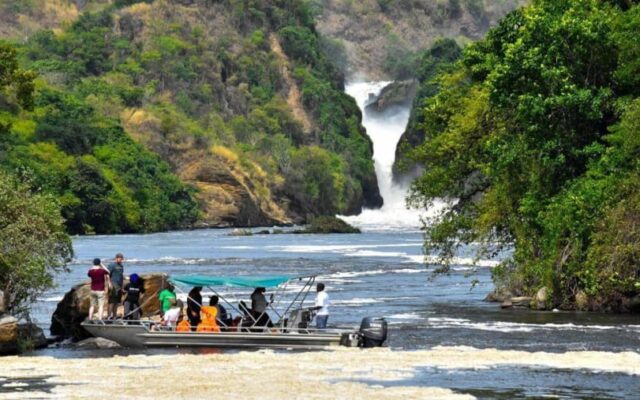
Habitat in Murchison Falls National Park
Murchison's Victoria Nile corridor is prime waterbuck country. North-bank Buligi circuits, Paraa approaches, and the Nile delta support herds alongside hippo, crocodile, buffalo, and elephant. Riverine woodland gives shade; floodplain grasses supply forage. Lion and hyena patrol the same edges, making Murchison a full predator–prey wetland theatre.
Habitat in Queen Elizabeth National Park
Queen Elizabeth's waterbuck habitat centres on the Kazinga Channel linking Lake George and Lake Edward, plus the Mweya peninsula and Ishasha river systems. Channel banks offer short, green grass maintained by grazing and seasonal water-level changes. Boat safaris here are among the best waterbuck habitat experiences in East Africa because animals treat the water as sanctuary.
Habitat in Lake Mburo National Park
Lake Mburo National Park is Uganda's most compact savannah wetland mosaic — five lakes within a small park boundary. Waterbuck inhabit lakeshore grasslands and valley lines throughout, making the park ideal for travellers with limited time who still want reliable shoreline antelope viewing.
Coarse-Grass Niche
Waterbuck favour coarse, medium-to-tall grasses that shorter-bodied selective grazers avoid. This dietary niche reduces direct competition with Uganda kob on adjacent plains while maintaining wetland vegetation structure. By grazing rank growth along shorelines, waterbuck influence fire fuel loads and open sightlines for predators and observers alike.
Seasonal Habitat Shifts
During heavy rains, waterbuck may spread slightly onto higher ground as floodplains green uniformly. In dry months, they contract toward remaining pools and main river channels — increasing encounter rates on standard game-drive loops. Neither shift involves long-distance migration; waterbuck are resident specialists.
Threats to Habitat
Outside parks, wetland drainage, agricultural expansion, and livestock grazing reduce shoreline habitat and block access to water. Inside protected areas, habitat remains largely intact — though invasive species, human settlement pressure on park boundaries, and climate variability affecting water levels are long-term management concerns. Read more on our conservation page.
Why Habitat Matters for Safari Planning
If your itinerary includes a Nile boat cruise, Kazinga Channel launch, or Lake Mburo lakeshore drive, waterbuck habitat is already on your route. Plan dawn riverside game drives and afternoon boat trips for overlapping activity peaks — the combination that delivers the most consistent shoreline sightings on a Uganda safari.
Quick Habitat Summary
- Core requirement: Permanent water within ~1–2 km
- Vegetation: Riverine grassland, floodplain, lakeshore
- Uganda subspecies: Defassa waterbuck
- Top parks: Murchison, Queen Elizabeth, Lake Mburo
- Best viewing: Boat safaris and riverside drives